Africa-Press – Rwanda. Rwanda’s startup ecosystem has steadily emerged over the past decade as one of Africa’s most promising innovation landscapes.
From fintech and agritech to e-commerce and digital services, a new generation of entrepreneurs is rolling out solutions tailored to local realities.
Yet behind this momentum lies a more nuanced story—one of young companies navigating structural challenges while building resilience, adaptability, and long-term potential.
For many founders, the journey is defined not just by obstacles, but by how those obstacles are shaping stronger, more grounded businesses.
Building trust in complex markets
For startups operating in highly regulated or traditionally structured sectors, one of the earliest hurdles is not just launching a product, but convincing people to use it.
Elie Tuyizere, a 2024 MTN Level Up Your Biz winner and founder of Coversoko.rw, a digital insurance platform expanding access to financial protection, says the challenge goes beyond technology.
Elie Tuyizere, founder of Coversoko.rw. Courtesy.
“The market we operate in is particularly complicated and overly regulated,” he says. “Insurance as a product is not a ‘sexy’ one. If people could avoid it, they would—just like taxes.”
This perception creates a trust gap between insurers and customers, which startups must address before introducing innovation.
“When you try to introduce a tech product on top of those underlying factors, people are not necessarily impressed by the digitisation of an unattractive product,” he adds.
“The main challenge is working with what people are already used to before building something more appealing.”
Rather than slowing progress, this reality is pushing startups to rethink their approach—focusing on rebuilding confidence and simplifying user experiences.
Regulation as both support and barrier
Rwanda is widely recognised for its pro-innovation policies, but founders say gaps between policy and implementation can still create friction.
Tuyizere notes that while the regulatory framework is supportive in principle, startups often encounter hesitation at the operational level.
“It’s true that the policies are probably the best any entrepreneur could wish for,” he says. “However, in implementation, you face resistance. Some of the people meant to support digital innovation are not always familiar with how these solutions work.”
This caution can slow partnerships and approvals, especially in sectors like insurance that rely heavily on established players and regulatory clarity.
“Our partners cannot take the risk of working with us if they do not have clear approval from the regulator,” he adds.
Still, rather than discouraging innovation, this has prompted more engagement between startups and regulators—dialogue that could ultimately strengthen the ecosystem.
The capital question
Access to funding remains a widely cited challenge. In Rwanda, however, the issue is less about the absence of capital and more about timing and accessibility.
Claver Rusaro, a communications and marketing consultant. Courtesy.
Claver Rusaro, a communications and marketing consultant in the startup ecosystem, says many early-stage ventures struggle to secure enough runway to refine their ideas.
“Most startups here don’t have enough runway to learn, adjust, and find their footing,” he says.
This often forces founders to pursue growth under pressure, limiting their ability to experiment, fail, and iterate—an essential process for building sustainable businesses.
At the same time, regulatory costs add strain.
“In sectors like health, finance, or logistics, the cost of obtaining licences can be beyond the capacity of startups,” Rusaro says, even when solutions show strong potential.
He suggests that more tailored support systems aligned with the realities of emerging businesses could make a significant difference.
WATCH: Rwanda at 30: the transformation journey | Entrepreneurship
Understanding the market
Beyond financing and regulation, founders say some of the most critical challenges lie in understanding the market and reaching the right customers.
Aline Ishimwe, owner of Musanze-based Karisimbi Cave Resort, says many entrepreneurs struggle to clearly define their target market.
Aline Ishimwe, founder of Kalisimbi Cave Resort, was among the panelists at the National Dialogue Council on February 6, 2026. Courtesy.
“You find someone trying to serve everyone at once, without understanding whether they are targeting a high-end or low-end market,” she says. “In the end, they either price themselves out or operate below sustainability.”
Limited access to reliable market data compounds the problem, especially for first-time founders.
“Sometimes the issue is not the idea, but the lack of information,” she adds. “You may know that a market exists, but without understanding how it works, it becomes difficult to position your business.”
Marketing is another hurdle. While digital platforms offer opportunities, visibility often comes at a cost.
“Platforms like booking sites or social media can help, but they require consistent investment,” she says. “For a small business, paying for advertising can quickly become expensive.”
For Ishimwe, the gap is not just financial but informational—access to knowledge, experience, and market insight.
Backbone of the economy
Despite these challenges, startups and small businesses remain central to Rwanda’s economy.
Ecosystem analysts say micro, small and medium enterprises (MSMEs) account for the vast majority of businesses, contributing significantly to GDP and employment.
Michael Shyaka Nyarwaya, founder of Afri-Global Cooperation Programme, describes them as a critical engine of growth.
Michael Shyaka Nyarwaya, founder of Afri-Global Cooperation Programme. Courtesy.
“MSMEs represent about 98 percent of businesses in Rwanda,” he says. “They contribute around a third of the country’s GDP and play a major role in job creation.”
This makes supporting startups not just an innovation agenda, but an economic priority.
“There is a very big opportunity that we need to empower,” he adds, pointing to untapped potential among young entrepreneurs.
Drawing from global exposure, Nyarwaya contrasts Rwanda’s ecosystem with more mature markets such as the United States.
“In places like Texas, startups already have access to strong early-stage capital, networks, and structured support systems,” he says.
“Here, many young entrepreneurs are still struggling to access not just funding, but information, markets, and even the right skills.”
He argues that bridging this gap requires more than financial investment—it demands deliberate efforts to equip founders with practical knowledge and early support systems.
“Starting a business is not just about having an idea,” he says. “It’s about having the right support system—from lawyers to accountants, mentors to peers—so the business grows on a solid foundation.”
Beyond funding: building ecosystems
Recognising that startups need more than capital, Rwanda is increasingly investing in a broader support ecosystem that combines funding, mentorship, and infrastructure.
The Ministry of ICT and Innovation says initiatives like Hanga PitchFest are part of a wider framework supporting innovators at different stages.
Programmes such as Hanga Ignite, implemented with the Rwanda Information Society Authority (RISA) and the Development Bank of Rwanda (BRD), target early-stage startups with funding and structured support.
Thematic initiatives like Hanga Agritech and Hanga SRH are directing innovation toward priority sectors, while platforms such as Innovate Rwanda are improving visibility and connections.
WATCH: From startups to taxpayers: Rwandans weigh in on nation’s largest budget yet
Through the ESO Grant Programme, the government is also strengthening Entrepreneur Support Organisations, enabling them to offer networks, incubation, and strategic guidance.
Meanwhile, Hanga Hubs are expanding access to these resources beyond Kigali, opening opportunities in secondary cities.
This shift reflects a broader understanding that sustainable startups are built not just on funding, but also on knowledge, networks, and adaptability.
From survival to sustainability
Breaking into the market is only the first step. For many startups, the real challenge lies in staying competitive and building for the long term.
The Ministry notes that Rwanda’s strength as a “proof-of-concept” country offers startups a unique advantage—the ability to test and refine solutions locally before scaling regionally or globally.
However, long-term success depends on access to finance, strong business models, and the ability to respond to market needs.
To support this, the government is working with partners including UNDP, the World Bank, and WIPO to strengthen the ecosystem—improving investment readiness and facilitating market access.
A generation learning to adapt
For many founders, challenges are not deterrents but part of the process of building stronger ventures.
Whether navigating regulation, earning customer trust, or securing funding, each obstacle is shaping a more resilient startup culture grounded in local realities.
There is also growing collaboration across the ecosystem, as startups, policymakers, and support organisations work to address shared challenges.
Tuyizere says a key priority is bridging the gap between policy and practice.
“The help we need is to remove bottlenecks between policy implementers and realities on the ground,” he says. “So policies don’t just exist on paper, but actually support innovation.”
Rusaro echoes the need for more inclusive support systems that recognise startups’ unique constraints.
A cautiously optimistic future
While challenges remain, Rwanda’s startup ecosystem is evolving in the right direction.
Policy support, growing investment in innovation, and a more connected ecosystem are creating conditions for long-term growth.
More importantly, founders are adapting—building businesses that are not only innovative, but practical, resilient, and responsive to the market.
In that sense, Rwanda’s startup story is not just one of struggle, but of steady progress—driven by entrepreneurs shaping an ecosystem, one challenge at a time.
Umurava founder Vivens Uwizeyimana poses for a group photo with his team at Intare Conference Arena.
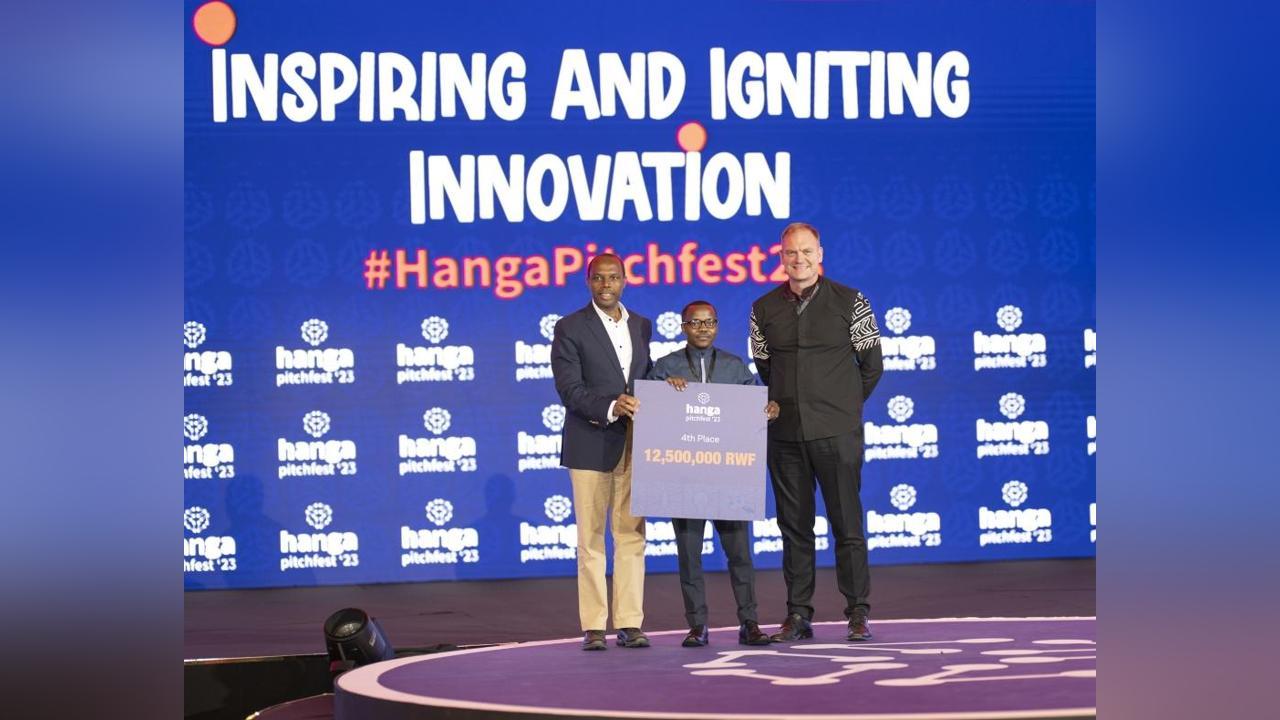
Vivens Uwizeyimana, the founder of Umurava, was among the finalists in Hanga Pitchfest 2023.
For More News And Analysis About Rwanda Follow Africa-Press