Africa-Press – Rwanda. Works on nine stalled neighbourhood roads funded jointly by residents and the City of Kigali could soon resume after the city said it has secured new contractors.
The move follows growing complaints from community members who had contributed money to road construction projects that were later abandoned by contractors.
One of the affected roads is in Rugunga Village, Muyange Cell, Kagarama Sector, Kicukiro District.
“The road is among those being jointly developed by residents and the City of Kigali, but it has not yet been completed because the contractor awarded the tender abandoned the works,” said Emma-Claudine Ntirenganya, the city’s spokesperson. “This made it necessary to seek another contractor in accordance with procurement law.”
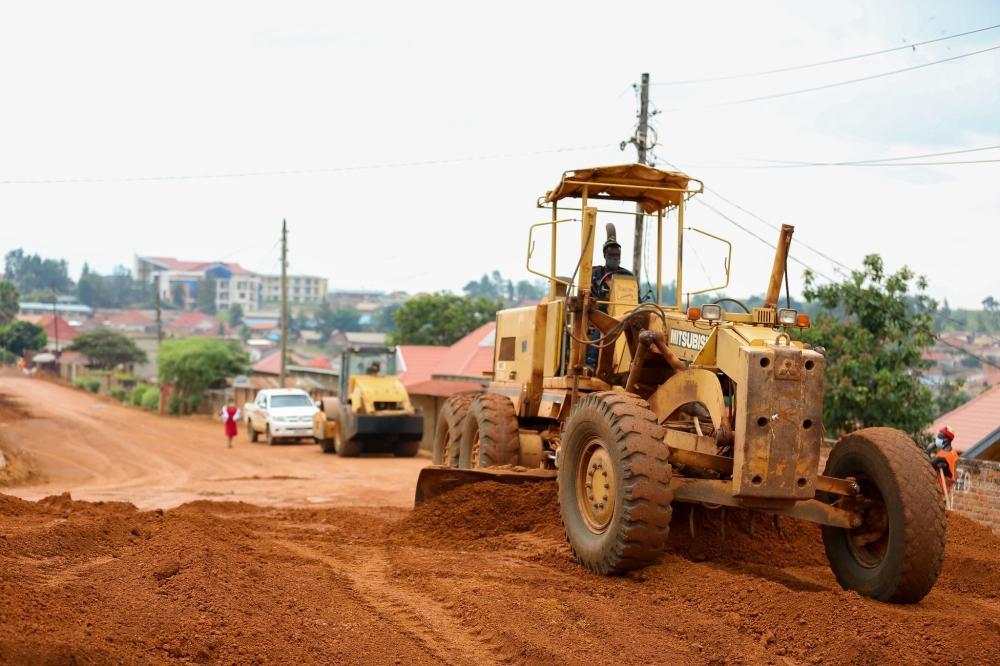
She said the tender has since been re-awarded and that a new contractor has begun work on nine roads spanning a total of eight kilometres in Kicukiro and Nyarugenge districts.
In Rugunga, she added, installation of street lighting is already underway.
“The remaining works are expected to begin within two weeks. Construction of these roads is scheduled to be completed by no later than March 2026,” Ntirenganya said.
To improve the delivery of neighbourhood roads, she said the City Council has introduced new construction guidelines to standardise implementation.
“We apologise for what did not go well and assure residents that measures have been put in place to address the issues and prevent them from recurring,” she added.
What went wrong?
The leader of Rugunga Village, Ignatius Kabagambe, said each household in the neighbourhood contributed Rwf 2 million towards paving the road.
“The road was poorly constructed and never completed,” he said.
Under the Neighbourhood Roads Programme, residents were required to contribute 30 per cent of the total cost, while the City of Kigali was expected to cover the remaining 70 per cent through a subsidy.
The community had planned to build at least five kilometres of paved roads.
“I cannot confirm whether the contractor withdrew, but what is beyond doubt is that even the 30 per cent contributed by residents was not properly utilised. As for the remaining 70 per cent, it was never invested,” Kabagambe said.
“We raised Rwf 168 million, yet only two kilometres were built — unfinished and already deteriorating.”
Similar concerns have been raised in other neighbourhoods.
In Kicukiro Sector, near Bar Isonga, residents said a road project stalled after excavation works were left incomplete for months.
“They dug up the soil and abandoned the site. Now the soil has lost its quality,” one resident said.
In Kanombe’s Rubirizi–Uwabarezi area, another resident complained that heavy trucks carrying sand were damaging a newly built road.
“It is deteriorating quickly, yet each household contributed Rwf 1 million. We don’t know who to turn to,” the resident said.
Kabagambe said transparency from authorities is critical, particularly regarding the city’s financial contribution.
“People suspect the 70 per cent subsidy is not forthcoming. Timelines must be respected, and where delays occur, communication should be timely,” he said, adding that weak planning and delays undermine public trust.
Communities taking initiative
In Jali Sector, Gasabo District, resident Elie Ntakirutimana mobilised community members to upgrade a 4.6-kilometre neighbourhood road using their own funds rather than waiting for city financing.
“Our contractor is still working on the road, which will cost about Rwf 2 billion,” he said. “Supervision is carried out by residents with road construction experience, and the city provides the technical standards.”
He said discussions were ongoing with the city to restore a formal partnership.
The road serves two cells — Nyakabungo and Agateko — covering seven villages and benefiting about 3,000 households.
Residents of Kanserege Village in Kagarama Sector, Kicukiro District, have fully financed the construction of four paved roads covering 1.5 kilometres at a cost of Rwf203 million.
Initially planned under the City of Kigali’s feeder roads programme, the project was taken on entirely by residents after the city indicated some roads would be implemented later.
“The main challenges included mobilising residents, explaining the project, ensuring commitments were honoured, and monitoring the contractor’s work. Nevertheless, the residents showed remarkable dedication, and the authorities remained supportive throughout,” said Léopold Tuyisabe, the chairperson of the residents’ committee that oversaw the project.
Antoine Mutsinzi, Kicukiro District Executive Administrator commended the residents for taking the initiative and pledged continued collaboration to address outstanding issues.
“Regarding drainage, we agreed to address it urgently, and since residents funded the roads entirely, we plan to support them by installing street lighting,” he said.
Funding shortfall
In January 2025, Members of Parliament raised concerns that residents had already contributed 30 per cent of required funds under the subsidised programme, yet some roads had not been built because the city had not provided its share.
Mayor Samuel Dusengiyumva told MPs that while the programme was still ongoing, budget constraints meant not all planned roads could be constructed simultaneously.
At the time, 18 neighbourhood roads covering 15.2 kilometres were under construction across Kigali’s three districts.
The City of Kigali plans to construct 100 kilometres of paved neighbourhood roads by 2029 — about 25 kilometres per year — to improve urban mobility.
City officials say the initiative continues to support communities willing to co-finance projects, though the city’s subsidy has since been revised to 50 per cent from the previous 70 per cent.
Under the 2025/2026 fiscal year budget, which begins on July 1, more than Rwf 1 billion has been allocated to the community-driven road programme.
For More News And Analysis About Rwanda Follow Africa-Press