Africa-Press – Rwanda. For many people, the current conflict in eastern DR Congo is a distant political story—another headline about rebels, armies, and negotiations. But for some of us, it is deeply personal. It brings back memories that predate the ongoing war and reminds us that the tensions now erupting into violence were woven into everyday life for decades.
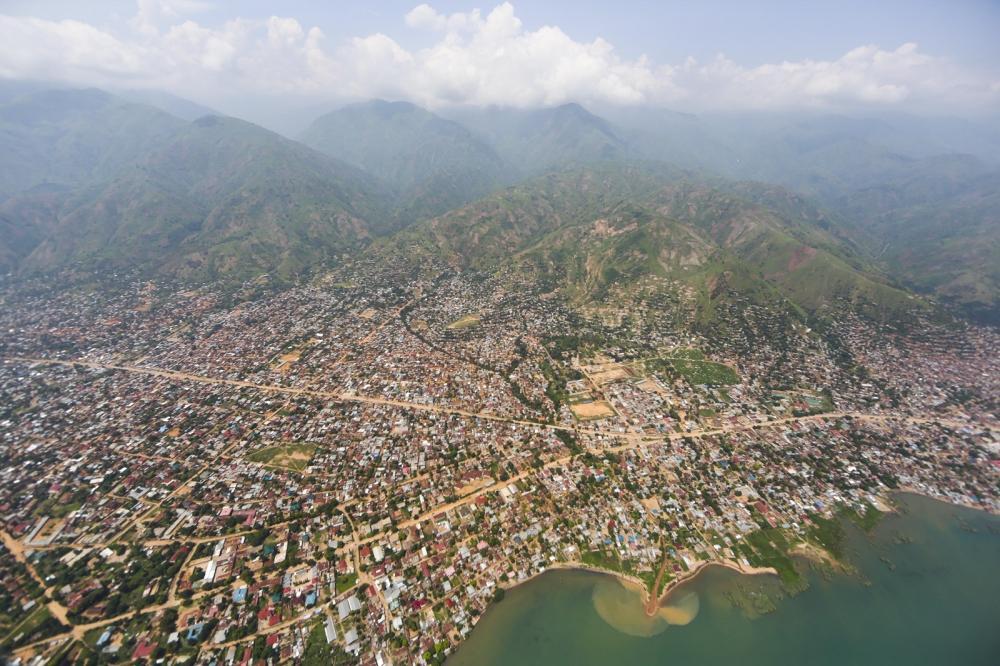
I grew up in Uvira, a lakeside town in South Kivu Province. It is a place of beauty, culture, and commerce. But for children of Rwandan origin like us, identity was also a burden.
My father left Rwanda in the 1950s to pursue his studies in Congo, before the tragedies that shook Rwanda in 1959. He was simply a young man seeking education and opportunity, and he began building his life across the border.
Over the years, he lived in Kinshasa and other cities before settling in Uvira, where he started a business and raised his family. By the time Congo gained independence, he was already firmly rooted in the country. But being present in a place did not always mean being accepted. Belonging was not just about documents; it was about how society perceived you.
As children, we did not see ourselves as foreigners. Uvira was the only home we knew. We spoke the same languages, played in the same streets, and attended the same schools as everyone else.
It was others who reminded us that we were different.
I still remember walking to school and hearing groups of children chant, “Banyarwanda kabila mucafu”—loosely translated as “Banyarwanda, a dirty tribe”—a taunt directed at us simply because we were of Rwandan origin. We did not grasp the history behind those words, but we felt their sting.
Many people today view hostility toward Banyarwanda communities in eastern DR Congo as something recent. For us, it was already part of everyday life in the 1980s and early 1990s. The insults, the suspicion, and the quiet forms of exclusion were ever-present.
One of my favourite childhood activities was going to the football stadium. Like any young boy, I loved the excitement the game brought. But even there, we had to be cautious. During one match, the atmosphere suddenly turned hostile toward “Banyarwanda.” We were nearly stoned. Fortunately, some players recognized us and ushered us into the team area for safety. At halftime, we slipped out and ran home.
After that, we began leaving matches 15 minutes early—not because of traffic or curfew, but because it was safer. Once the final whistle blew, crowds could turn hostile, and those known to be Banyarwanda became easy targets. The hostility was not confined to stadiums. On another occasion, I witnessed a group of Banyamulenge schoolchildren being stoned by a crowd. It was terrifying. We were all just children, yet identity alone was enough to mark someone for attack.
Our parents endured far more. Many had to pay bribes just to move goods, obtain services, or avoid harassment. Life became a constant negotiation with insecurity—in government offices, on the streets, and sometimes even in their own neighbourhoods.
Eventually, we returned to Rwanda. It was not entirely by choice. After the 1994 Genocide against the Tutsi, many perpetrators of the genocide fled into eastern DR Congo with some settling in the very neighbourhoods where we resided. The fear was real and immediate, and our parents concluded that staying was no longer safe.
And so we left the only home we had ever known and moved to Rwanda.
One day in Nyamirambo, something happened that has stayed with me. My brother recognized a man playing for one of Kigali’s top football teams—someone who had once hunted and beaten us at the stadium in Uvira, all because we were Banyarwanda. Now he was living freely in Kigali—playing football and moving about without fear. No one was targeting him. Life went on as if nothing had ever happened.
That moment spoke louder than many speeches about the differences between societies.
Today, as the conflict in eastern DR Congo persists, these memories come back with a sharper meaning. The taunts we endured as children have, over time, turned into bullets. What once caused beatings now results in killings, displacement, and communities gripped by fear.
What we lived through in the 1980s and early 1990s was not full-scale war, but a warning. The seeds of exclusion had already been planted, and if left unchecked, they can grow into something far more destructive. The conflict in eastern DR Congo is not only about territory or politics. At its core, it is also about identity, belonging, and the unresolved question of who is recognized as a citizen—and who is not.
Peace will come when every child—whether in Uvira, Goma, or Bukavu—can walk to school, attend a football match, and live without being reminded that they are different.
For More News And Analysis About Rwanda Follow Africa-Press