Africa-Press – Rwanda. This year’s commemoration of the 1994 Genocide against the Tutsi in Rwanda was solemnly observed in Malawi on April 10 under the theme “Remember, Unite, Renew.”
Hosted by the Rwandan High Commission in Zambia (also accredited to Malawi), and supported by the Malawian government, civil society, and international partners, the event brought together the Rwandan community in Malawi, members of the diplomatic corps, and friends of Rwanda to honour the victims of the 1994 Genocide against the Tutsi.
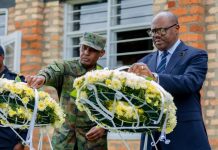
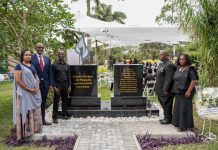
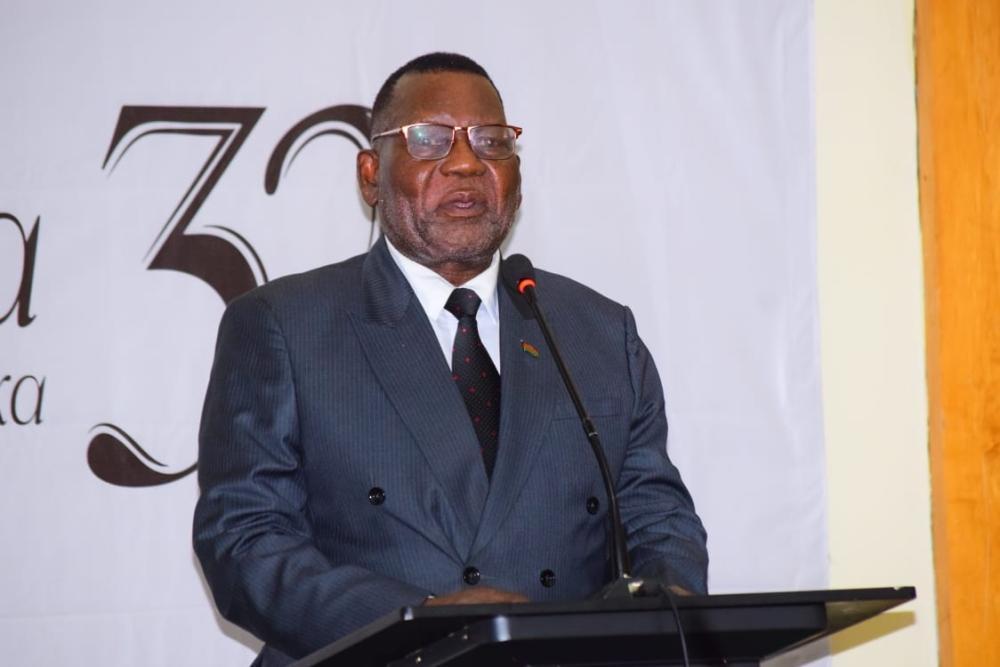
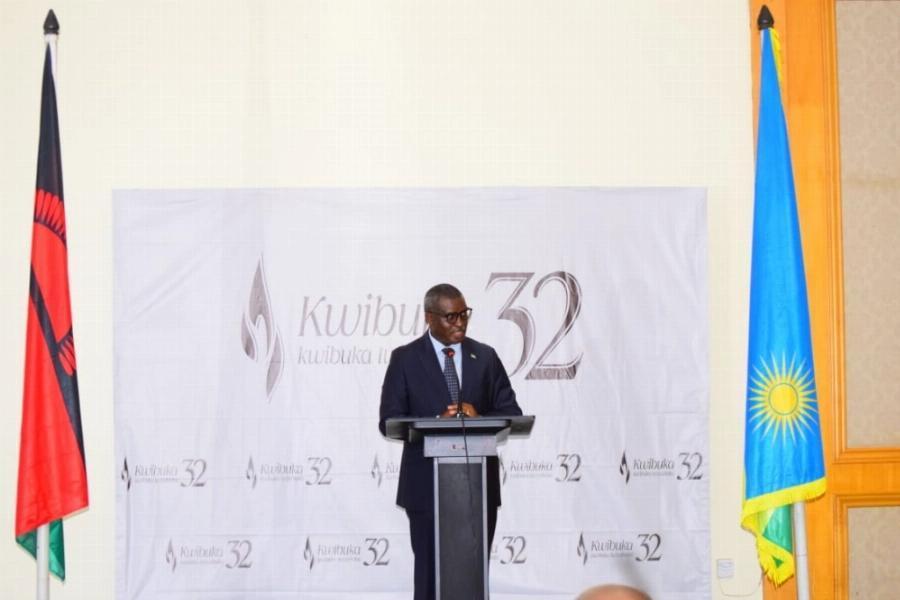
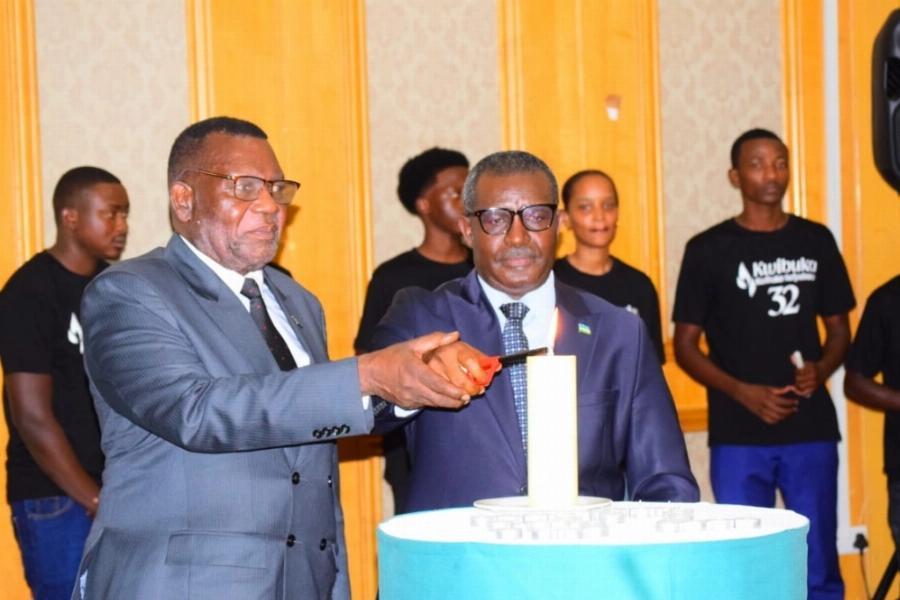
The Kwibuka 32 commemoration brought together 200 guests. The Guest of Honour was the Minister of Foreign Affairs and International Cooperation of Malawi, Dr. George Thapatula Chaponda, accompanied by Chauncy M.K. Simwaka, the Secretary for Foreign Affairs and International Cooperation, along with other government officials. The commemoration in Lilongwe featured a candle-lighting ceremony and a moment of silence to honour the more than one million lives lost during the genocide. Attendees underscored the importance of global solidarity in combating genocide denial and revisionism.
Speakers—including the Malawian government representative, the Rwandan High Commissioner to Malawi, Emmanuel Bugingo, and Simone Heri-Terrence, Senior Human Rights Advisor at the United Nations in Malawi, representing the UN Resident Coordinator—emphasized the shared responsibility to uphold human dignity and justice. Rwanda’s journey of reconciliation and rebuilding was widely commended.
Dr. Chaponda stated that Malawi stands with Rwanda in declaring “Never Again,” and urged people to reject hate speech, which played a central role in fuelling the 1994 Genocide against the Tutsi.
The Rwandan High Commissioner stressed that the genocide was not a sudden eruption of violence, but the culmination of decades of division, discrimination, and dehumanization. He noted that, after stopping the genocide, Rwanda’s visionary leadership implemented inclusive policies that brought all Rwandans together to rebuild the nation.
He cautioned that the negative forces responsible for the 1994 Genocide against the Tutsi have not disappeared. In the region—particularly in eastern DR Congo—dangerous narratives continue to contribute to instability. He highlighted that extremist ideologies targeting Tutsi communities, including the Banyamulenge, are still fuelling violence, persecution, targeted killings, and displacement in broad daylight.
Genocide ideology, denial, and negationism, he added, continue to spread—sometimes openly, sometimes subtly—across regions and continents. He warned that silence in the face of such warning signs amounts to complicity, recalling the consequences of past indifference.
Speaking on behalf of the UN Resident Coordinator in Malawi, Simone Heri-Terrence noted that the international community failed to prevent and stop the 1994 Genocide against the Tutsi despite clear warning signs.
She called on all member states to recommit to the collective responsibility of promoting unity, justice, and inclusion in pursuit of a peaceful world.
The commemoration concluded with a renewed pledge to uphold the lessons of history and to work toward a peaceful and inclusive future. By uniting Malawians and Rwandans in grief, hope, and resolve, Kwibuka 32 in Malawi reinforced the universal message: “Never Again.”
For More News And Analysis About Rwanda Follow Africa-Press