Africa-Press – Rwanda. The Rwanda Social Security Board (RSSB) has reaffirmed its commitment to delivering stronger returns and better services to members, according to its Chief Executive Officer, Regis Rugemanshuro.
He made the observation on January 30, as RSSB hosted the 30th Africa Social Security Association (ASSA) Governing Council Meeting in Kigali, positioning African pension and social security funds as key drivers of development and inclusion.
The three-day meeting, which ran from January 27 to 30, brought together heads and chief executives of 19 social security institutions from across the continent to deliberate on strategic priorities, including reforms in governance, expansion of coverage to the informal sector, and the proposed establishment of an African Infrastructure Fund.
RSSB’s performance and value to members
Rugemanshuro said RSSB’s recent performance demonstrates how strong governance and prudent investment can directly benefit contributors.
“As you know, for the past five years, there has been transformational in nature,” he said. “From an asset under management perspective, as we published recently, the fund has more than doubled. Right, now it’s at over Rwf3.2 trillion as of the financial numbers of 2025.”
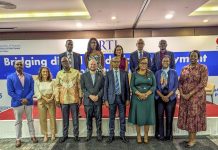
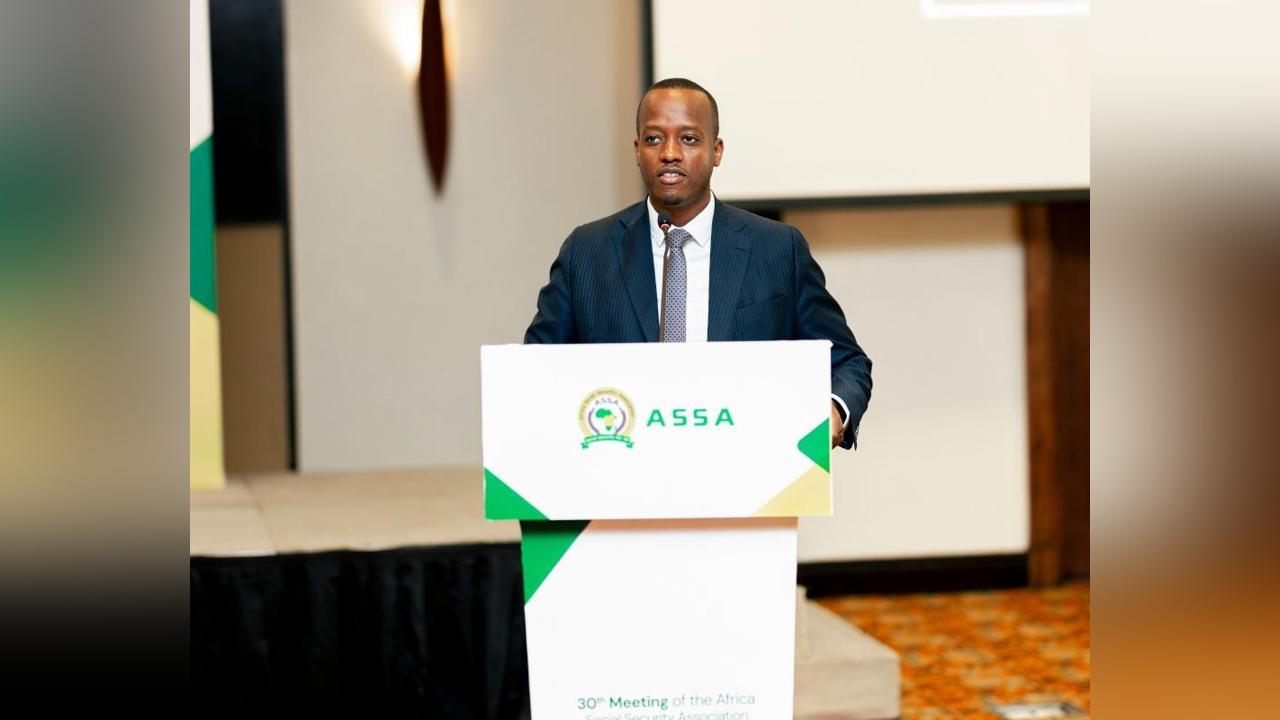
Participants follow a presentation during the 30th Africa Social Security Association (ASSA) Governing Council Meeting in Kigali, on January 30. Courtesy
RSSB’s return on investment has also risen sharply, from about 1.6 per cent during the Covid-19 period to 15.6 per cent in 2025, he indicated.
“That should give a lot of confidence to the Rwandan citizens that the money they contribute for their long-term retirement is being taken care of, is growing healthy and safely,” Rugemanshuro said.
He added that most of the funds are invested domestically, reinforcing the link between members’ savings, national development and long-term sustainability.
Beyond pensions: health insurance impact
In addition to pensions, RSSB manages major health insurance schemes, including community-based health insurance scheme (commonly known as Mutuelle de Santé) and workers’ medical insurance scheme (RAMA).
Rugemanshuro said these schemes remain central to citizens’ welfare, offering high-value coverage at relatively low contributions, while recent medical tariff adjustments aim to keep healthcare provision sustainable – for healthcare providers not to make losses.
As the country’s largest medical insurer, RSSB has pledged greater efficiency, transparency and improved service quality for both members and healthcare providers.
Informal sector: Africa’s biggest challenge
A recurring theme at the Kigali meeting was the challenge of extending social protection to informal workers, who make up more than 80 per cent of Africa’s workforce, according to Bamba Amed, Technical Advisor at National Social Security Fund of Côte d’Ivoire, and ASSA’s coordinator for West Africa and francophone countries on the continent.
Bamba said informal sector coverage is a defining issue for the continent.
“You know that more than 80 per cent of the population lives in the informal sector. So it is a major challenge for our states,” he said.
Participants agreed that sustainable actuarial planning, better governance and innovative contribution mechanisms are critical to ensuring that benefits promised today can be paid tomorrow.
They also pointed to the need to devise strategies to ensure social security coverage is effectively expanded to include informal sector workers.
Pension funds as Africa’s long-term investors
With their long-term liabilities, African pension and social security funds are increasingly seen as natural investors in infrastructure and productive sectors. The ASSA meeting advanced discussions on creating an African Infrastructure Fund, which would pool resources to finance major projects across the continent.
Hosea Kili, CEO of CPF Financial Services in Kenya and chair of the ASSA Council, said the decision marks a strategic shift.
“We have made a decision that we begin the journey for establishment of an African infrastructure fund, which will be an aggregation vehicle for investment jointly in African infrastructure by the pension funds and social security funds of Africa,” he said.
Such a vehicle, participants noted, would help mobilise African capital for African priorities, while delivering stable, long-term returns for contributors.
Ettah Muango, Manager for Legal and Regulatory Services at Kenya’s National Social Security Fund (NSSF), said ASSA membership is critical for advancing home-grown solutions to shared challenges.
“It is Africa for Africa, and that is a game changer,” she said, observing that the association enables social security institutions to jointly invest in infrastructure and improve livelihoods across the continent.
RSSB’s reforms and member-focused changes
Rugemanshuro said RSSB is not only focused on performance but also on flexibility and access for members, particularly those in the informal sector. For instance, he said, proposed reforms to the EjoHeza long-term savings scheme recently approved by the Cabinet, seek to allow savers to withdraw up to 30 per cent of their savings at any time, while preserving the remaining 70 per cent for retirement benefits.
EjoHeza was created to extend pension services to informal sector who are not covered by the mandatory public pension fund, which is also managed by RSSB.
RSSB’s broader goal, Rugemanshuro said, is universal long-term savings within the next decade, supported by digitisation and simplified access.
“Many of our members’ livelihoods, long-term retirement, social welfare, depend on what us here, entrusted with this responsibility, are going to do,” he told participants at the ASSA Council meeting.
“Let us work, let us make it count, and let us not fail our people and our trustees.”
Kigali’s symbolic and strategic role
ASSA Secretary General Meshach Bandawe said the Kigali meeting reflects both history and ambition, pointing out that the association was founded in Rwanda in 2007 – as East and Central Africa Social Security Association (ECASSA) – before expanding to cover the entire continent, this time as ASSA.
He said closer alignment of regulatory frameworks, investment strategies and coverage models could unlock Africa’s economic and social potential through stronger social security systems.
For RSSB, hosting the meeting is both recognition and responsibility to be a high-performing and impact-driven institution, according to Rugemanshuro.
For More News And Analysis About Rwanda Follow Africa-Press