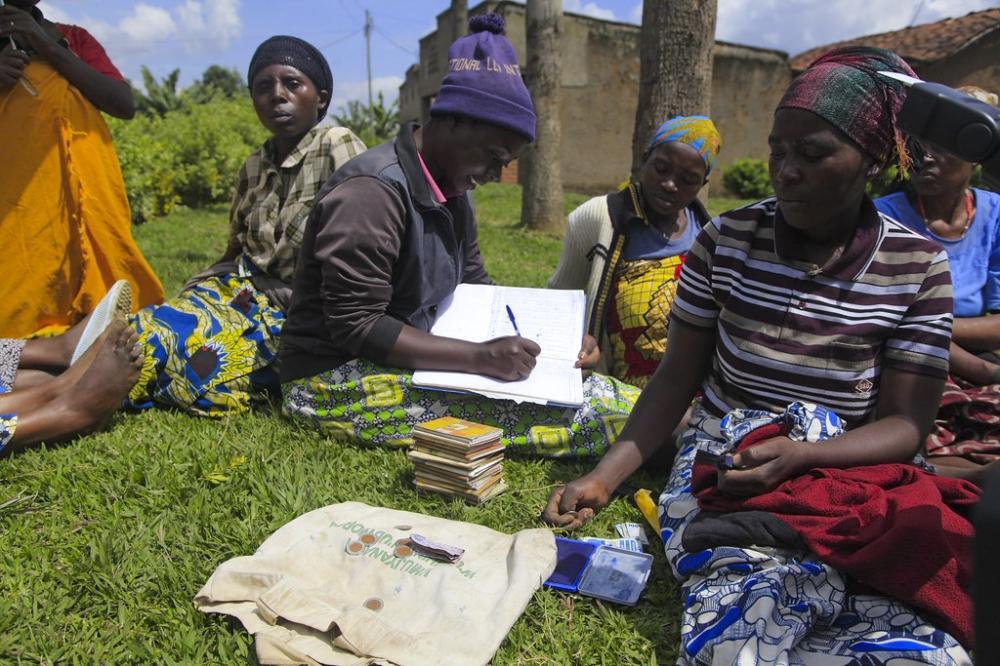
Africa-Press – Rwanda. On Christmas Day, rural communities across Rwanda come together to mark the festive season as a shared celebration, shaped by collective savings, communal meals, church services and renewed social bonds that extend far beyond individual households.
From early December, community saving groups known locally as ibimina and ibisabane begin winding up their annual cycles, releasing funds that many families rely on to prepare for Christmas.
For households whose incomes depend largely on agriculture and informal trade, these savings often determine how the festive season is celebrated.
In Nyamagabe District, members of a women-led saving group say the Christmas period is the reward for a year of discipline.
“We save small amounts every week—sometimes as little as Rwf100 or Rwf500—depending on a person’s financial situation. By December, the savings help us buy food, clothes for children and contribute to communal celebrations,” said Mukamana Clarisse, a farmer from Tare Sector.
“Christmas feels meaningful because it is prepared collectively, and the children eagerly look forward to it, knowing the whole community played a part.”
Across several rural districts, the tradition of collectively slaughtering a cow or a goat remains one of the most anticipated aspects of Christmas.
Neighbours contribute funds, agree on the animal to be purchased, and share the meat among participating families. Rooted in solidarity, the practice ensures that even households with limited means can enjoy a festive meal.
In Rutsiro District, Jean Baptiste Niyonsaba, a local community leader in Gihango Sector, Kivumu Cell, says the tradition has endured despite growing economic pressures.
“Not every family can afford to slaughter a cow or a goat on its own, or even buy meat for Christmas,” he said. “But when we come together, it becomes possible. Christmas here is not about luxury; it is about making sure no one celebrates alone or goes without food.”
Preparations often peak on Christmas Eve, when churches in rural parishes host evening services that draw entire villages. Worshippers gather for prayers, hymns and messages centred on hope, gratitude and unity. For many families, the service sets the tone for the celebrations that follow.
“At the Christmas Eve Mass, the church is usually full, with children, parents and the elderly attending side by side,” said Kabagwira Marie Immaculée, a mother of four in Gakenke District.
“Beyond celebrating the birth of Christ, people pray for good harvests, better health and peace in the community. It is also a time to give thanks for making it through the year together and to ask for strength for the year ahead.”
The service often continues until midnight.
While Christmas Day itself is largely reserved for family gatherings, the festive period frequently extends beyond December 25. In many rural communities, visiting relatives, especially elders is regarded as an essential part of the season.
Younger family members travel from neighbouring villages, towns and, in some cases, cities to pay their respects, exchange greetings and share meals, reinforcing family ties and community bonds.
For parents, Christmas also carries expectations from children, even in modest households.
“My children start asking about Christmas weeks in advance,” said Beata Uwimana, a 54-year-old mother of four in Rwamagana District.
“I don’t expect expensive gifts. I just look forward to seeing them and sharing a good meal together. Having them back home and happy makes everything worthwhile.”
Local authorities say the festive season offers an opportunity to strengthen community cohesion.
“Christmas is a time to come together and support one another,” said Marie Uwase, a Social Affairs Officer in Kamonyi District.
“We encourage families to focus on joy, kindness and helping those in need, rather than overspending or excess.”
Despite rising living costs, many rural residents say the spirit of Christmas remains strong. For them, the season is defined less by material abundance and more by shared experiences, faith and the simple joy of being together.
For More News And Analysis About Rwanda Follow Africa-Press