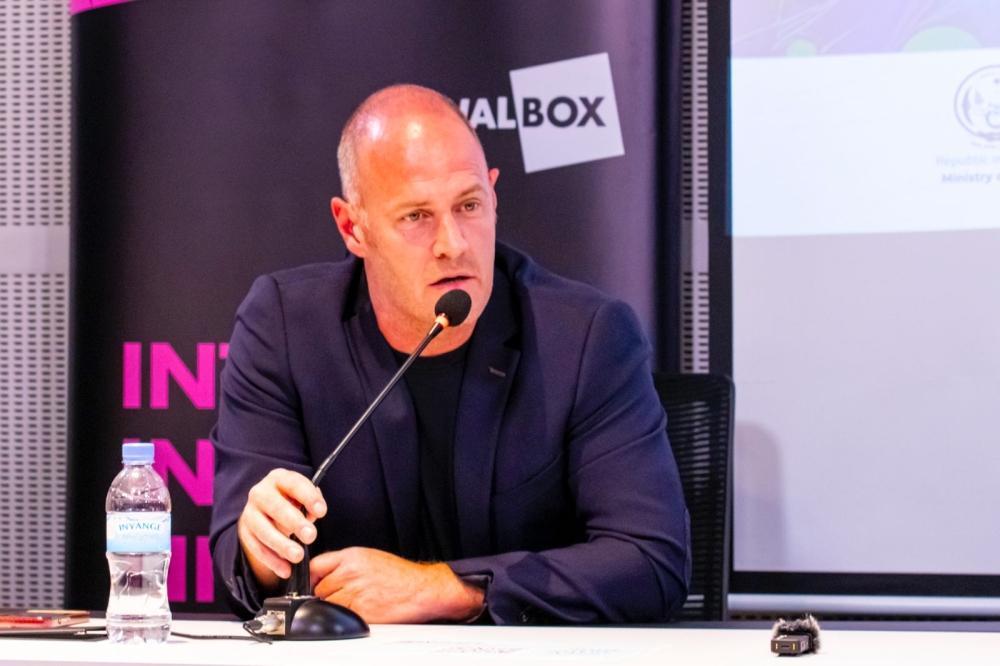
Africa-Press – Rwanda. In just three years, Rwanda Challenger has evolved from an ambitious concept into one of Africa’s most promising professional tennis events, attracting international players while giving local talent a rare opportunity to compete at a higher level.
Tournament director Arzel Mevellec says the journey has been driven by passion and a commitment to creating opportunities for young players aspiring to turn professional.
“I was driven by passion to create opportunities for young tennis players who dream of becoming professionals,” Mevellec told Times Sport in an exclusive interview.
The French professional organiser, who first arrived in Kigali in 2023, reflects on the tournament’s origins, its growing impact, and why Rwanda could soon be ready to host an even bigger ATP Challenger event.
Why did you choose Kigali to host ATP Challenger?
The idea came from a friend who was looking for someone bold enough to take on what initially seemed like a crazy challenge. He knew my background—I had started a tennis tournament in France with just 500 euros, and over 17 years, it grew into an event with a budget of 800,000 euros.
That experience convinced me the project was possible, so I contacted the Association of Tennis Professionals to propose bringing a tournament to Rwanda. At first, my request was rejected due to a lack of sponsorship, but I remained curious about the opportunity.
I first arrived in Rwanda on December 16, 2023, and immediately felt there was something special about Kigali. Among the many cities that host professional tournaments, this one stood out—partly because of the country’s history, especially the 1994 Genocide against the Tutsi.
I was 16 at the time, and like many young people in France, I only understood it through what we saw on television. Visiting the Kigali Genocide Memorial deeply moved me. As a father of four, I could truly feel the weight of the stories and the pain behind them.
When I returned home, I did not expect to come back, as I had family responsibilities and my own tournament to manage. But later, I received a call saying the project could still happen. My wife encouraged me to take the opportunity, and I decided to follow that instinct.
Three years later, I am still here in Rwanda, living what once felt like a dream—helping bring professional tennis to Kigali.
What has been the impact so far?
I believe we are on the right track. Of course, Kigali cannot yet be compared to France, but having a professional tournament like the ATP Challenger here is extremely important, especially for local players.
It gives them a clear picture of the level they need to reach to compete internationally. The biggest impact so far has been bridging the gap between professional tennis and young players in Rwanda, while also giving children something to dream about.
This year alone, many children have been involved as ball boys, while others have travelled from upcountry just to watch professional players compete. Seeing that level of tennis can inspire them to believe they can reach it too.
I started playing tennis at the age of seven, and today I am investing in the sport because I believe in creating opportunities and building a platform for the next generation.
The long-term goal is to see players from Rwanda and the region competing at the highest level, even in countries like France, and eventually returning home to help develop the sport.
For that to happen, the system must grow step by step—from national tournaments to regional competitions, and then to the continental level.
Some African countries, such as Morocco and South Africa, have already made significant progress. With tournaments now taking place in cities like Kigali, Abidjan, and Brazzaville, the objective is to help produce more African champions.
Could Kigali upgrade to ATP Challenger 125 or above anytime soon?
Upgrading the tournament to an ATP Challenger Tour 125 level is possible, but several conditions must first be met.
Key factors include the continued development of local players and maintaining multiple levels of international tournaments to strengthen the country’s reputation in professional tennis.
Moving from Challenger 100 to Challenger 125 will also depend on securing the right slot on the ATP calendar. Since the Kigali event is played on clay courts, it must align with the clay-court season while attracting higher-ranked and more experienced players—something that requires a strong and consistent tournament reputation.
The progress made in recent years has been significant, with the event growing from a Challenger 50 in 2024 to Challenger 75 and 100. However, stepping up to Challenger 125 represents a new level, with stricter standards and the need for better positioning on the global schedule.
I believe the next step is to expand professional tournaments across more African countries, such as Kenya and Uganda, to create a regional circuit. This would make it easier for players to compete within Africa and ultimately culminate in a higher-level event in Kigali.
Can we say that Rwanda Challenger is becoming a gateway for global tennis stars to elevate their talent?
Yes, definitely. A good example is Joel Schwaerzler, who won the first week. He is only 20 years old and already ranked around 214 in the world. With the exposure players gain here, tournaments like the Rwanda Challenger can help them move closer to the top 100.
The Challenger has become an important stepping stone for many players. Young talents come to gain ranking points and experience, while more experienced players share knowledge with the next generation. Those returning from injuries also use this level to rebuild their form before stepping back up to bigger tournaments.
We are working to make Rwanda one of the most attractive Challenger events on the tour. At the same time, the country has positioned itself strongly on the international stage by offering a great environment, excellent organisation, and strong tourism potential.
With these advantages, the Rwanda Challenger has significant room to grow in the years ahead.
You recently introduced the idea of the Africa Tennis Tour. What is this initiative about?
The African Tennis Tour is an idea I began developing a few months ago.
We aim to leverage professional tournaments organised by our company, as well as established competitions such as the Billie Jean King Cup, the Davis Cup, and other tournaments under the International Tennis Federation.
Our objective is to create youth-focused initiatives and social programmes that encourage young players to attend these events, actively participate in structured activities, and experience live matches in an engaging environment.
To successfully deliver these initiatives, we will seek sponsorship support from leading companies.
One of the biggest challenges today is the gap between emerging talent and the opportunities needed to reach the professional level. Travelling from Africa to Europe or other developed tennis nations requires significant sacrifice, and many promising players drop out due to the cost and difficulty involved.
Our aim is to provide the right support at the right time—offering quality training and competitive opportunities within Africa—so that young players can pursue their dreams without having to leave too early


For More News And Analysis About Rwanda Follow Africa-Press