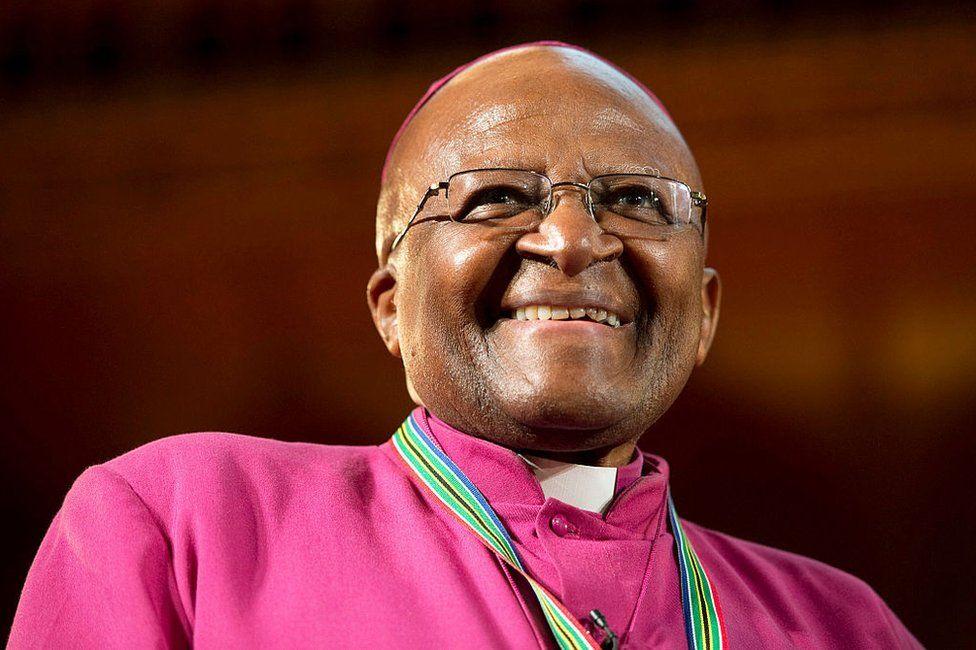
Africa-Press – Rwanda. Archbishop Desmond Tutu was laid to rest on New Year’s Day in Cape Town, South Africa. He is the latest Africa’s liberation hero to leave us. Many have already gone, some very early in their lives and others after a full life. Titans all and revered.
But some have had their role reassessed and either been reviled or had their reputations severely altered.
That comes with the territory. Greatness has its hazards. You are constantly under scrutiny by people with varied interests and intentions and even ability.
Archbishop Tutu was one of those titans. Small in stature, yes, but a giant in his actions and their reach and influence. And, like the others, he has been subjected to very close examination.
But whatever the outcome, positive appraisal or negative dismissal, there will always be different opinions about him, coloured by what they see as unfair, uninformed or outright ignorant judgement.
Most of those who hold Desmond Tutu in such high regard as a great man have never met him in person. Yet they can all claim to know him well. That knowledge comes from what they read and the images they saw of him in the thick of the anti-apartheid struggle, at the head of protest marches, or in the post-apartheid era championing reconciliation.
The image formed as a result is that of a man using the moral force of his conviction and calling to bring about change and end evil.
Some might therefore take issue with that source of information about the Archbishop’s greatness and argue that we have been fed with selected material and so what we see is what we have been allowed to see, not necessarily the whole picture.
Probably. And there will be a reassessment of his life and contribution. Indeed, it has already begun.
But whatever the doubts or results of any re-evaluation, his place in history as one of the great leaders of the anti-apartheid struggle is secure. The story of that period in South African history can never be fully told without him featuring prominently in it.
His stand and use of moral force against all forms of injustice cannot be contested. He will always be among Africa’s great humanist leaders who brought charm, simplicity and familiarity to greatness. He did cry like another great African humanist, Kenneth Kaunda of Zambia. He laughed a lot too and danced in the streets in his archbishop’s robes.
He had weaknesses like all of us, I suppose. A little vanity perhaps, or something bigger. But he must have been aware of them. That is really what makes us human – knowing our limitations and flaws. The ability to rise above them and move towards perfection of oneself and others is what distinguishes the great from the ordinary. It is probably what makes saints.
It came as a shock, therefore, to read angry and, in some cases insulting, comments on Tutu by some Rwandans professing to be Christian. They picked on one aspect of Tutu’s life they do not agree with to dismiss him as a person of no consequence, certainly not one to admire.
His sin? Understanding and compassion for gay people. For this, some of these Rwandan critics have called his actions satanic and condemned him to eternal damnation.
They are within their rights to disagree with the worthy and now departed archbishop, of course. But they seem to have forgotten the biblical injunction not to rush to judgement, recorded so many times in the bible, but mostly in the New Testament, which is the one directly concerned with Christ’s teaching.
Other individuals said that his understanding of gay people alone rendered all his good deeds worthless, nullified and erased them from the record. They too seem to have suffered from similar amnesia and could not recall Pope Francis’ words some years ago when asked about gay people. Who am I to judge, he is reported to have replied.
As expected, the intolerant crowd masquerading as righteous and conservative custodians of morals and tradition rounded on the Pope and accused him of all manner of crimes.
They, like the Rwandan critics of Tutu, failed or refused to distinguish between understanding and endorsement, and rushed to condemn. Yet Christians frown on a holier than thou attitude. It is simply not Christian and the bible has a lot to say about it, again most of it in the New Testament.
The outbursts against the archbishop that I have read on social media are neither Christian nor Rwandan. The Christian faith stresses reconciliation as necessary for redemption. Rwandans have based the rebuilding of their nation on reconciliation. What these are, are therefore simply acts of intolerance.
I cannot claim deep knowledge of the Christian faith. But this much I know. Christ taught love and understanding, humility and tolerance, and compassion and forgiveness. He did not set out to condemn but sought to redeem.
The good archbishop might have offended Rwandans in some way and they would have good reason to be angry with him. Better to take issue with him on that, not his attitude to the gay.
But in dismissing Archbishop Desmond Tutu’s contribution to humanity on the basis of this attitude, these Rwandan Christian critics seem to have gone against the teaching of Christ. But again, who am I to judge?
For More News And Analysis About Rwanda Follow Africa-Press