Africa-Press – Rwanda. Recently, the UN Group of Experts on DR Congo performed the diplomatic equivalent of that overexcited wedding timekeeper, the one who grabs the microphone before the groom even lifts the veil and confidently announces that the cake is being cut, the gifts are being opened and the reception is winding down, all while the bride is still adjusting her dress.
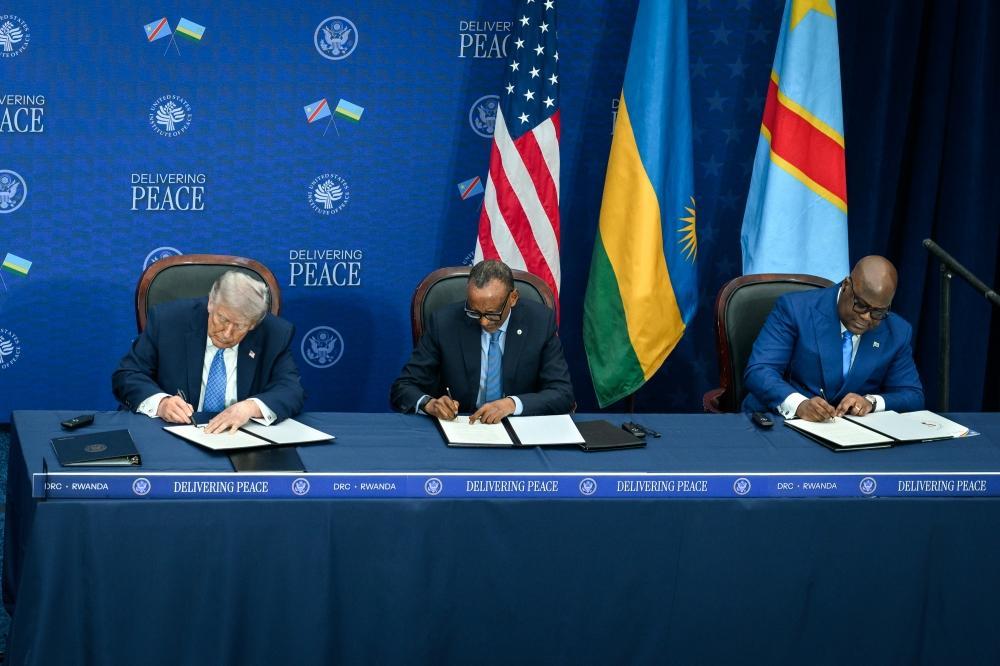
And in that same comedic spirit, the Group of Experts released their report with theatrical urgency immediately after Rwanda and DR Congo signed their peace accord, almost racing the presidents’ motorcades to the tarmac. A perfect case of negative correlation, where the more diplomacy in eastern DR Congo improves, the more urgently UN tries to contradict it.
Kasper’s recent report arrived with the velocity of a DJ who jumps from a slow waltz into South African kwaito drums, startling the crowd, confusing the couple, and raising suspicion that someone spilled peanut sauce on the soundboard.
The presidents had barely finished the ceremony before the document dropped, polished and dramatic, as if it had been waiting backstage rehearsing its lines.
Statistically speaking, it was an anomaly. The curve of normal report timing was broken with the enthusiasm of a timekeeper who thinks skipping ahead to the cake increases efficiency.
And then there is the cast itself, this so-called UN Group of Experts on DR Congo. A coordinator in Denmark, Kasper Andersen, a military expert in Ethiopia, Yonas Abera, a natural-resources person in the Netherlands, Judith Verweijen, a finance specialist stationed in the United Kingdom, Samantha Whiteside, a humanitarian working from France, Marie Forestier, and a regional analyst in Zimbabwe, Robert Mtisi. Not one of them based in DR Congo. Their own contract terms confirm it. They are home-based, conducting investigations about one of the world’s most complex conflict zones from thousands of kilometres away, like meteorologists forecasting tropical storms from the comfort of winter scarves. It is almost algebraic in its absurdity.
The probability of accurate field insight decreases as the physical distance from the field increases, yet the confidence interval of their conclusions seems to expand. They became, in effect, the wedding timekeeper who never attended a single planning meeting, never met the couple, never saw the venue, but still insists he knows exactly when the cake must be cut, when the vows should end, and when the dancing should begin.
They monitor a conflict they do not live in, interpret dynamics they do not witness, and make pronouncements with the gusto of someone announcing a wedding schedule based purely on the in-law’s gossip. In statistical terms, this is the ultimate remote-sensing fallacy. Mistaking second-hand signals for primary data, then delivering them with the authority of someone who believes that attendance is optional as long as the microphone is loud enough.
The core problem remains that the report behaved like a pre-written wedding speech delivered regardless of what actually unfolds.
If the bride faints, the speech continues. If the groom is late, the toast proceeds. If the ceremony pauses for a family crisis, the timekeeper keeps reciting the programme with royal authority. In statistical language, this is textbook model rigidity. The refusal to update conclusions even when new variables enter the equation.
The peace accord was not a small variable. It was a major data point, significant enough to shift all regression lines and recalibrate the entire model. Yet Kasper and his team treated it like background noise, the way a wedding timekeeper ignores rain and still orders everyone outside for photographs.
What we saw was the classic sin of omitted variable bias. The accord existed, mattered and altered the diplomatic atmosphere, yet the report pretended it never happened. It is the analytical equivalent of predicting wedding attendance without considering that half the family is stuck behind a broken-down bus. Leave out a vital variable and your model becomes decorative fiction—beautiful fonts, impressive footnotes and entirely disconnected from reality. The report read like a wedding programme printed weeks in advance and never updated, even after the flowers wilted and the priest changed the order.
In the statistical world there is what they call a runaway feedback loop, where assumptions feed the data and the data feeds the assumptions until the final product looks less like an analysis and more like a rumour that found a microphone.
Timing, in diplomacy as in weddings, is everything. You do not interrupt vows to announce dessert, and you do not publish an explosive report moments after two presidents sign an accord intended to calm a fragile region. That timing forces perceptions to shift in real time, creating what behavioural statisticians call a self-disrupting intervention—an action that changes the very environment it claims to observe.
By releasing the report at the height of hope, the Group of Experts effectively danced onto the aisle mid-procession, tripping the bride while insisting they were simply doing their job.
If this were merely a wedding mishap, it would be harmless. People would laugh, and the ceremony would continue. But geopolitics is not a social event you can fix with a smile and a fresh announcement. A poorly timed report can distort trust, alter negotiation probabilities and spike political tension faster than any agile statistical model can capture. When observers confuse themselves with participants, they become variables that reshape outcomes rather than instruments that passively record them.
Diplomacy requires patience. Statistics require discipline. Both demand humility. You wait for the data to settle, you observe without rushing and above all, you respect the moment. The Group of Experts may have some legitimate findings, but their rush transformed their work from observation to interference.
If the Great Lakes region is ever to stabilise, then global institutions must learn the lesson, holding the microphone does not make you the main character. Announcing the cake-cutting while diplomacy is still saying “I do” does not make you efficient. It simply makes you the distraction everyone wishes would sit down and let the ceremony proceed.
For More News And Analysis About Rwanda Follow Africa-Press