Africa-Press – Rwanda. The signing of the Washington Accords, on December 4, by Presidents Paul Kagame and Félix Tshisekedi, under the mediation of US President Donald Trump, was widely described as a potentially historic step toward resolving one of Africa’s most protracted conflicts. Alongside the deal, Rwanda and DR Congo also concluded a long-delayed economic instrument, the Regional Economic Integration Framework (REIF), signalling a renewed commitment to shared development.
But analysts warn that the prospects for lasting peace rest almost entirely on one unresolved question: the disarmament of the DR Congo-backed genocidal militia FDLR, a terrorist militia formed by masterminds of the 1994 Genocide against the Tutsi in Rwanda which has operated from eastern DR Congo for the past 31 years. The genocidal militia is at the heart of the insecurity affecting eastern DR Congo and the region.
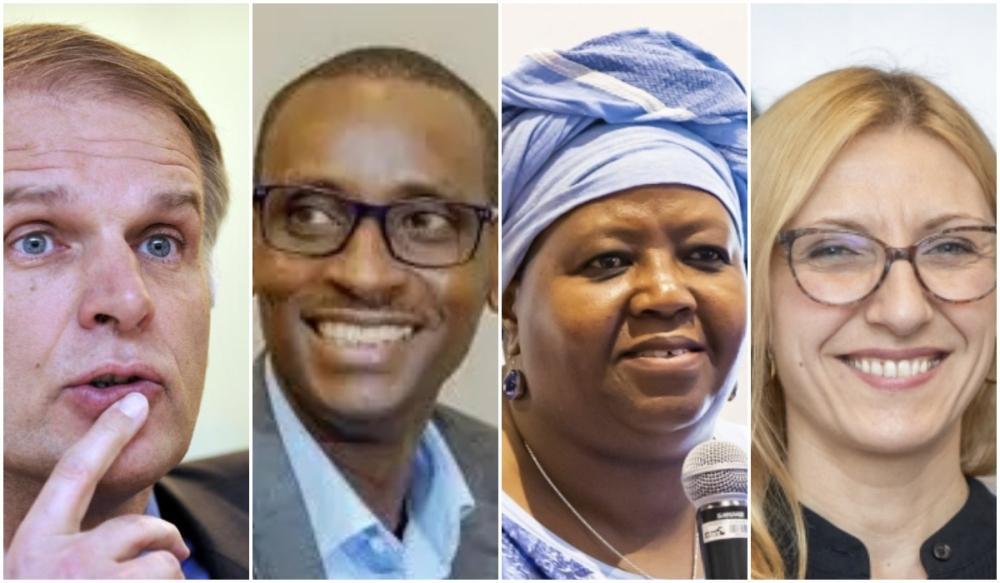
Alain Destexhe, a former Belgian Senator and a long-time observer of the Great Lakes region, insists that “the key point is the disarmament of the FDLR, and this has not taken place since the pre-agreement signed in July.” He argues that however attractive the economic package appears, no long-term settlement is possible unless Kinshasa decisively tackles the militia at the heart of three decades of instability.
“As long as the FDLR is not disarmed, it is very difficult to move forward,” he said. “President Trump should be commended for bringing the parties together, but the consolidation of the agreement depends entirely on action, something we have hardly seen.”
His caution is reinforced by developments on the ground. Destexhe notes that despite the diplomatic engagements, Kinshasa has continued military operations against AFC/M23 positions, supported at times by foreign armed groups, undermining the credibility of its commitments.
He argues that President Tshisekedi’s strategy has repeatedly been shaped by political manoeuvring rather than genuine pursuit of peace.
“Initially, he believed that an alliance with Washington would isolate Rwanda,” Destexhe said. “But that plan failed. Rwanda is a full partner to the agreement, and Kinshasa was eventually compelled to negotiate and sign, something it never intended at the beginning.”
Legal scholar and political analyst Alphonse Muleefu places the Washington accord within a broader theoretical framework of how conflicts end. “There are three ways,” he explains. “A war ends when one side wins; through a negotiated peace agreement where each side makes concessions, or through a frozen conflict, where fighting stops but the divisions remain.” The DR Congo conflict, he says, is clearly at the crossroads of these options.
For Muleefu, the most innovative element in the new agreement is the economic incentive built into REIF. “Trump is bringing his business instinct,” he said.
“If both sides benefit economically, the logic of belligerence becomes less useful. Shared interests can change behaviour.”
But he cautions that peace agreements are only as meaningful as their implementation, and implementation depends overwhelmingly on political will.
Tshisekedi’s presence in Washington, he argues, does not automatically translate into renewed sincerity.
“For him to respect what he committed to, the cost of not respecting it must increase,” Muleefu said. “And that depends entirely on the mediator’s willingness to impose pressure.”
Muleefu sees two principal obstacles: the deep integration of FDLR fighters within the Congolese army (FARDC) and the anti-Rwanda political narrative Tshisekedi has used for domestic legitimacy.
“He has created political capital over lies,” Muleefu said. “Walking that back will be extremely difficult.”
‘Region remains hostage to a militia that has survived through political convenience’
Coulibaly Bojana, a Great Lakes conflict researcher and analyst, sees the Washington moment as symbolically powerful but structurally fragile.
She argues that economic cooperation without security guarantees is unlikely to materialise.
“No investor, local or foreign, will exploit the potential of REIF if the conflict ecosystem remains intact. Economic deals thrive on predictability, and eastern DR Congo has had none for decades.”
Bojana, however, stresses the catalytic role Washington can play.
“What distinguishes this agreement from earlier ones is the weight of American oversight. If the US treats compliance as a strategic imperative, Kinshasa will have far less room for duplicity.”
For MP Fatuma Ndangiza, a member of the East African Legislative Assembly (EALA), the accord’s success will be measured not in conference halls but in communities long trapped between armed groups.
She said: “Eastern Congolese civilians want one thing, above all: protection. FDLR has been the core engine of fear for too long. Unless this is resolved, the region remains hostage to a militia that has survived through political convenience.”
Ndangiza argues that the humanitarian dimension has been insufficiently centred in diplomatic conversations.
“People speak of geopolitics, minerals, regional alliances, but ordinary Congolese families want basic security and functioning institutions. Any agreement inattentive to governance deficits will face the same fate as its predecessors.”
Peace and development researcher and conflict analyst Alice Karekezi underscores the interplay between the Doha process, where AFC/M23 and Kinshasa have been negotiating and the new Washington agreement. These two tracks are mutually reinforcing, she said.
“Doha deals with internal armed groups, Washington addresses interstate tensions. A breakthrough in one creates incentives in the other,” Karekezi added.
Still, she warns that Doha remains painfully slow.
“Progress is incremental, sometimes frustratingly so. But the fact that Kinshasa is even talking to M23, something unthinkable a year ago, is itself significant.”
Destexhe concurs that the Doha process will shape the future more decisively than Washington.
“Peace in eastern DR Congo depends more on Doha than on the bilateral negotiation,” he said.
Source: The New Times
For More News And Analysis About Rwanda Follow Africa-Press