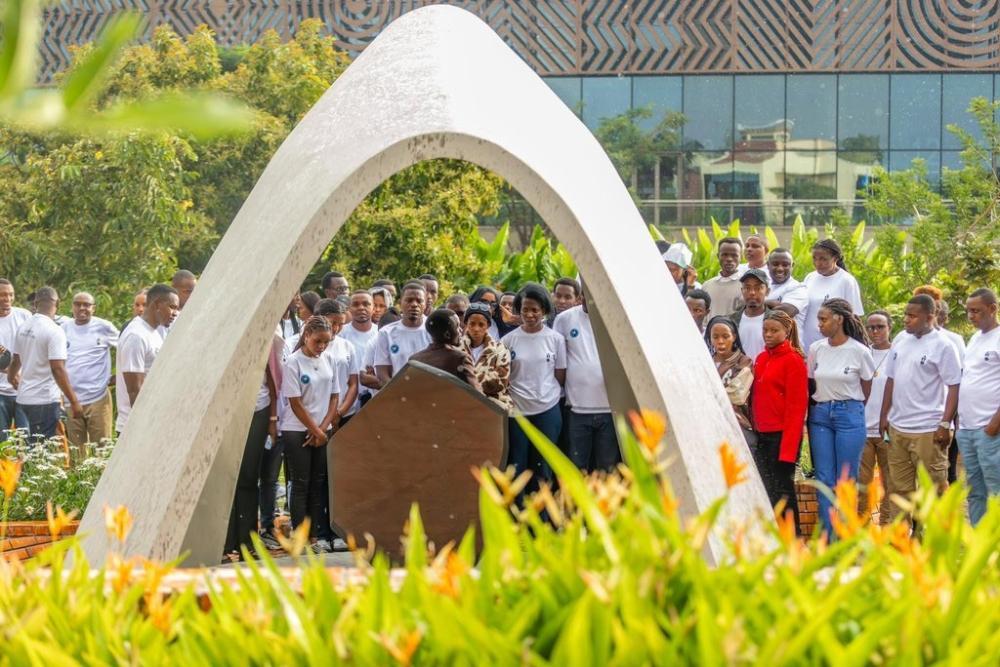
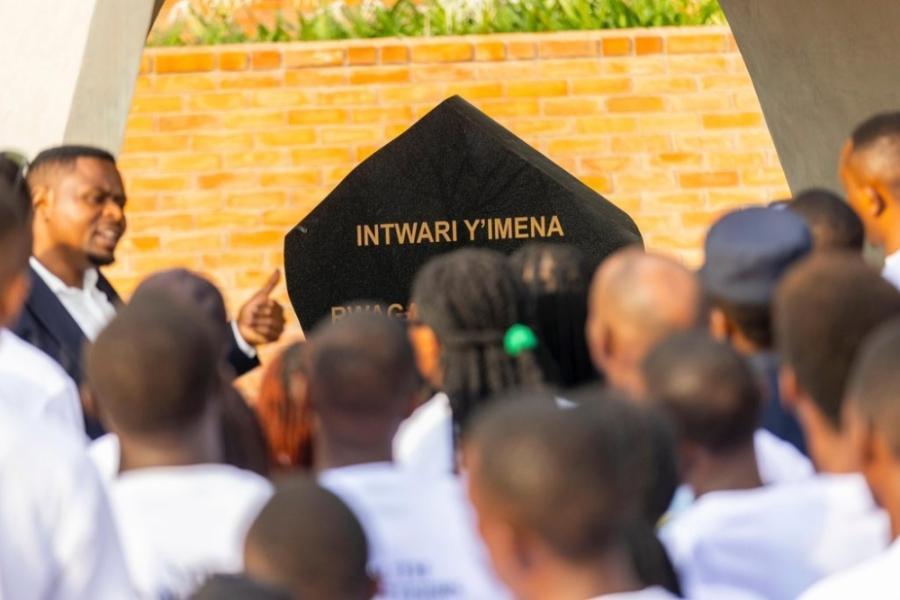
Africa-Press – Rwanda. Representatives of youth volunteers from the City of Kigali on February 2 visited the National Heroes Mausoleum in Remera to honour Rwanda’s national heroes, before taking part in learning sessions aimed at deepening their understanding of the country’s history, values and their civic responsibility.
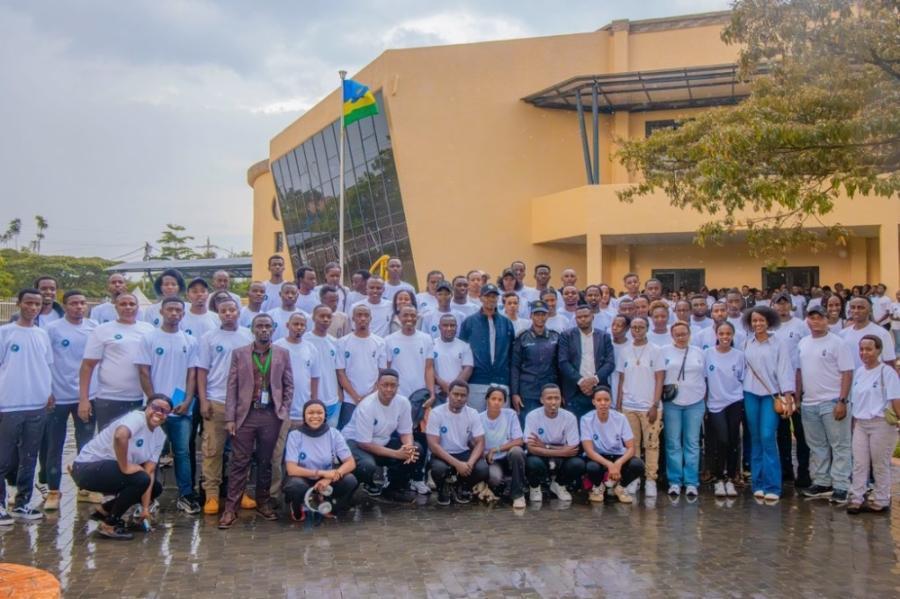
The 200 participants, representing fellow youth volunteers at sector and district levels in Gasabo, Kicukiro and Nyarugenge, used the visit to reflect on the sacrifices that shaped modern Rwanda and to draw inspiration from the legacy of those who placed national interest above personal gain.
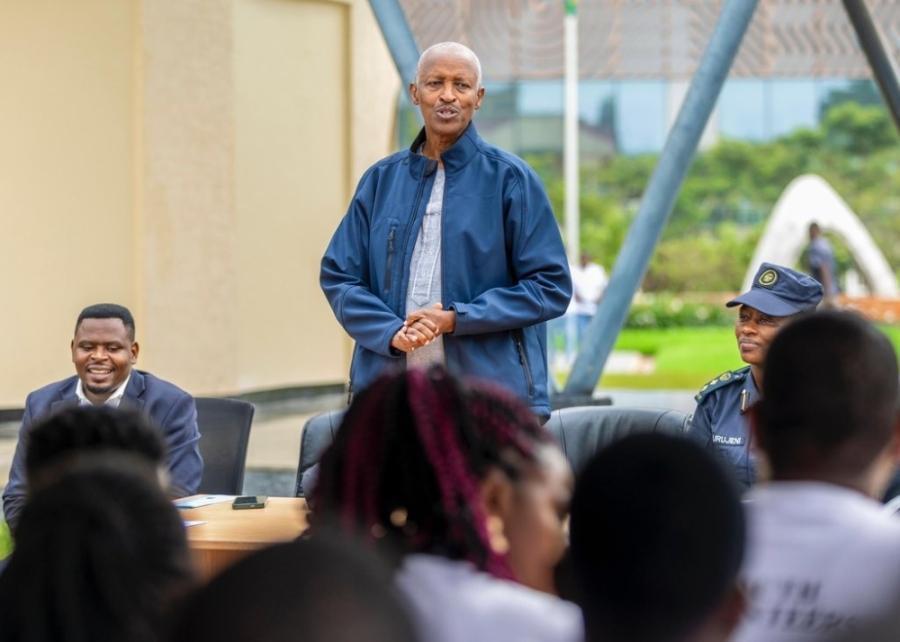
Deo Nkusi, the executive secretary of the Chancellery for Heroes, National Orders and Decorations of Honour (CHENO) speaks to the visitors.
Following the commemoration, the representatives were guided through sessions that traced Rwanda’s history and highlighted how heroes emerged from ordinary citizens who chose courage and selflessness during periods of national threat. The discussions further emphasised the importance of upholding Rwandan values, including unity, patriotism and the preservation of cultural identity, notably the protection of Kinyarwanda.
Alexia Uwitonze, the youth volunteer coordinator in Kigali, said the visit was intended to connect commemoration with practical lessons for daily life.
The visitors used the visit to reflect on the sacrifices that shaped modern Rwanda and to draw inspiration from the legacy of those who placed national interest above personal gain.
“Visiting the Heroes Mausoleum is about learning history and drawing lessons that help us today and in the future,” Uwitonze said. “It strengthens our love for the country and helps us understand the history that guides our daily lives.”
Uwitonze added that the symbolism encountered during the visit offered powerful insights for young people.
“Knowing where our country comes from is crucial for the youth, because without that knowledge, it becomes difficult to innovate or create new things to develop our nation,” she said.
Christian Ndizeye said the visit was an opportunity to reflect on their role as young people in the nation-building. “Such sessions are exceptional because they help us think about what we will leave behind in this world,” he said.
“They remind me of what I need to do as a young person to contribute to my country’s development and to be disciplined and self-reliant, so that whenever my country needs me, I am ready.”
He also urged fellow youth to emulate the leadership demonstrated by national heroes. “We should celebrate our heroes by stepping into the exemplary leadership and deeds they left behind,” he said, cautioning that some young people have taken unproductive directions that must be corrected before it is too late.
Patrick Niyonkuru said the visit also served as a reminder of the discipline required to serve the nation responsibly.
“Youth should be encouraged to serve the country and avoid harmful behaviour, such as abuse of drugs and excessive alcohol,” he said. “Once you destroy your health, your body can no longer do anything useful. To carry out meaningful activities that may even become heroic deeds, we must avoid such dangers.”
Fridaus Akumuntu said: “When we learn what our heroes did for Rwanda to reach where it is today, we realise that we too must follow in their footsteps and strive to become the heroes of tomorrow, starting today.”
Akumuntu noted that understanding history is a prerequisite for meaningful participation in national development. “We are the strength of the nation’s future,” she said. “If we do not understand the history first, where do we expect to go? It is up to us to carry Rwanda forward, including by using our social media wisely to explain where our country stands in different aspects.”
The representatives also linked heroism to everyday volunteering work carried out within communities, such as mobilising citizens to enroll in health insurance schemes and supporting vulnerable groups.
Addressing the youth, Deo Nkusi, the executive secretary of the Chancellery for Heroes, National Orders and Decorations of Honour (CHENO), placed Rwanda’s heroism within a long historical continuum.
“Rwanda’s heroes are part of a long history since the nation’s existence,” he said. “Often, there were young people who sacrificed themselves to save the nation, and today it is essential that the youth know the history of their ancestors and understand the responsibilities they carry today.”
Nkusi commended the youth volunteers for demonstrating commitment to national service. “Their actions already show heroism through serving the country, the city and the community,” he said.
He urged them to uphold cultural values as a safeguard for Rwanda’s future. “Laziness, violence, drug abuse and neglecting work must be avoided. Distractions and harmful behaviours that lead people into useless activities are not good for the family or the nation,” he said.
“It is important for the youth to know what is beneficial and what is not, because these values are what protect and advance our country.”
For More News And Analysis About Rwanda Follow Africa-Press