Africa-Press – Rwanda. Students who once dropped out of school say it wasn’t lack of essentials alone that pushed them away from classrooms but also the mindset at home.
The 2022/23 Education Statistical Yearbook showed a reduction in the dropout rate for both primary and secondary education. In primary schools, the dropout rate dropped from 7.1 per cent in 2020/21 to 5.5 per cent in 2021/22, while in secondary schools, it decreased from 9.2 per cent to 7.5 per cent during the same period.
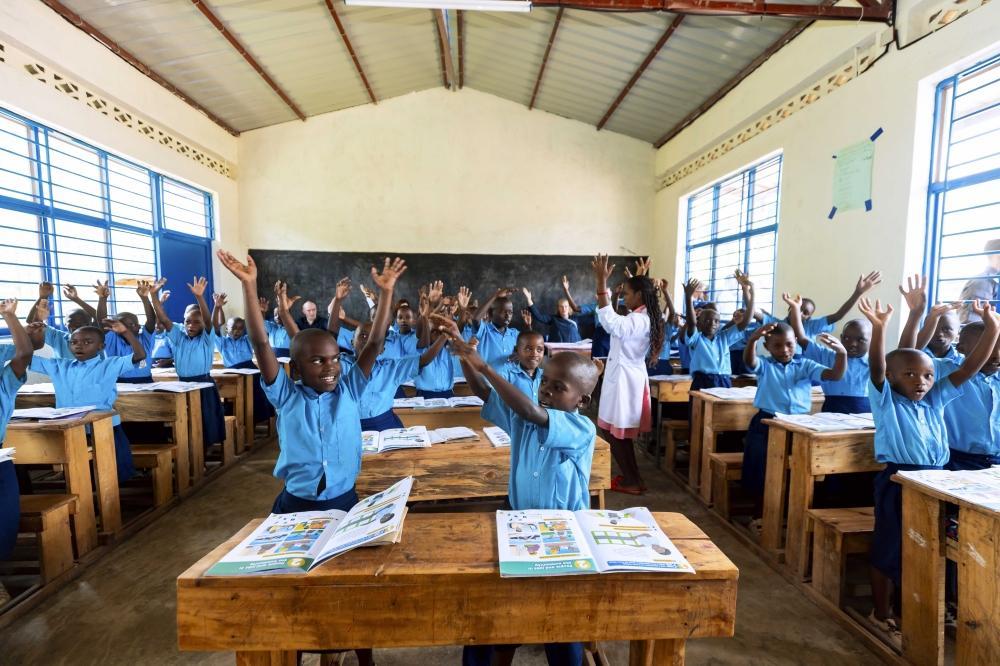
Florence Twizerimana, a 15-year-old Primary Four pupil whose dream is to become a teacher and who loves mathematics, dropped out of school for two years due to a lack of basic necessities. During that time, she was often given heavy household tasks. Although she sometimes thought about returning to school, she couldn’t until she received support from the LIFT programme through the proper channels.
“Later, I realised that I was missing out on a lot, and I was lucky that my parents understood why I needed to go back to school. I now have support, and my studies are much better than before,” she said.
Twizerimana admits that the long distance to school and lack of essential materials are common reasons why many students drop out.
The ongoing efforts by the Ministry of Education and its partners, including the Learning and Inclusion for Transformation (LIFT) programme, which the latter aims to bring more than 10,000 students back to school across the country. Over 5,000 learners have already resumed their studies, among them Nsengiyumva and several others with similar stories at G.S. Kirebe.
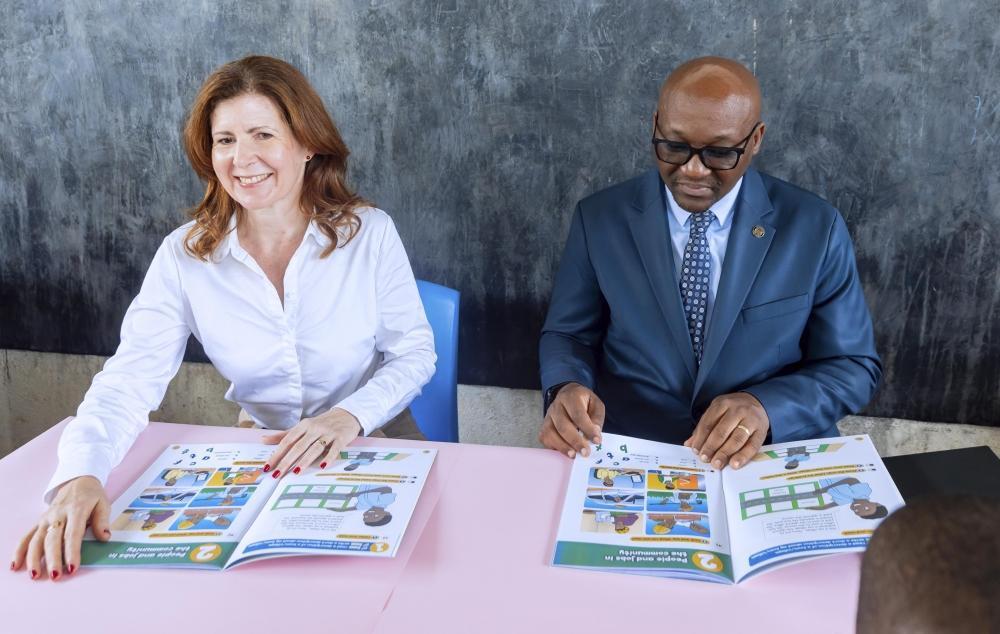
UK Minister of State for International Development and Africa, Baroness Chapman of Darlington and Nelson Mbarushimana, Rwanda Education Board Director General at G.S. Kirebe in Gakenke District. Courtesy
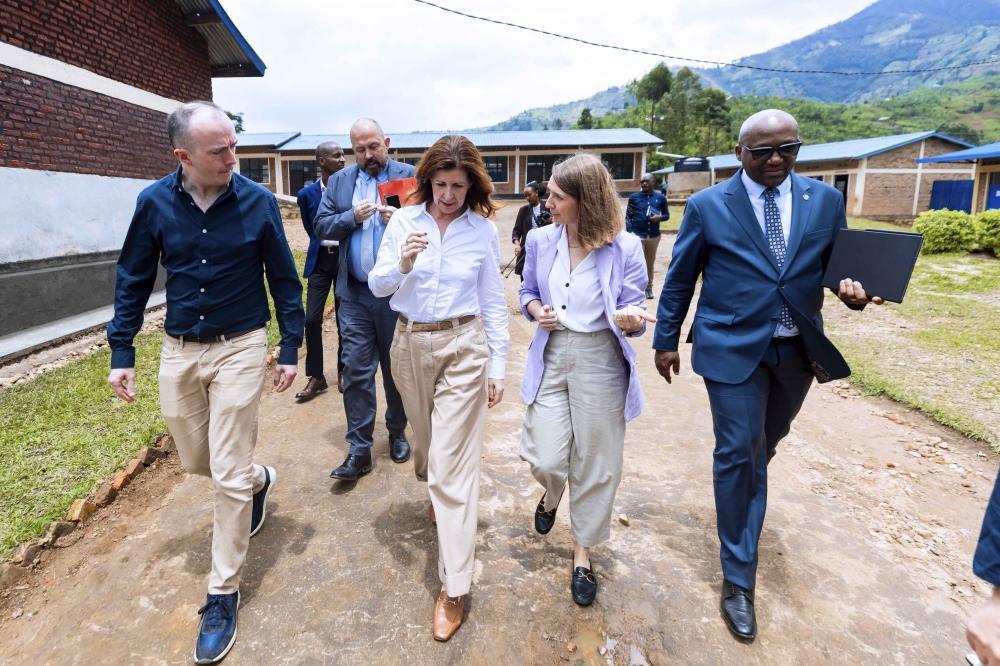
G.S. Kirebe is part of over 800 schools in seven districts supported by LIFT, a UK-funded programme. On October 9, Minister of State for International Development and Africa, Baroness Chapman of Darlington, visited the school alongside a MINEDUC delegation.
The visit aimed to meet grantees implementing the Out-of-School Children and Youth (OOSCY) component. It highlighted Rwanda’s continued collaboration with development partners to expand learning opportunities for all. It also showcased the progress and collective impact of partnerships transforming education outcomes across Rwanda.
Jean-Baptiste Nsengiyumva, a Senior Four student studying Languages at G.S. Kirebe in Gakenke District, returned to school after eight years away. He had dropped out in 2012 when he was in Senior One.
Until his dropping out, he had been performing well academically, but his peers convinced him to quit, saying that “not every successful person is educated.” His parents took no action to encourage him to return to school.
“My friends convinced me to stop going to school so that we could earn money through different activities. I didn’t want to quit, but I eventually did because of peer pressure,” he said.
“I didn’t gain anything from those eight years,” he noted. “If you can work all that time and still have nothing to show for it, I’d say it was time wasted, something I truly regret now.”
“I don’t think that when a child shows some weakness, the solution is to tell them to quit. That’s a poor mindset. They should be encouraged to keep going and eventually succeed,” he said.
“I’m now doing well in my studies. I’ve realised how much I lost. To others, I would say, no matter the negative influence, stay focused on pursuing what can bring real change, not just short-term activities that lead nowhere,” he added.
Silas Bahigansenga, the Country Director for LIFT, said that through the partnership with MINEDUC, the focus is on lower primary schools and supporting students who dropped out to return to school.
Silas Bahigansenga, the Country Director for LIFT, said that through the partnership with MINEDUC, the focus is on lower primary schools and supporting students who dropped out to return to school. The programme provides comprehensive support to all learners, and for those unable to return, it provides alternative learning pathways to help them live productive lives through other activities not necessarily tied to formal schooling.
“It’s just a year since we started, and the programme runs for five years. It has already shown good results, as many students have been brought back to school, and we are maintaining the momentum,” he said.
Bahigansenga noted that LIFT focuses not only on students but also on teachers, aligning its work with Rwanda Education Board’s Continuous Professional Development (CPD) framework and implementation guidelines for education stakeholders, including district education teams.
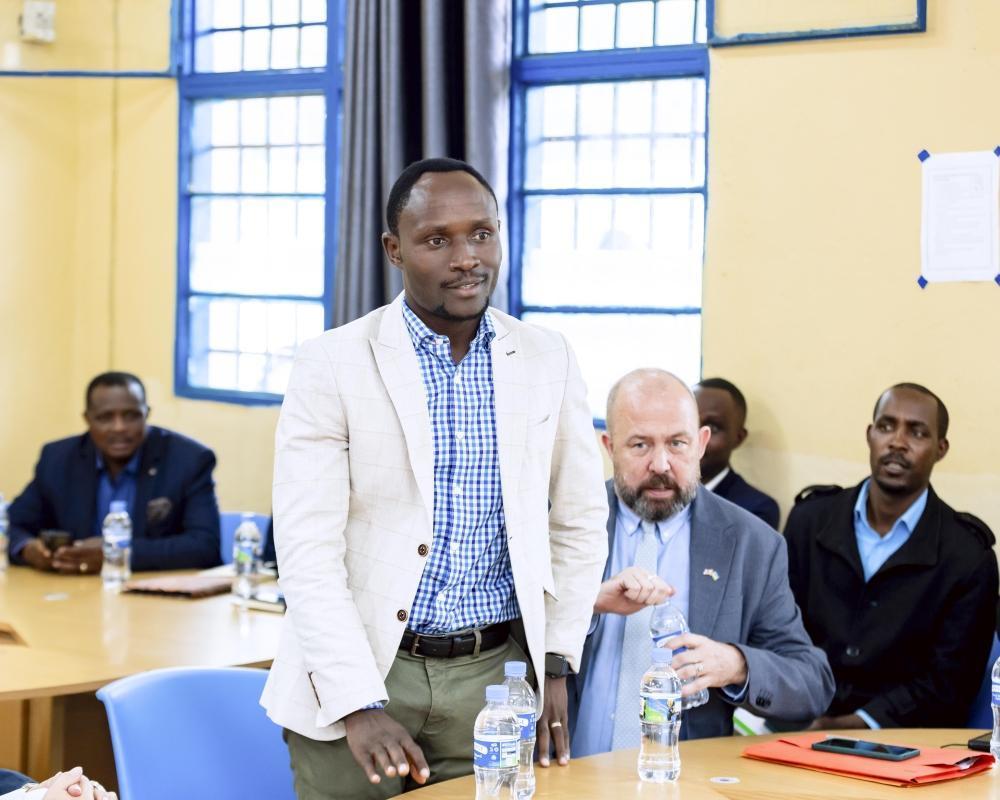
“We started in seven districts; Gakenke, Gasabo, Kirehe, Gisagara, Rusizi, Karongi, and Ngororero and we are considering expanding to more. The minister’s visit aimed to evaluate the programme’s implementation and discuss the way forward to strengthen collaboration and achieve even greater results,” he said.
UK Minister of State for International Development and Africa, Baroness Chapman of Darlington and Nelson Mbarushimana, Rwanda Education Board Director General during a tour at G.S. Kirebe in Gakenke
Nelson Mbarushimana, the Director General of REB, said that MINEDUC’s goal is to ensure that every child who completes Primary Three can read, write, and count. He added that partnerships are also providing textbooks and training aimed at strengthening inclusive education.
“We’re working closely with LIFT. School dropouts are caused by several factors, including family-related issues. LIFT has been instrumental in addressing these negative attitudes by raising awareness among parents.” he said.
For More News And Analysis About Rwanda Follow Africa-Press