Africa-Press – Rwanda. The Monetary Policy Committee (MPC) of the National Bank of Rwanda (BNR) increased the central bank policy rate by 50 basis points to 7.25 per cent in a fight to bring inflation under control.
The decision, announced last week on February 19, followed the committee deliberations, which observed that inflationary pressures have been persistent and could remain elevated for the most part of this year.
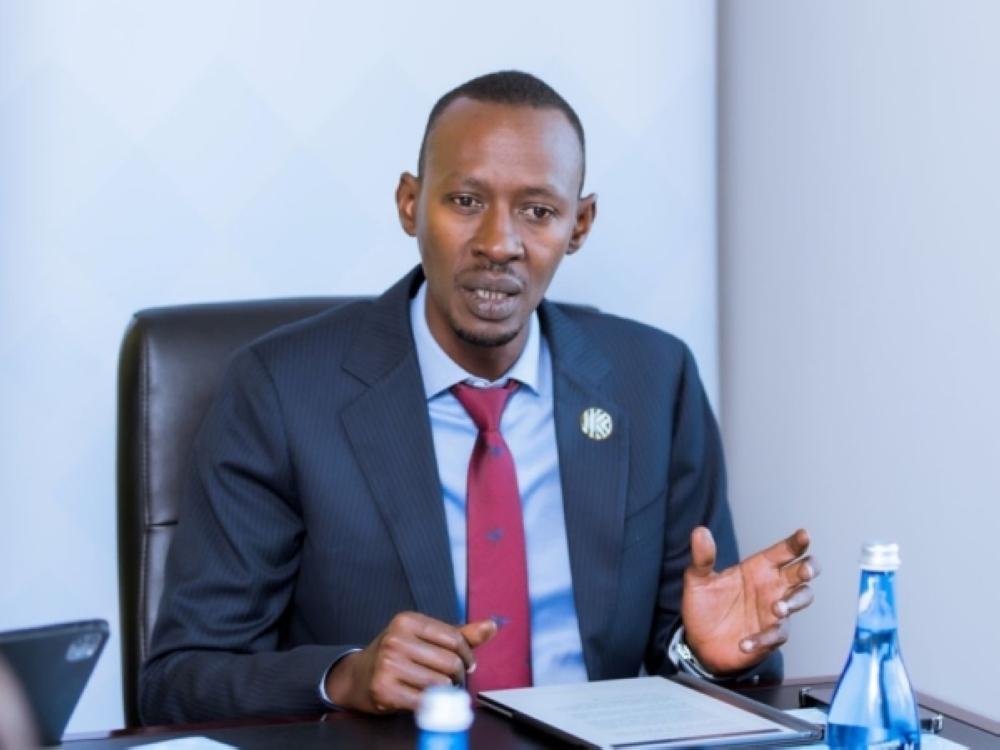
Following the decision, BNR Deputy Governor Nick Barigye sat down exclusively with The New Times Business Editor Julius Bizimungu to outline how the move is designed to rein in inflation and stabilize price pressures.
The interview has been edited for clarity and brevity. Below are excerpts;
Can you explain the thinking behind the decision the MPC has announced, and how is it expected to bring inflation under control?
Our decisions are data-driven. When we examined the inflation path, it had been increasing quarter after quarter. It was at 7.4 per cent in the fourth quarter of 2025, and in January this year it rose to 8.9 per cent.
The central bank’s target band is 2-8 per cent. When inflation moves outside that range, it becomes a serious concern for the Monetary Policy Committee. We then discuss what action is needed to ensure elevated inflation does not become entrenched or spiral out of control.
That is what led to the decision to raise the policy rate as a preemptive measure to bring inflation back within the 2–8 per cent target band. The MPC remains committed to price stability, and we will continue monitoring inflation and economic developments closely, taking further action if necessary.
At the last MPC meeting you maintained the policy rate at 6.75 per cent. Did you not anticipate inflation rising to these levels? Were you being cautious, waiting to see what would happen?
We take forward-looking decisions, based on what the data tells us at the time. We monitor developments continuously, daily and monthly, while the MPC meets quarterly. That informs the decision at that point, and we also provide an outlook.
At the last MPC meeting, we identified key risks, especially how weather patterns could affect agricultural output, and whether administered prices could drive inflation higher. Those risks have since materialized. That is what informs today’s decision.
We cannot predict what the next quarter’s decision will be, but we will continue monitoring and remain focused on bringing inflation back into the target band.
It’s also important to note that monetary policy is not the only lever. Other government institutions are implementing measures, particularly in agriculture, such as irrigation, improved seed quality, and fertilizer quality to reduce weather dependence and improve sustainability.
There are also decisions in manufacturing, given that some inflation pressures relate to imports. Combined with our measures, these efforts give us optimism.
Our expectation is that inflation will begin to ease in the second half of 2026.
How exactly will this decision rein in inflation especially when inflation pressures are expected to remain elevated in the first half of this year?
The central bank rate has a direct relationship with money markets. We monitor the interbank rate, and what we see is that it usually moves at the same pace with the policy rate.
We therefore expect today’s decision to translate relatively quickly into the interbank lending rate, and over time to influence lending and deposit rates. That is the transmission mechanism through which the policy rate supports our goal of returning inflation to the 2–8% band.
Some may ask whether this means higher interest rates that could hurt economic growth or borrowers. Our view is that this will be moderated. Interest rates do not immediately follow the policy rate, especially in the short term. And we have also seen borrowing rates come down in response to prior policy decisions.
There are global and regional geopolitical risks to the 2026 economic outlook. How do these risks affect your decision-making, especially given instability in the region, including the DRC where we have an important export market?
We assess both global and regional outlooks. Globally, we are seeing slight easing of inflation, and regionally as well. However, geopolitical tensions affect us because we both export and import.
We are seeing expectations of declining global commodity prices. That affects the prices of what we export. At the same time, as an importing economy, these developments affect our balance of payments. Similar impacts occur through our trading partners.
Regionally, we take note of ongoing diplomatic efforts. Doha talks, Angola resolutions, and the Washington Accord. While we do not control these outcomes, our expectation is that these discussions will support stability in the region.
We also note that global trade tensions have moderated compared to earlier peaks, which is contributing to the easing we are seeing.
On the foreign exchange market: to what extent did exchange rate developments factor into your decision to tighten?
These factors are interrelated. We ended 2025 with Rwanda franc depreciation of 4.4 per cent, down from higher levels in previous years. That reflects multiple contributors beyond the policy rate: export performance in both volume and prices, global dollar depreciation, increased receipts from tourism and remittances, and foreign exchange reforms implemented by the National Bank of Rwanda.
So it’s not only the policy rate, it’s the broader domestic reforms and global conditions working together.
In the financial sector, what stood out from your assessment?
Several developments stand out. First, the financial sector continues to grow. Growth means greater capacity to lend. Total outstanding loans have increased to RWF6.4 trillion, which is positive. Key sectors,construction, trade, manufacturing, and agriculture, are benefiting.
Second, the sector is performing well in profitability and liquidity. Third, we are seeing diversification in financial services. New types of financial institutions are now contributing to the sector, products that were not present a few years ago.
Overall, the financial sector is resilient. It has adequate capital buffers, it is profitable, and it has the appetite to support key sectors of the economy.
What do you see as the biggest risks confronting the banking sector this year?
One is the rapid digitization of products and services, which brings cybersecurity and fraud risks. However, strong risk-management protocols are in place at the institutional level, central bank level, and national level through capacity building, awareness, and mitigation.
A second risk relates to the insurance sector. We are concerned about rising receivables, and we are monitoring this closely.
Third is concentration risk. Out of the Rwf6.4 trillion in outstanding loans, a large share is concentrated in a few sectors – construction, trade, and manufacturing. We want to see more diversification, and we continue engaging both the sector and other government institutions to support that.
How are you addressing that concentration risk?
It starts with engagement especially with institutions like the Ministry of Agriculture to understand why lending to some sectors remains limited. If opportunities are well-structured, financing will flow, but banks have legitimate concerns.
In agriculture, for example, weather dependence has been a major concern which is why irrigation is important. If agricultural projects can demonstrate resilience through irrigation and insurance coverage, they become more bankable.
Government initiatives through institutions like the Development Bank of Rwanda can also provide incentives and support mechanisms to increase lending to underserved sectors.
For More News And Analysis About Rwanda Follow Africa-Press