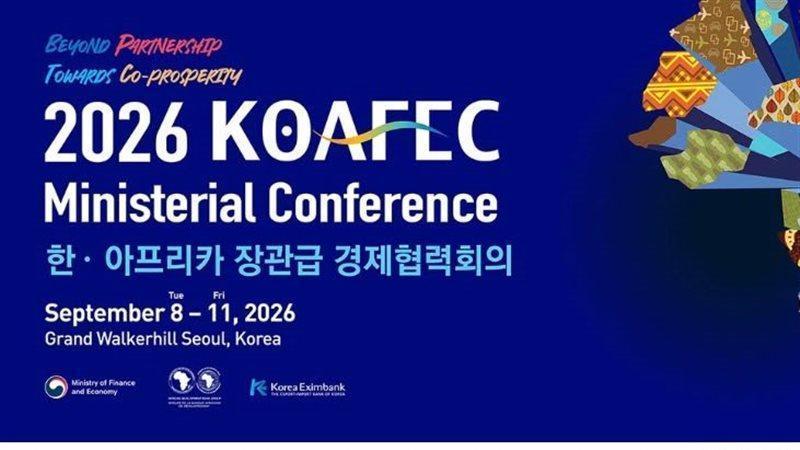
Africa-Press – Rwanda. Delegations from 54 African countries gathered in the South Korean capital, Seoul, to participate in the Korea-Africa Economic Cooperation Summit (KOAFEC), which this year intensively focuses on developing cooperation in advanced technology, artificial intelligence, and digital transformation.
The summit is being held from September 8 to 11, with representatives from South Korea and African nations discussing a range of joint development projects and programs, particularly emphasizing the use of modern technologies to support economic growth and development in the African continent. The summit commenced on Wednesday in Seoul, with the development of African economies in the era of artificial intelligence at the top of the agenda, as South Korea seeks to share part of its extensive experience in advanced technology and digital transformation with African countries.
During the opening ceremony, the South Korean Prime Minister emphasized the importance of combining Korean expertise and technology with the economic and human potential of the African continent.
He stated that South Korea’s sharing of its experience with African countries, alongside the integration of artificial intelligence technology and Korean digital capabilities with Africa’s significant growth potential, could serve as a driving force to accelerate digital transformation on the continent and achieve tangible progress in its economies.
Sidi Wold Tah, President of the African Development Bank, highlighted the significant economic potential that artificial intelligence can provide for African economies, noting the possibility of substantial gains if the necessary investments are made to develop infrastructure and digital capabilities.
He explained that analyses from the African Development Bank indicate that artificial intelligence could contribute approximately one trillion US dollars to Africa’s gross domestic product by 2035, equivalent to about 4% of the continent’s economies over the next decade, provided that the necessary investments are made to develop and expand the use of these technologies.
Participants are expected to discuss ways to integrate artificial intelligence into several vital sectors within African countries, including health, education, and agriculture, as well as developing digital infrastructure and enhancing the human capacities needed to leverage new technologies.
The summit also includes a series of ministerial meetings aimed at devising long-term strategies that enable African countries to participate in the rapidly accelerating global transformation in artificial intelligence, rather than merely relying on imported technologies without building local capacities.
Some African nations arrived in Seoul with clear plans to leverage cooperation with South Korea to develop their digital economies, including Gabon.
Mark Abigi, the Minister Delegate to the Minister of Economy in Gabon, stated that his country is working towards achieving digital sovereignty by developing data centers and the necessary infrastructure to host digital data domestically.
He added that Gabon also aims to utilize artificial intelligence to enhance productivity and digitize and modernize the agriculture and healthcare sectors, allowing for the use of modern technology to address various economic and service challenges facing the country.
In this context, Ousmane Fall, Acting Director at the African Development Bank, affirmed that South Korea represents an important model from which African countries can benefit in the field of digital transformation.
He noted that South Korea is one of the leading countries globally in artificial intelligence and has extensive experience in implementing large-scale digital transformation processes, which African countries need to build their own capabilities in artificial intelligence and develop their digital systems.
The African countries participating in the summit seek to benefit from Korean expertise not only in acquiring modern technologies but also in developing digital infrastructure, training human resources, establishing data centers, and developing innovation and research and development systems related to artificial intelligence.
As part of these efforts, it is expected that the participating African countries and South Korea will sign a series of partnerships and agreements aimed at increasing investments in the development of artificial intelligence technologies and enhancing their use across the continent, thereby supporting digital transformation and opening up new opportunities for economic growth and development.