Africa-Press – Rwanda. The government is exploring a mix of public, private and market-based financing models to implement its $12 billion climate action plan through 2035, as it seeks to close a wide funding gap and scale up action across key sectors.
In December 2025, the country published its updated Climate Action Plan, the third Nationally Determined Contribution (NDC 3.0) under the Paris Agreement.
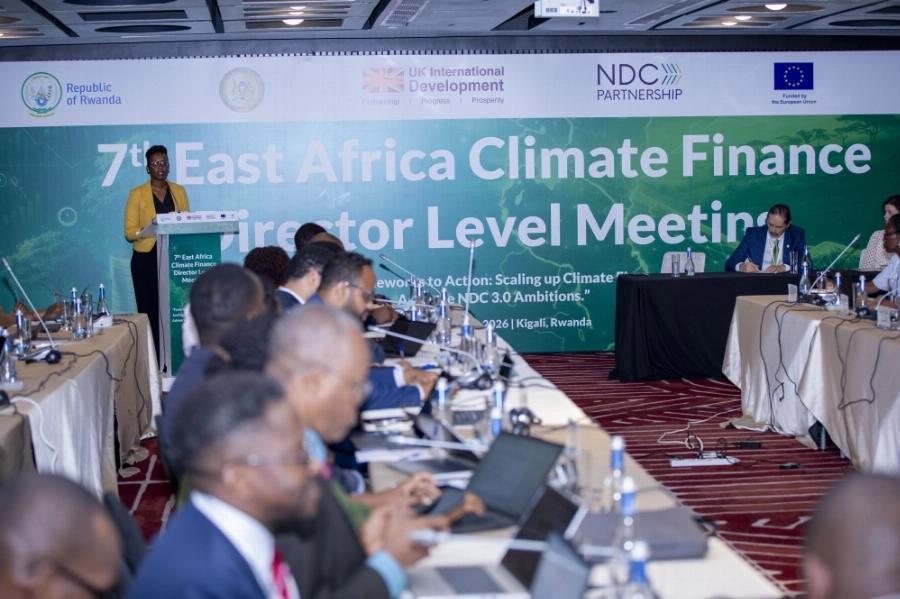
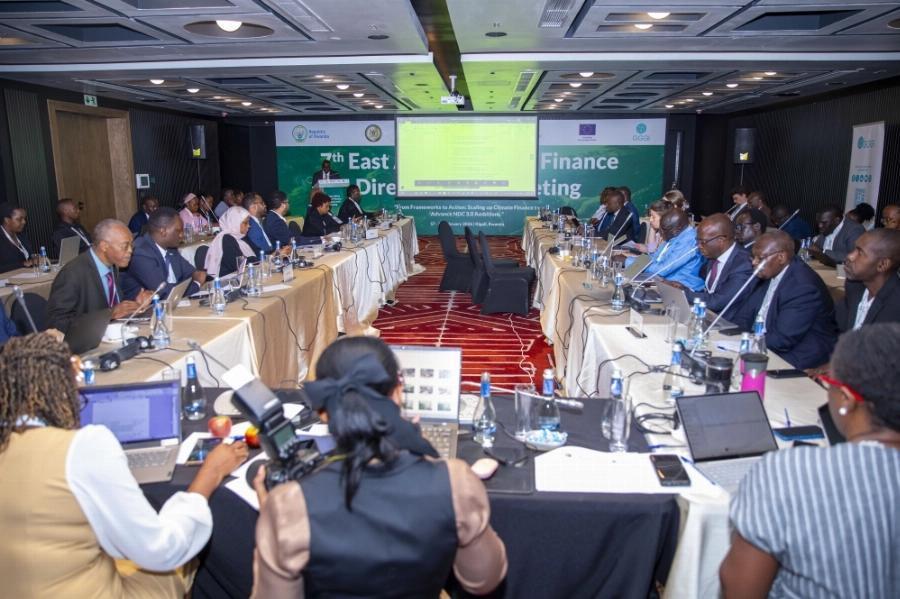
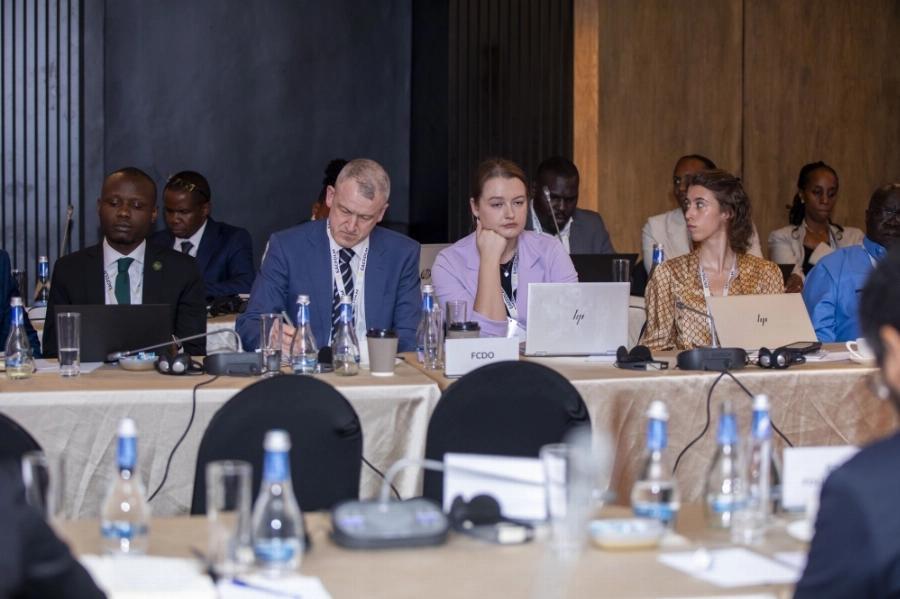
Delegates at the 7th East Africa Climate Finance Directors’ Level Meeting (EACFDLM) held on February 18 in Kigali
Under the new plan, Rwanda commits to reducing its net greenhouse gas emissions by up to 53% compared to a business-as-usual (BAU) scenario by 2035, equivalent to a reduction of 14.86 million tonnes of carbon emissions. This includes a 7% unconditional reduction, financed domestically, and a 46% conditional reduction, dependent on international support and financing.
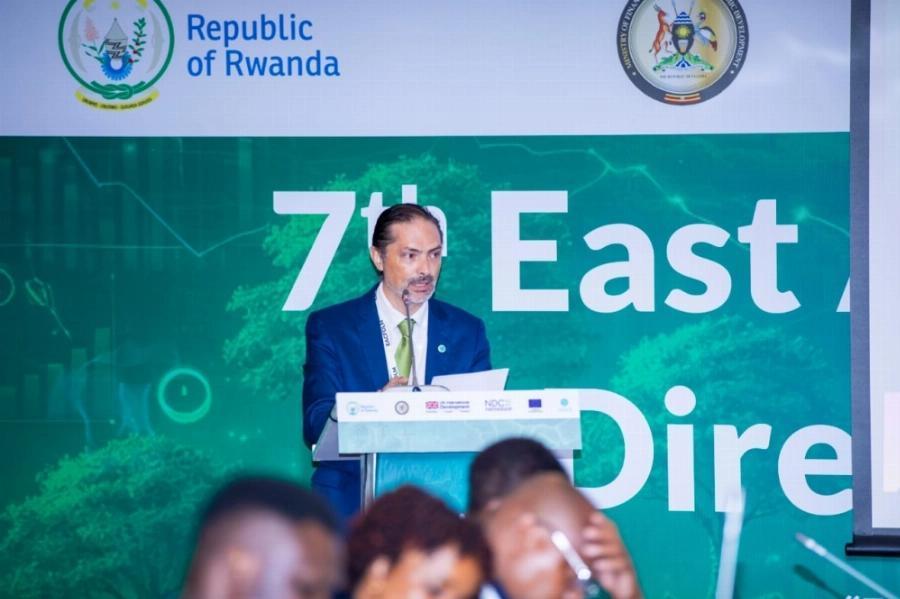
Pablo Martinez, country representative of the Global Green Growth Institute (GGGI), addresses delegates at the event.
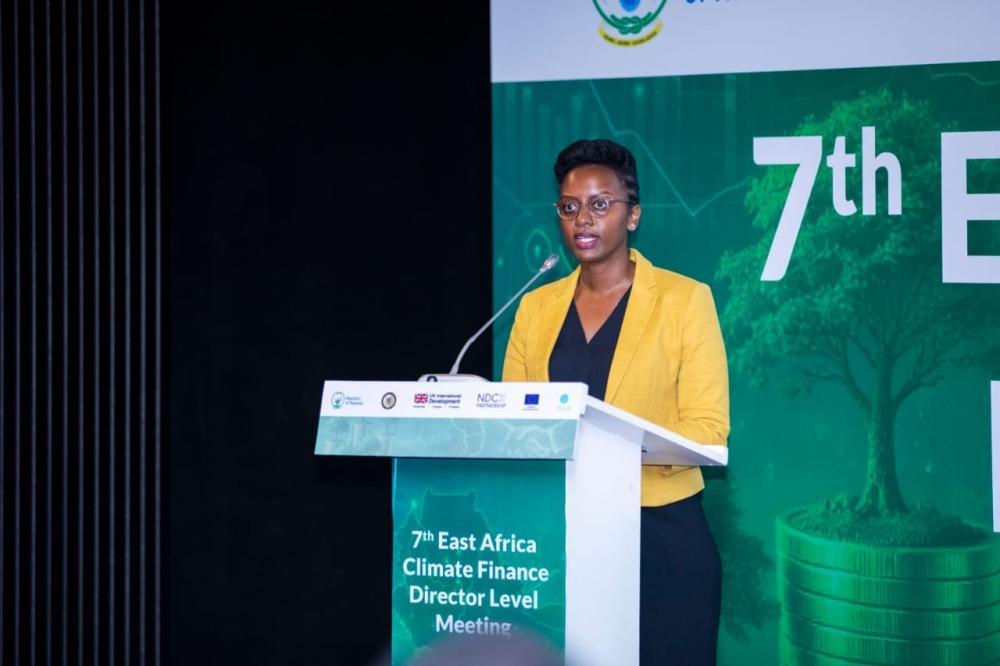
Speaking at the 7th East Africa Climate Finance Directors’ Level Meeting (EACFDLM) held on February 18 in Kigali, Elie Sebagabo, a climate finance specialist at the Ministry of Finance and Economic Planning (MINECOFIN), outlined financing models under consideration to support the plan’s implementation.
Held under the theme “From Frameworks to Action: Scaling up climate finance to advance NDC 3.0 ambitions,” the meeting brought together regional policymakers and development partners.
The conference was held under the theme “From Frameworks to Action Scaling up climate finance to advance NDC 3.0 ambitions.
“We are essentially trying to work with the private sector; that is the main focus,” Sebagabo said. “At the national level, there are limits to what we can achieve on our own. But when we crowd in the private sector, there is substantial financing potential.”
Financing models under review
Sebagabo said Rwanda is building on tools already in use, including carbon market financing, green bonds and sustainability-linked financing.
The meeting brought together regional policymakers and development partners.
Carbon markets raise funds through the buying and selling of carbon credits, with one credit representing one tonne of reduced or removed carbon emissions.
Projects such as renewable energy, reforestation or methane capture can generate credits, which are then sold to companies or countries seeking to meet emission-reduction targets. Proceeds are channelled back into activities that deliver verified emissions cuts.
Green bonds, meanwhile, are debt instruments whose proceeds are earmarked exclusively for environmentally beneficial projects. They help mobilise private capital while offering investors a socially responsible option.
Sustainability-linked loans tie borrowing costs such as interest rates to the borrower’s performance against agreed sustainability targets. A company that cuts its carbon footprint, for example, may benefit from lower financing costs.
Blended finance combines public or philanthropic funds with private investment to reduce risk and improve the attractiveness of climate projects.
“These are tools we continue to explore to finance commitments that companies have already made,” Sebagabo said. He added that Rwanda has also secured over $300 million through a programme with the International Monetary Fund, which is supporting climate-related policy reforms.
Priority sectors and coordination
Rwanda’s 10-year climate plan identifies energy, agriculture and forestry as offering the largest potential for emissions reductions. Of the $12 billion required by 2035, about 60 percent is allocated to adaptation—building resilience to climate impacts—while 40 percent is set aside for mitigation measures to cut emissions.
A newly established Country Platform for Climate and Development will coordinate national efforts, investment pipelines and international partnerships to mobilise finance for the plan’s rollout.
Under the Paris Agreement, countries are required to update and strengthen their NDCs every five years to reflect higher ambition on emissions reduction and climate adaptation.
Regional approach to climate finance
Mutesi Rusagara, Minister of State for Resource Mobilisation and Public Investment at MINECOFIN, said a regional climate finance initiative is currently at the concept stage.
“This is a critical shift from fragmented interventions to integrated, scalable solutions that can attract larger volumes of finance and deliver cross-border impact,” she said, stressing the role of carbon markets, blended instruments and bankable regional project pipelines.
Dr. Pablo Martines, GGGI’s Country Representative in Uganda, Angola and Zambia, said the Climate Finance Directors General Meeting provides a key platform for East African countries to share experiences on integrating climate change into national planning and mobilising resources.
GGGI, he said, supports governments with technical advice on instruments such as green bond frameworks, debt-for-climate swaps and the establishment of climate finance units within ministries of finance.
In December 2025, Rwanda set up a climate finance unit within MINECOFIN.
“The scale of finance required will not come from grants alone. It must largely come from the private sector,” Martinez said, citing public-private partnerships in areas such as transport and waste management as critical entry points.
Domestic and external sources
Maris Wanyera, Director of Debt and Cash Policy at Uganda’s Ministry of Finance, said countries can draw on domestic resources such as taxes, fees and licences, but noted that mobilising private-sector finance particularly from emissions-intensive sectors remains challenging.
External sources include bilateral and multilateral development partners, as well as capital markets through instruments like green bonds.
She said access to funds from institutions such as the Green Climate Fund and the Global Environment Facility depends on preparing bankable, well-structured projects. Regional coordination, she added, could help countries present a unified voice and scale up funding requests.
Beatrice Jerono, a senior budget officer at the East African Community Secretariat, said several regional climate policy frameworks including the EAC Climate Change Policy 2025 and the Climate Finance Access and Mobilisation Strategy are awaiting adoption.
“The overarching aim is to coordinate partner states’ efforts toward achieving their NDC commitments, both individually and collectively,” she said.
For More News And Analysis About Rwanda Follow Africa-Press