Africa-Press – Rwanda. In rural parts of Rwanda, beekeepers carefully position hives along forest edges, hillsides and farms, attentive to flowering cycles and weather patterns that determine the quality of honey produced.
The work is deliberate and patient. For many small-scale producers, honey is both a livelihood and a tradition, shaped by knowledge passed down over generations.
Yet for most producers, international markets remain distant. While global demand for premium and infused honey is growing, access to those markets often depends on consistent supply, quality standards and partnerships that can bridge producers to consumers abroad.
As interest rises in the United Kingdom for traceable, wellness-oriented honey, Rwandan beekeepers are being encouraged to consider how their product could move beyond local and regional markets into higher-value export channels.
An underplayed sector with untapped value
Rwanda’s beekeeping sector is largely dominated by small-scale producers operating in rural and forest-adjacent communities. The country’s diverse flora, relatively low industrial pollution and favourable climate provide conditions for high-quality honey.
Yet despite these advantages, Rwandan honey has historically struggled to break into high-value export markets in a meaningful way.
BEEyond Honey, officially launched in the UK in October 2025, founded by Koren-Lynch, a British entrepreneur with roots in Rwanda.
Much of what is produced is sold informally or exported with minimal processing and branding, leaving producers exposed to volatile prices and thin margins. As with many African agricultural products, the greatest share of value is often captured elsewhere — at the stages of packaging, branding and retail.
In the UK, meanwhile, honey consumption has been evolving. Consumers are increasingly attentive to provenance, health benefits and ethical sourcing. Alongside this shift has come a growing appetite for infused and functional foods — products that promise more than basic nutrition, appealing to lifestyle, wellness and cultural curiosity.
This convergence has opened a narrow but promising door for African-origin honey that can meet premium expectations.
Reimagining honey for a new market
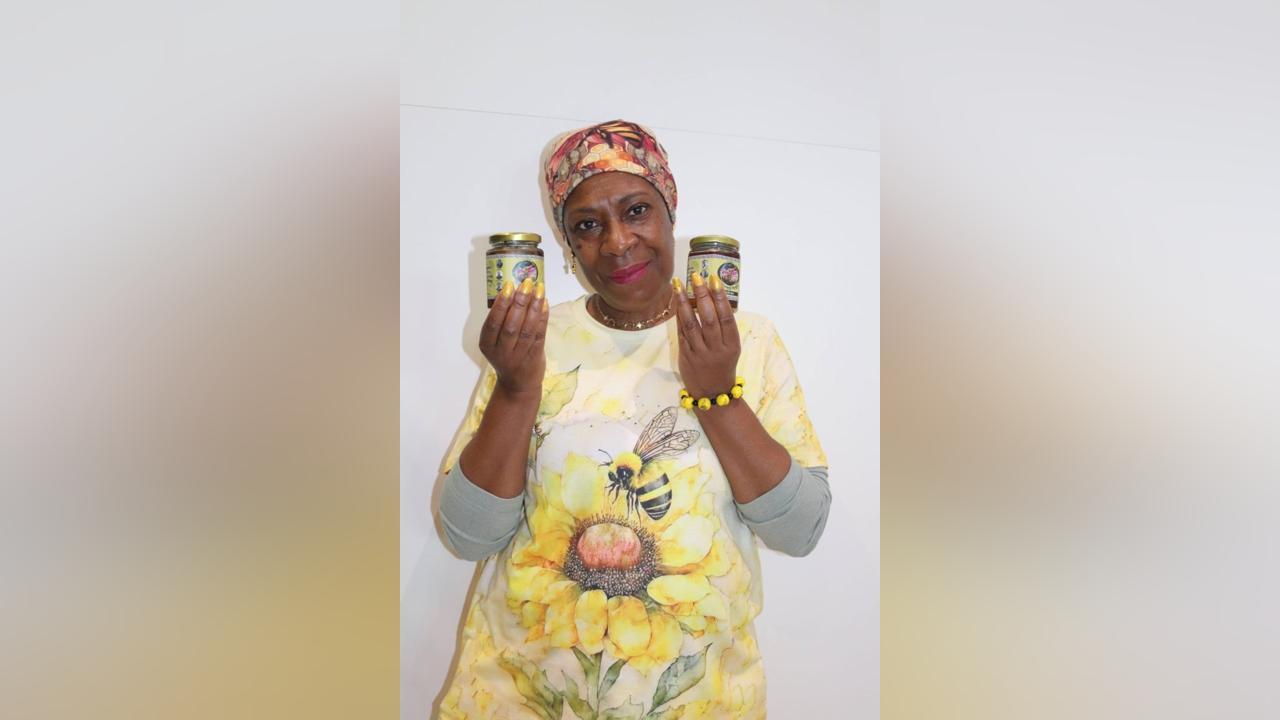
BEEyond Honey, officially launched in the UK in October 2025, sits at this intersection of origin and market demand. Founded by Adowa Koren Dejean-Lynch, who is also known as Queen Bee, the brand explores how honey can be infused, curated and positioned for premium consumers while maintaining strong cultural roots.
Founded by Koren-Lynch, a Black British entrepreneur with roots in Rwanda, the brand uses infused honey as a way of translating African and Caribbean traditions into a format legible to UK consumers.
A selection of BEEyond Honey infusions, each crafted to reflect specific wellness intentions such as calm, warmth, and balance
Rather than positioning honey as a standalone product, BEEyond Honey frames it as an experience. Dejean-Lynch says the approach is shaped by careful sourcing and intentional blending rather than volume. “The honey we use has to meet specific quality standards before any infusion takes place,” she explains.
“The process is about respect for the bees, the beekeepers and the traditions that inform how honey has been used across African and Caribbean cultures.” As its founder Adowa Dejean Koren-Lynch explains, the intention was always to go beyond selling a food item.
“BEEyond Honey is not just a honey brand,” she notes. “It is about creating culinary and wellness pairings that help people understand how to use honey with purpose, not just taste.”
Adowa Koren Dejean-Lynch presenting BEEyond Honey to customers at a UK market
Each edition released by the brand contains six infusions, designed around seasons, emotions or cultural moments. Pairing guides accompany the collections, encouraging consumers to think about how honey interacts with food, drink and daily rituals.
This approach reflects a broader shift in premium food markets, where education and storytelling are integral to perceived value. In this context, honey becomes less about sweetness and more about intention — a product to be savoured, shared and understood.
Diaspora as a value-chain bridge
The role of the African diaspora in this process is not incidental. Entrepreneurs who straddle origin countries and consumer markets often possess a dual fluency: an understanding of local production realities on one hand, and of international consumer expectations on the other.
For Rwandan honey, this mediation is critical. UK consumers may be unfamiliar with Rwanda as a honey origin, but they are increasingly receptive to narratives that connect food to heritage, sustainability and wellness. Diaspora-led brands are often best placed to make these connections credible rather than cosmetic.
In October 2025, BEEyond Honey leveraged Black History Month to introduce a special edition celebrating African and Caribbean heritage. According to Koren-Lynch, the edition was designed to honour ancestral knowledge systems that have long linked honey to healing and ceremony.
Adowa Koren with the Gravesham mayor at the Ellenor charity Christmas event
“Each infusion was carefully crafted with therapeutic intention, drawing from ingredients that carry cultural memory across African and Caribbean traditions,” she says.
The collection highlighted ingredients and infusions associated with ancestral wellness practices, positioning honey as a vessel for cultural memory as much as nutrition. Showcases took place at venues including BBC Television & Studios, alongside Rwanda-focused business events and activations across London and Birmingham.
While these appearances helped raise visibility, they also underscored a broader point: that African agricultural products can compete in premium markets when they are allowed to carry their full cultural and intellectual value.
From commodity to curated experience
What distinguishes the UK honey market today is not volume, but differentiation. Supermarket shelves are crowded with generic options, often blended from multiple origins.
Premium buyers, by contrast, are looking for specificity — single-origin stories, artisanal processes and products that align with health-conscious lifestyles.
Infused honey responds neatly to these expectations. By incorporating botanicals, spices and herbs familiar within African and Caribbean traditions, brands can introduce layers of flavour and function without departing from honey’s natural appeal.
Education plays a central role in this repositioning. Pairing guides, for example, encourage consumers to experiment — to drizzle certain infusions over roasted vegetables, stir others into teas, or use them as finishing touches in desserts.
In doing so, honey becomes part of a broader culinary and wellness practice, rather than a background sweetener.
The brand’s move into corporate gifting further reflects this logic. Koren-Lynch says the idea emerged from conversations with UK companies seeking more meaningful ways to support staff wellbeing. “Corporate gifting does not have to be transactional,” she explains.
“It can be a way for organisations to communicate care, wellness and cultural awareness at the same time.” As UK companies increasingly prioritise workplace wellness, food gifts are expected to signal care and intention. Honey positioned as restorative or celebratory fits naturally within this space, particularly when tied to ethical sourcing and cultural depth.
Recognition as validation, not destination
This emerging model has begun to attract international recognition. Koren-Lynch views such recognition as affirmation of a wider agricultural approach rather than a personal milestone.
“The award is really about what becomes possible when we treat African produce with respect for its origin, its people and its knowledge,” she says.
In 2025, BEEyond Honey received a PAWES Award for Excellence in the Agriculture Sector — an acknowledgement that, while centred on one brand, points to growing interest in how African-origin products are being repositioned globally.
Such recognition matters less for its trophy value than for what it signals: that value-added approaches to agriculture are gaining legitimacy beyond niche or novelty markets. For Rwandan honey, this kind of validation can help shift perceptions, from a marginal export to a product capable of commanding attention in competitive spaces.
Looking back to Rwanda
Perhaps the most consequential part of this story lies not in the UK, but in what may follow back home. While the UK arm of BEEyond Honey currently works with multiple honey sources to meet demand, Dejean-Lynch says her long-term vision is to source more consistently from Rwanda, provided producers can supply the required volumes and quality.
“The launch and Christmas editions used Rwandan honey,” she says. “Going forward, I want to continue working with Rwandan beekeepers who are able to supply honey that meets international standards. This is an open invitation for producers who are ready to engage.”
Koren-Lynch says the long-term vision has always included Rwanda as more than a source of raw material. “Expanding manufacturing and training in Rwanda is about building ownership along the value chain,” she says.
“When women beekeepers are supported with skills and infrastructure, the impact goes far beyond honey.” BEEyond Honey has outlined plans to establish manufacturing facilities in both Rwanda and the UK, alongside initiatives to create women-focused beekeeping hubs.
If realised, these plans could have implications beyond a single supply chain. Local processing would allow more value to be retained within Rwanda, while training hubs could help professionalise beekeeping and improve quality consistency.
For women, who already play a significant but often informal role in agricultural production, targeted support could translate into more stable incomes and skills.
The challenge, as always, will be scale and standards. Premium markets demand reliability, traceability and compliance — areas where smallholder-dominated sectors often struggle without coordinated support. Yet the potential upside is considerable: honey that carries not just Rwandan origin, but Rwandan ownership along the value chain.
Lessons for Rwanda’s agri-exports
The journey of Rwandan honey into the UK offers lessons that go beyond apiculture. Coffee and tea have long dominated exports, but products like spices, essential oils, and natural sweeteners face similar challenges and opportunities.
Competing on volume alone is unlikely to deliver inclusive growth. Strategic branding, diaspora engagement, and cultural storytelling can open pathways into markets where price is shaped by meaning as much as supply.
For policymakers and development actors, the message is clear: support for agriculture must extend beyond production to include branding, quality standards, and market connections.
Diaspora-led initiatives like BEEyond Honey demonstrate the potential of linking local production to international consumer trends while respecting tradition. African agricultural products can carry cultural stories and wellness benefits — attributes that add measurable value in premium markets.
For Rwandan beekeepers and smallholder producers, the call is simple: invest in quality, adopt consistent standards, and engage with partners who can bring your honey to high-value markets. Done well, this can grow exports, create employment, empower women beekeepers, and establish Rwanda as a source of premium, ethically produced honey.
These lessons extend beyond honey to other value-added agricultural products, offering a roadmap for strengthening Rwanda’s place in global agri-exports.
Artisanal infused honey by BEEyond Honey, developed by Adowa Koren Dejean-Lynch, also known as Queen Bee.
Some of the different varieties off honey
For More News And Analysis About Rwanda Follow Africa-Press