

Africa-Press – Rwanda. In just three years, Impanuro Girls Initiative (IGI) has reshaped conversations on health, gender, and family well-being across Gahara Sector in Kirehe District.
As the initiative’s Imenye Wikunde (Know yourself, Love yourself) project closed on Sunday, November 30, after being introduced in the area in 2023, testimonies from parents, teachers, and teenagers revealed a transformation that began with adolescent girls but ended up touching entire communities.
“The project has mentored adolescent girls and boys on Sexual and Reproductive Health and Rights (SRHR), Gender Based Violence (GBV), mental health, leadership, and advocacy.”
To strengthen community impact, the initiative also trained boys, teachers, parents, community health workers, and local service providers.
Speaking at the event, Joselyne Izere Mucunguzi, IGI’s Programs Lead, said the organisation trained teachers extensively on Comprehensive Sexuality Education and how to confidently engage students.
Among them was Theonilla Nyirabahire, a mother of three. For her, the project was not just another community project; it transformed a broken home into a hopeful one.
Nyirabahire, once a Kigali-based businesswoman, saw her marriage crumble under the weight of domestic violence, eventually losing her inheritance and fleeing to Kirehe for a fresh start.
The separation, finalised in late 2023, particularly affected her 17-year-old daughter, now a beneficiary of the initiative.
“She became quiet both at home and school,” Nyirabahire recalled. “She stopped answering in class, avoided playing with others, and no longer talked to us. Sometimes she cried instead of responding to me.”
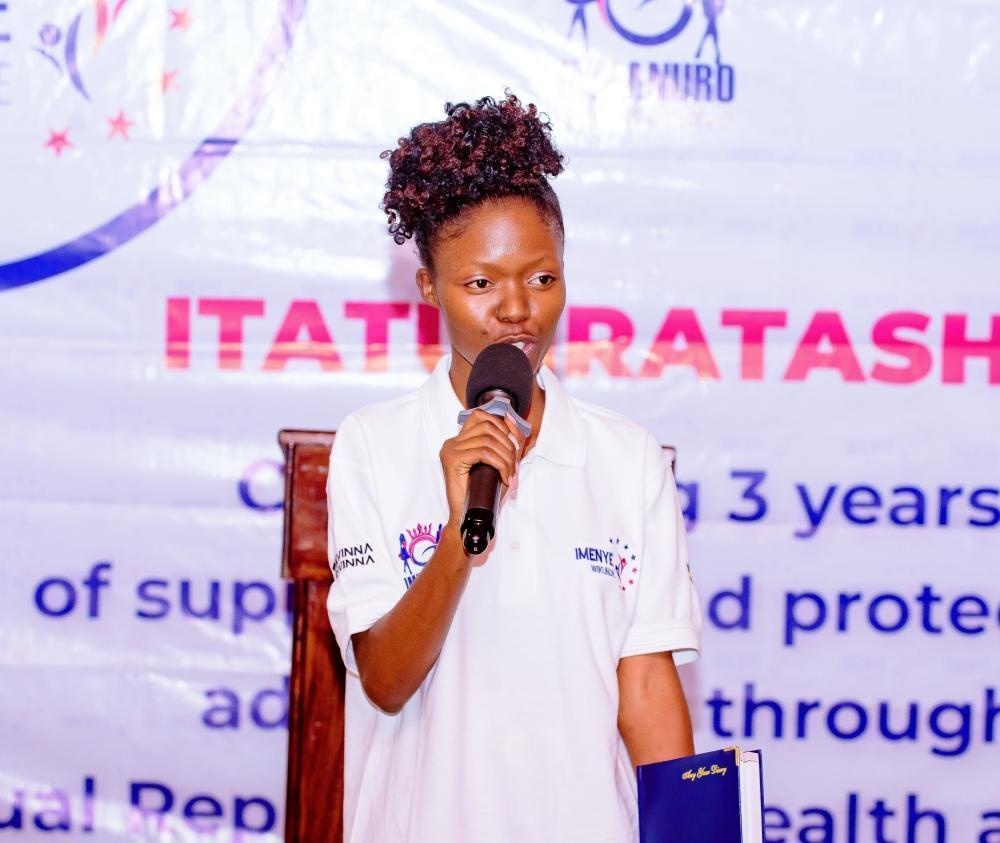
Everything changed after the girl joined Imenye Wikunde. The once-silent teenager stood confidently as the master of ceremonies during the project’s closing event.
“You saw her leading the event,” Nyirabahire said proudly. “She is now the cheerleader in our house. She has learned to live with the little I provide, and she no longer worries about our financial situation.”
The project also reshaped family conversations that were previously unthinkable.
“SRHR used to be unspeakable in our home,” Nyirabahire explained, “But when we began reviewing the topics together at home, everything changed. Now my daughters openly tell me about their menstrual cycles and other issues. We do not shy away, even when their younger brother is present. We are simply a happy family.”
Cleophas Nteziryayo, another parent, said the initiative changed his perception of fatherhood.
“I believed a father should keep a distance so children respect him,” he said. “I used to raise my voice and never discussed anything with them because I believed that is what a man should do.”
“But now, we talk freely in our living room, including about SRHR. I can even discuss it with other men, even though some still treat the subject as unspeakable.”
Nteziryayo further noted that the training helped him understand the recent 2025 health law, signed on September 17, allowing teenagers aged 15 to access health services, including contraception.
“At first I thought the law would destroy our children,” he said. “Now I know it protects them. Many were already accessing services in hiding. This law ensures they do so safely.”
Emmeline Kuradusenge, 29, a Senior Six student at Groupe Scolaire Mugogo, gave birth at 18 before dropping out of school. She says ignorance about SRHR made her vulnerable to repeating past mistakes.
“Men would approach me promising marriage or a better life,” she said. “I was confused and vulnerable. But now I know my rights and options. Every choice I make is informed.”
“In school, we would shy away from asking SRHR questions for fear of being judged. But with the Imenye Wikunde trainers, we felt safe. They always reminded us that there was no wrong answer. Now I speak up at home, help resolve conflicts, and even guide neighbours when I feel they need information.”
Teenage pregnancy remains an alarming issue, according to the Ministry of Gender and Family Promotion; Rwanda recorded 22,454 teenage pregnancies in 2024, up from 22,055 in 2023. Rwanda Biomedical Centre reported 10,480 cases in the first half of 2024.
The National Commission for Human Rights report showed 69 per cent of victims do not report their cases. It also found that 57 per cent of pregnancies involved acquaintances, 20 per cent neighbours, 7.5 per cent unfamiliar individuals, and 3 per cent family members.
At the start of the project, with support from the Kvinna till Kvinna Foundation, IGI enrolled 60 adolescents, 20 from each of the three schools (GS Mugogo, GS Gahara, and Ecole Primaire Butezi), including HIV-positive adolescents, orphans, adolescents with disabilities, teenage mothers, and those from vulnerable families.
Under the project’s second component, Mumenye, an additional 120 adults were trained, including 60 parents, 30 teachers, and 30 local officials and service providers.
Over the course of the three years, IGI directly trained 136 adolescents, 136 parents and 60 duty bearers through the project.
After the training, IGI supported these participants, now Imenye and Mumenye Champions in reaching out to train their peers. They have so far trained over 10,000 adolescents, parents and duty bearers in Kirehe District.
“We trained teachers extensively on Comprehensive Sexuality Education and how to confidently engage students,” said Joselyne Izere Mucunguzi, IGI’s Programs Lead.
“Parents are at the heart of their children’s health, so we equipped them with knowledge on Gender equality and gender-based violence, positive parenting in SRHR, mental health, and SRHR laws and Policies in Rwanda.”
She added that community health workers were trained on inclusive service delivery and relevant health and family laws.
“When we first arrived, the mindset here was frightening,” she said. “People secretly told us they used local herbs for abortion. Others believed a menstruating girl could destroy crops or cause diseases to babies. In that year alone, the three schools recorded 10 teenage pregnancies. Today, there are none.”
Martin Habumugisha, Head Teacher of GS Mugogo, confirmed the transformation.
“When the initiative began, I had six pregnant teenagers in my school. During these three years, there has not been another case,” he said. “Students now confidently engage teachers and challenge ideas. We have trained clubs and even reached out to other schools to share knowledge.”
The project’s closing event brought together students, parents, teachers, IGI staff, district officials, security officers, and community health workers from the three participating schools: GS Mugogo, GS Gahara, and Ecole Primaire Butezi. Students delivered poems, songs, plays, and discussions on SRHR, GBV, mental health, and domestic violence, showcasing behavioural and mindset shifts.
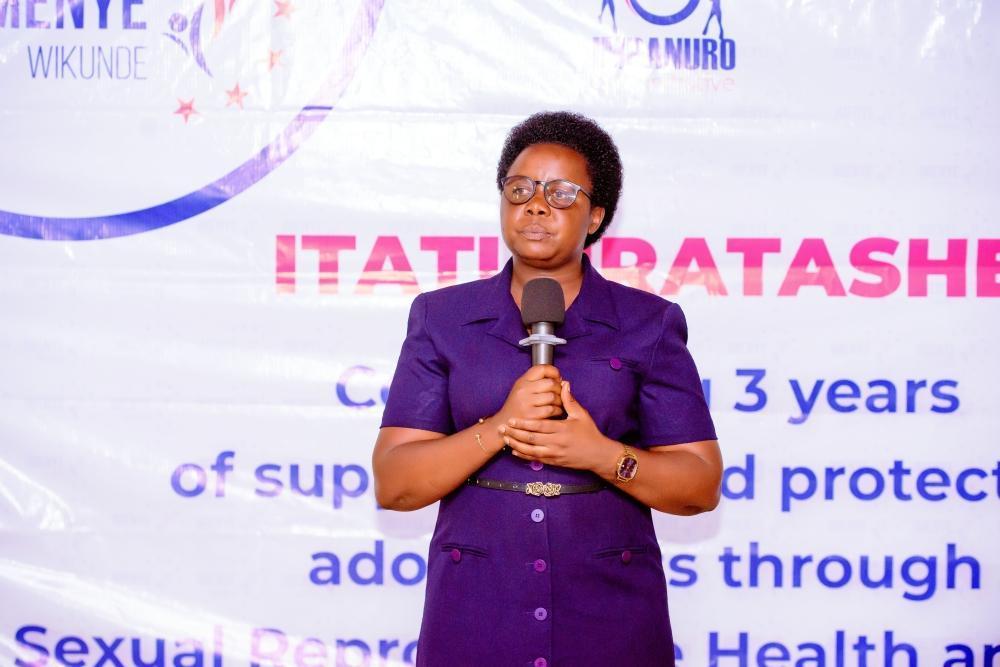
Janviere Mukandayisenga, Kirehe Vice Mayor, praised IGI for delivering on its promises.
During her speech, Janviere Mukandayisenga, Vice Mayor of Kirehe District, praised IGI for delivering on its promises. Courtesy
“We see the results through the right holders themselves,” she said. “We will ensure these clubs are established and supported in all schools. We will train the necessary staff and create platforms for school leaders to share feedback.”
Mukandayisenga urged parents to remain role models, emphasising, “You were lucky to receive this training. Let it be the trigger for change in your homes and communities. Form groups among yourselves and influence others. Help transform Gahara and beyond.”
For More News And Analysis About Rwanda Follow Africa-Press


