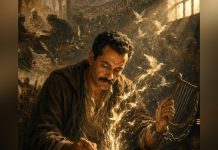
Africa-Press – Rwanda. Corporal’ Bimenyimana Nzayisenga was barely out of primary school when he was drawn into one of the many armed groups operating in eastern DR Congo.
What began as a call to “defend his country” quickly turned into a life defined by violence, deprivation, and strict obedience.
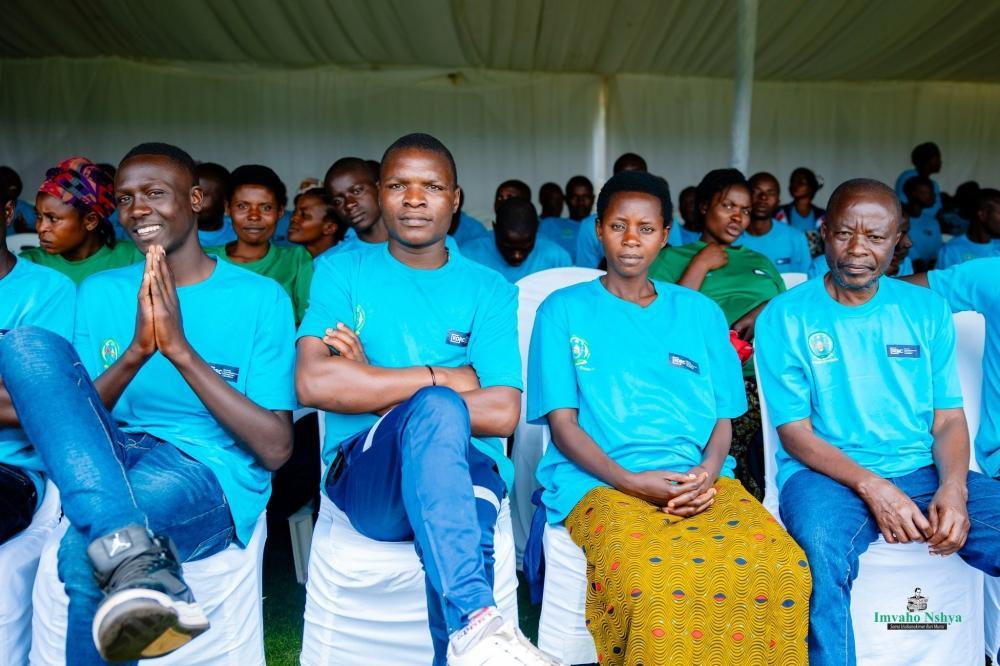
Now 27, Nzayisenga, a Rwandan born in DR Congo, is among former fighters who have laid down their arms and are seeking a fresh start in Rwanda. He is part of the 75th cohort reintegrated at Mutobo Demobilisation Centre on March 31.
He joined Mai Mai Nyatura in 2021 from Birihi in Masisi Territory, North Kivu, one of more than 120 militias active in DR Congo. Born in 1999 in Bufaringo, Masisi, he said he responded to mobilisation efforts after dropping out of Primary Six, with no clear path forward.
“They told us that our country, DR Congo, was falling into the hands of the enemy, AFC/M23, and we joined willingly to protect it,” he said.
His preparation for war lasted just one month.
“Once you knew how to shoot, you were sent to the front,” he said.
In his unit, he recalls, there were at least 20 Rwandans. They operated alongside the FDLR and other armed groups, often in coordination with the Congolese army (FARDC). But beyond alliances and battle lines, daily life was defined by survival.
“You had no say,” he said. “Everything was about following orders. If you were told to go and get food, you went. Most of the time, that meant attacking civilians.”
“If you refused, you could be punished severely or even killed,” he added.
In that world, recognition came at a cost.
“You were only valued when you brought back food or money, or did what you were told in combat,” he said. “That is when they would praise you, even joke about promoting you.”
Looking back, Nzayisenga describes life as harsh in every sense with no proper shelter, little food, and no medical care.
“You could be injured and still have to keep going,” he said. “There was no help.”
He also recalls constant messaging meant to shape their worldview.
“They tried to teach us things about Rwanda, about who owns it,” he said. “But honestly, I did not pay much attention to that.”
What eventually changed his path were conversations with his brother, who had been in the FDLR and later returned home.
“He kept calling me, telling me that life could be different,” Nzayisenga said. “That is when I started thinking about leaving.”
He later surrendered to MONUSCO and was repatriated to Rwanda, joining more than 200 others in the 75th cohort at Mutobo Demobilisation Centre, where they graduated on March 31.
Today, his ambitions are simple.
“I just want a normal life,” he said. “I am thinking of becoming a motorcycle taxi rider. The way we have been received here gives you hope. I do not see any reason to go back.”
His story echoes that of Esther Masengesho, also 27, whose journey into armed groups began much earlier.
She was just 13 when she was approached in Nyiragongo while selling charcoal.
“They told me I could earn a living and be part of something important,” she said. “They said it was a force fighting to liberate Rwanda.”
She joined the FDLR and spent years doing support work, mainly in charcoal production. Like many others, she adapted to a life where questioning orders was not an option.
“You just had to accept and move on with whatever you were told to do,” she said.
After four years, she left to start a family with a fellow combatant. But when her husband was killed in the fighting, she faced a difficult choice, to stay or leave.
“I chose to come back home with my children,” she said.
At Mutobo, she says, her outlook began to change.
“They showed us that there are opportunities,” she said. “You start to believe that you can build something better.”
One moment that stayed with her was a visit to the Kigali Genocide Memorial.
“I had heard about it before, but seeing it was different,” she said. “It made me realise how dangerous the ideas we had been exposed to are. I felt I have a role to play in making sure it never happens again.”
She believes the situation in eastern DR Congo still carries risks.
“There is a lot of division and misinformation,” she said. “If people do not challenge it, it can lead to more violence.”
Jean-Maurice Uwera, Deputy Government Spokesperson, said such testimonies help counter false narratives.
“Some people spread rumours that those who return are harmed, but here they are, rebuilding their lives,” he said. “What we are dealing with is not only armed groups but also an ideology.”
He urged returnees to help challenge that mindset.
The Northern Province Governor Maurice Mugabowagahunde also urged the former combatants to stay focused during reintegration.
“I encourage you to use the training you have received, avoid harmful behaviours, and work with others,” he said. “We will continue to support you as you rebuild your lives.”
For More News And Analysis About Rwanda Follow Africa-Press