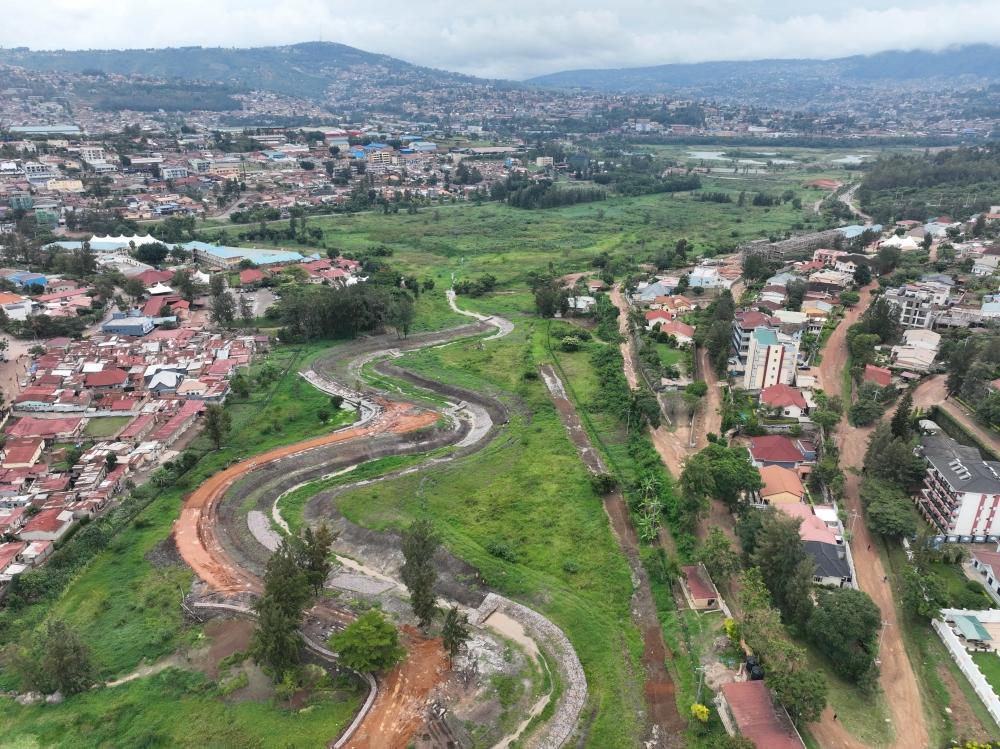
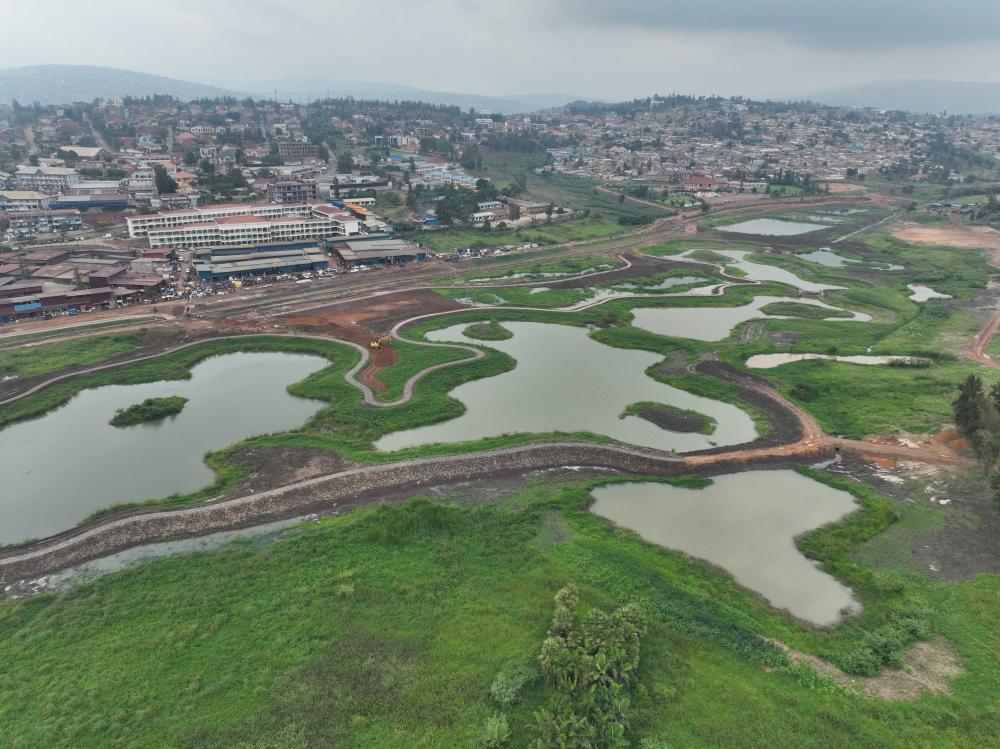
Africa-Press – Rwanda. Since March last year, Kigali’s wetlands, covering approximately 491 hectares, have undergone a major transformation under the Kigali Wetlands Restoration Project, an initiative aimed at reshaping the city’s landscape, promoting environmental protection, and improving residents’ quality of life.
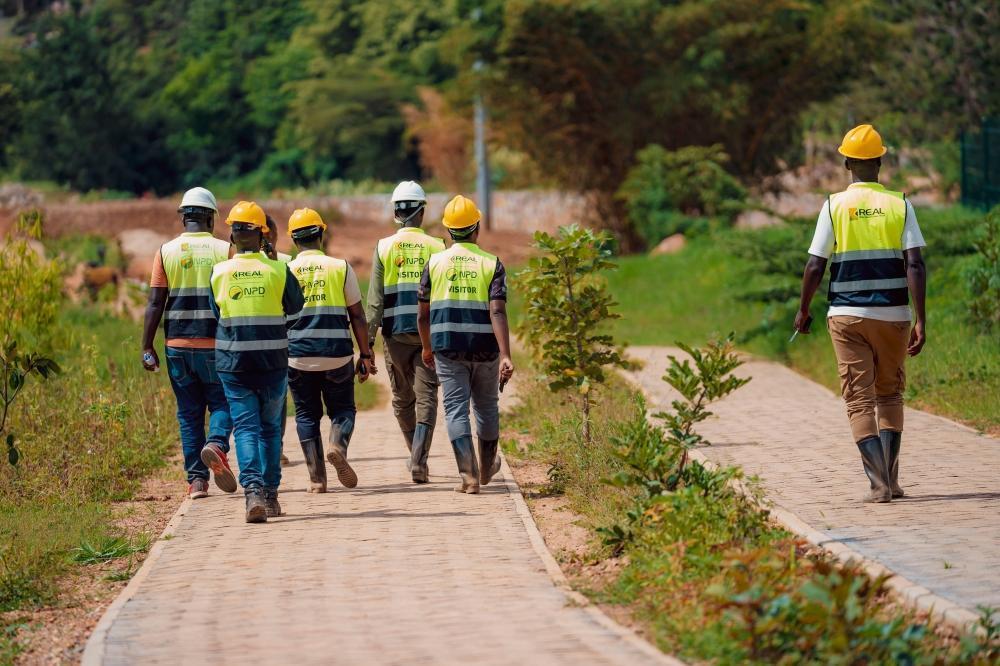
According to Fred Bugingo, Managing Director of Real Constructor, the Rwandan construction company is rehabilitating four of the five wetlands in the heart of the city.
The works have so far reached 75 per cent completion, and the entire project is scheduled to be finalised by April 2026.
Real Constructor Ltd and NPD Ltd, in a joint venture, were hired by REMA to restore key wetlands, including Gikondo Wetland (162 ha), which spans parts of Remera, Kimihurura, and Gatenga, and connects to the Rugenge–Rwintare Wetland (65 ha), covering areas of Kacyiru, Muhima, and Kinamba.
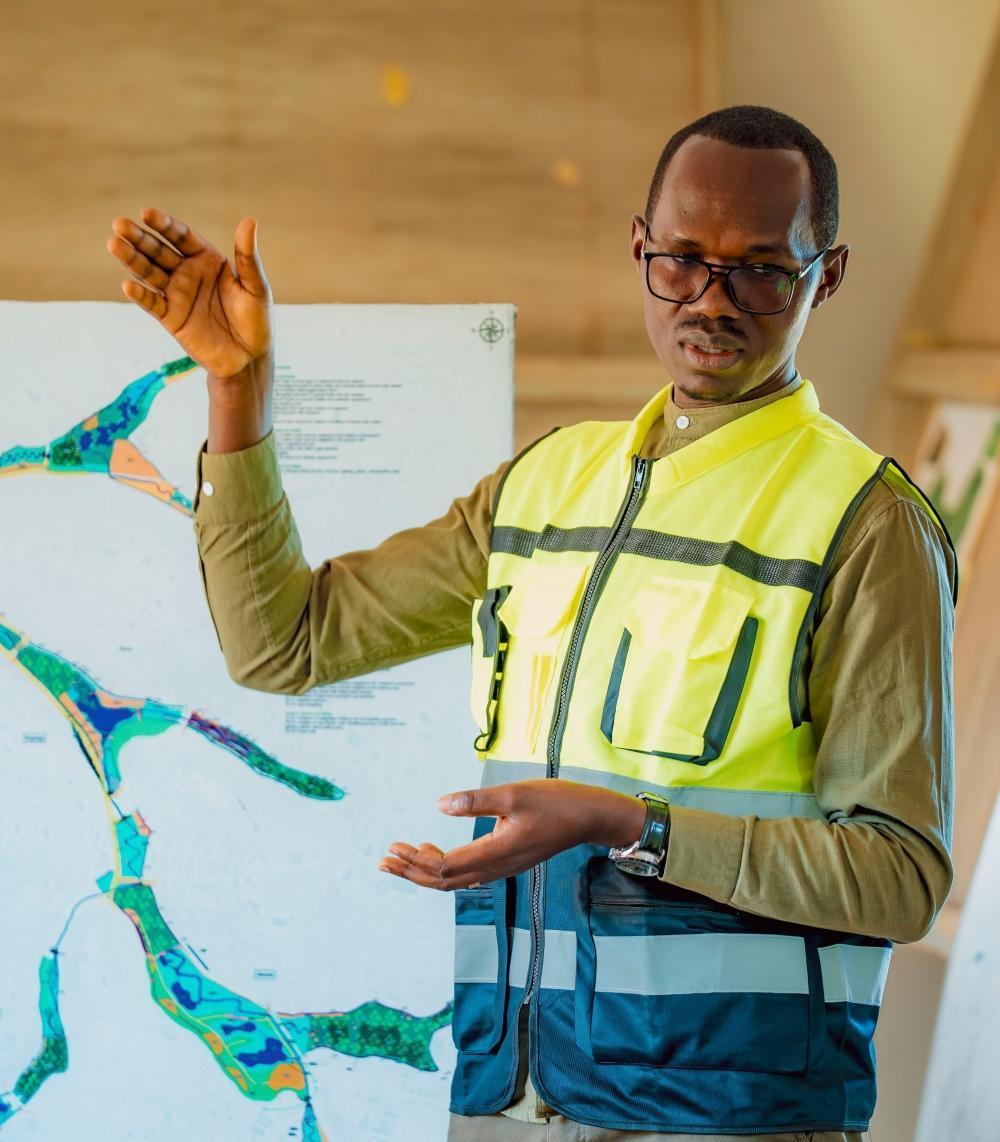
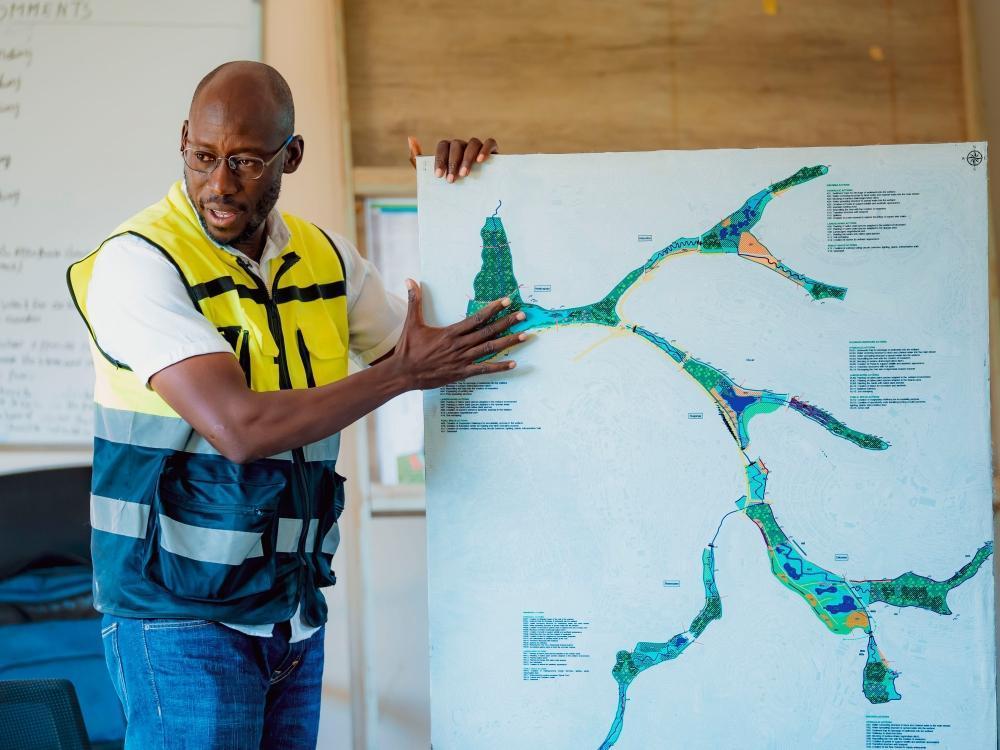
Fred Bugingo, Managing Director of Real Constructor, explains the project during a tour of the Kigali Wetlands Restoration Project on November 25. Courtesy
The sites include Kibumba wetland (formerly UTEXRWA) (68 ha), which connects Kinyinya and Gisozi sectors, as well as Nyabugogo wetland (131 ha), linking Muhima and Gatsata.
The primary goal of rehabilitating these wetlands goes beyond flood prevention in surrounding areas; it also focuses on ensuring that the water flowing into the newly created 10-hectare artificial lake, the final deposition point, is clean and safe for the ecosystem.
Following a recent media tour of the sites, The New Times breaks down how the restored wetlands will benefit nearby communities, from job creation and enabling business activity to boosting tourism and positioning Kigali as a greener, safer, and more attractive destination for both residents and visitors.
How water is filtered in Kigali’s restored wetlands
The four wetlands are being rehabilitated from the points where water exits the city’s drainage channels. The water then flows downhill, gradually slowing as it approaches the final filtration stage in Nyabugogo, then enters the artificial lake near Kwa Mutanga, and later continues into the Nyabugogo River system.
Each wetland has been designed with five core water-filtration and flood-control stages. The first point is the sediment (trash) traps, where water enters directly from the city’s drainage channels.
These traps are built with mesh and solid barriers that capture plastic bags and other physical waste. This stage plays a crucial role in removing solid pollution early and improving hygiene before the water moves deeper into the system.
From the trash traps, water flows into the permanent wetland zones, which are natural filtration areas densely planted with bulrush (reeds) and cord grass. These plants purify the water by absorbing contaminants and enabling biological cleaning.
This zone forms the foundation of the wetlands’ green filtration system, gradually removing pollutants through natural ecological processes.
To prevent flooding and regulate water pressure, weirs are placed across the permanent wetland areas. These small engineered barriers temporarily hold water and spread it evenly across vegetation, reducing water speed and minimising the risk of overflow into nearby neighbourhoods.
The water passes through three consecutive weir-controlled sections, each performing the same function of flow control and enhanced filtration before moving forward.
The next stage consists of spillways and ponds, where excess water is redirected into specially constructed ponds. In Kibumba wetland, for instance, the water splits into two paths: one feeds the fish-farming ponds, creating a controlled water supply for economic activities, while the other flows into aesthetic ponds, which act as retention basins that slow the water further while trapping remaining visible waste.
When one pond fills, the water overflows into the next, maintaining steady pressure control while allowing additional natural filtration cycles.
The final stage includes dykes and meanders, which provide the longest and most controlled filtration process before the artificial lake. The dykes retain water longer than the weirs to ensure tighter regulation during periods of heavy flow.
From here, water moves into a zigzag channel known as a meander, lined with rocks that act as extra filtration barriers to remove deeper contamination. After passing through long grass beds, the final natural cleaning point, the filtered water enters the 10-hectare artificial lake, marking the end of the filtration cycle.
A total of 220,500 residents will benefit from the wetlands
Thanks to the design of the restored wetlands, severe flooding that once affected surrounding communities is expected to be eliminated. According to Rene Rukundo Munana, the construction manager for Nyabugogo and Kibumba wetlands, a total of 220,500 residents will directly benefit from reduced flood risks.
So far, the project has created 5,917 jobs, including 2,893 women. By the time construction is completed, employment is expected to surpass 12,000 people.
The project has also taken into consideration groups that previously depended on wetland farming for their livelihoods. Beyond job creation, playgrounds and community sports facilities are planned in both Kibumba and Gikondo wetlands, encouraging public engagement through sport. The facilities to be constructed include football, basketball, tennis, and handball courts.
In addition, more than 6,000 trees will be planted along streams and around the ponds as part of Kigali’s broader ecological restoration plan.
Recreation will inspire Kigali residents to embrace tourism culture
Each wetland has been designed with unique recreational features aimed at attracting tourism. It is predicted that the restored wetlands will replicate several aspects of eco-friendly environmental structure and appeal.
A total of 61.5 kilometres of walkways and cycle lanes are being built to encourage eco-friendly mobility and to give the public greater access to nature.
Rukundo explained that each site has activities worth experiencing. He said Kibumba wetlands will host fishing ponds, supported by a large botanical garden designed to accommodate public events, including weddings, community gatherings, and cultural celebrations.
Real Constructor Ltd and NPD Ltd, working together in a joint venture, were contracted to restore key wetlands, including the 162-hectare Gikondo Wetland.
The site will also feature restaurants, large gardens for event hosting, and commercial spaces.
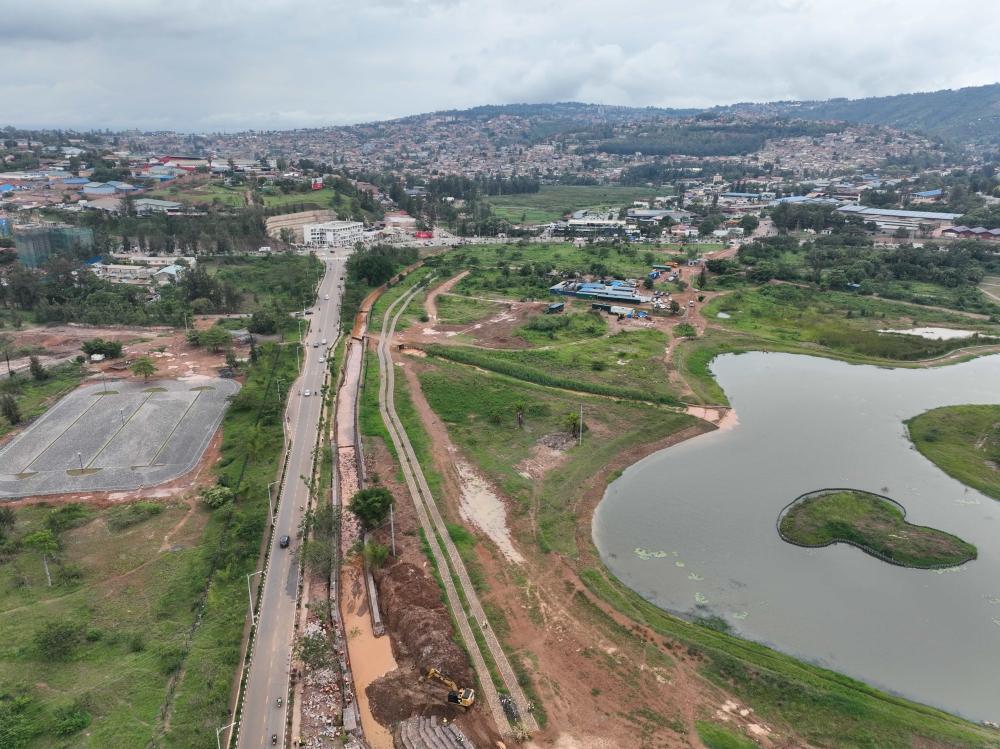
At Nyabugogo wetlands, adjacent to the artificial lake, a designated parking facility will be installed to improve visitor experience, addressing one of Kigali’s major urban challenges.
Gikondo, Rugenge–Rwintare wetlands will also feature large ponds to support both filtration and water retention, while investors will be given designated areas for business development.
The project managing director, Bugingo, added that individuals and investors seeking details on the commercial aspect of the wetlands can consult the Rwanda Environment Management Authority (REMA).
The project brings a new era in construction in Rwanda
According to Rukundo, the restoration works required investment in advanced and specialised equipment, much of which is being used in Rwanda for the first time.
These include: A dredger machine, used to remove accumulated sediments, mud, and debris from water bodies. In wetland rehabilitation, it restores natural water flow, deepens blocked channels, and improves water quality.
An amphibious excavator, capable of operating on both land and water, making it ideal for marshy and soft terrain. It moves across wetlands without sinking and is used to remove invasive plants, reshape water channels, and clear silt.
A long-reach excavator, fitted with an extended boom and arm to operate from a safe distance, especially in deep or unstable zones.
Rukundo emphasised that the deployment of these machines in the most challenging areas, particularly Nyabugogo wetland, marks a major milestone in Rwanda’s environmental restoration and construction innovation.
He noted that the use of such machinery, alongside engineered water-control systems, highlights the scale of investment in restoring critical natural infrastructure that protects the city and supports long-term ecological sustainability
The works have so far reached 75 percent completion, and the project is expected to end in April
2026.
For More News And Analysis About Rwanda Follow Africa-Press