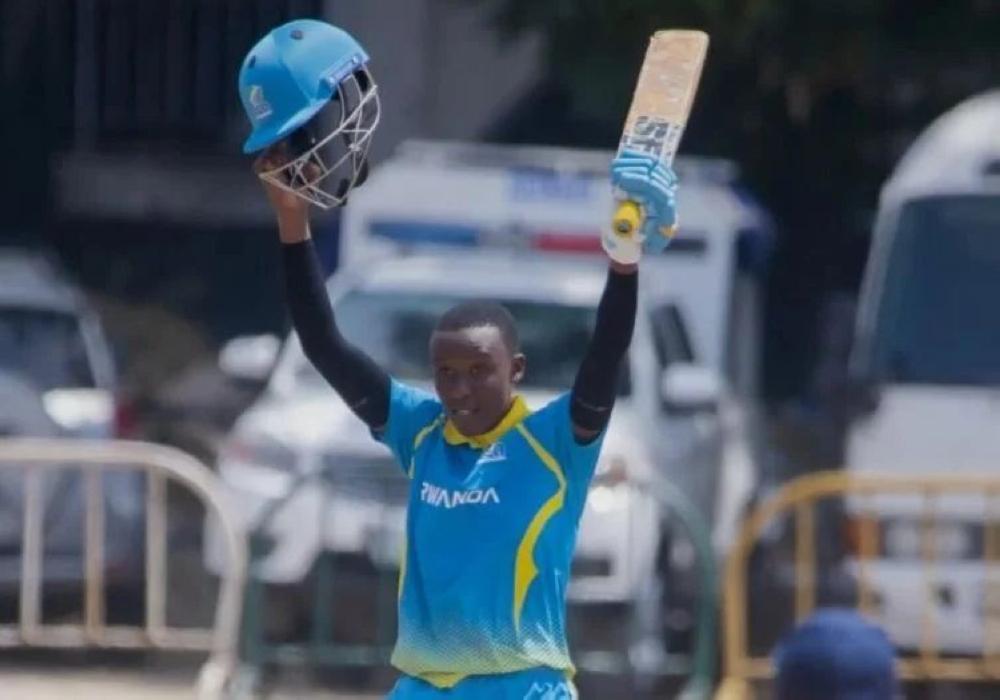
Africa-Press – Rwanda. When 15-year-old Fanny Utagushimaninde walked to the crease on her T20 International debut against Ghana in Lagos, few could have predicted the history she was about to make. By the 18th over, she had reached three figures, smashing an unbeaten 111 off 65 balls and setting two world records in the process.
At just 15 years and 223 days, Utagushimaninde became not only the youngest woman to score a T20I century, but also the first woman in cricket history to score a hundred on debut in the format.
Fanny Utagushimaninde
It may be tempting to frame this as a singular act of brilliance; a teenager seizing the moment. But her achievement is far more than that.
Anyone who has followed Rwandan cricket over the past decade will recognize that this milestone is the culmination of a carefully nurtured system of women’s cricket development. In a country where cricket is still relatively new, women in the country have risen from modest beginnings to challenge more established sides on the international stage.
Consider their recent trajectory. In 2023, Rwanda’s Under-19 team qualified for the inaugural ICC Under-19 Women’s T20 World Cup—a historic first for any Rwandan team. They went on to reach the Super Six stage, securing notable victories against sides such as Zimbabwe and the West Indies.
Credit must be given where it is due. Yet, this should be seen as a beginning, not a destination. Thinking otherwise risks stagnation.
Cricket in Rwanda was introduced after the 1994 Genocide against the Tutsi, brought back by returnees from cricket-playing nations like Uganda and Kenya, alongside the Indian community. In its early years, the sport was largely male-dominated.
However, Rwanda Cricket Association recognized the untapped potential among women and girls and began investing deliberately in school programs, coaching structures, and facilities.
Today, the results are visible, and impossible to ignore.
Local competitions such as the Kwibuka Women’s T20 Tournament provided players with international exposure and a platform to build skill and confidence.
Even before Utagushimaninde’s breakthrough, the country had already produced a wave of emerging talent. Henriette Ishimwe gained global recognition through the FairBreak Global tournament in Dubai. Giselle Ishimwe made headlines with a century on her UK club debut. Cathia Uwamahoro holds a Guinness World Record for the longest cricket net session by a woman.
Together, they signal a shift: Rwanda is no longer just participating—it is producing record-breakers.
Adding Utagushimaninde to this cohort reinforces that message.
Yet, Rwanda Cricket Association, players, and coaching staff must resist the temptation to rest on their laurels. Rwanda has not yet secured major global titles, and the road ahead remains demanding.
Utagushimaninde’s feat is not just a personal milestone; it reflects the broader narrative of women’s cricket in Rwanda. It is a testament to years of planning, coaching, and structured development.
These efforts have been supported by partners such as the Marylebone Cricket Club Foundation, which helped to nurture grassroots talent and expand access to the game. Facilities like Gahanga Cricket Stadium also played a key role in building a foundation for growth.
Challenges, however, remain. Limited infrastructure—particularly the shortage of quality pitches—continues to constrain training and match opportunities.
Despite this, the progress made is remarkable.
Importantly, Rwanda’s women have, in recent years, outpaced the men’s team, becoming a benchmark for what structured investment, opportunity, and commitment can achieve. Their success is not accidental. It is built on discipline, hard work, and a clear development pathway. Utagushimaninde’s century sends a powerful message, not only within Rwanda, but across the global cricket community: development works.
Grassroots investment, sustained planning, and a focus on youth can produce world-class athletes even in nations traditionally viewed as emerging cricketing countries.
Rwanda’s women’s cricket programme is increasingly becoming a blueprint. There is also a broader lesson here for other sports in Rwanda and beyond. Effective development programmes are not magic; they require consistency, vision, and execution.
Rwanda Cricket Association and its partners deserve immense credit for creating the conditions that enabled this success. From introducing girls to cricket in schools to building infrastructure and coaching systems, they have laid a solid foundation.
Under the guidance of head coach Leonard Nhamburo and his technical team, a culture of discipline and excellence has taken root, producing a pipeline of competitive players.
However, the next step—the most difficult one—requires a leap in both professionalization and competitive exposure.
Rwanda still faces limited access to international-standard facilities, and opportunities to compete regularly against higher-ranked teams remain scarce. Bridging the gap between emerging talent and consistent global competitiveness is still a work in progress.
To truly establish themselves on the world stage, Rwanda’s women cricketers will need sustained international fixtures, stronger domestic leagues, and clearer pathways to professional contracts.
There are no shortcuts.
Utagushimaninde’s record is a milestone, not a finish line. It signals Rwanda’s arrival, but also highlights the work that lies ahead. For a country that has taken cricket from obscurity to global recognition, the challenge now is clear: transform promise into sustained performance at the highest level.
Achieving this will require more than talent. It will demand investment, exposure to high-pressure competitions, mentorship from experienced international players, and continued development across all aspects of the game; batting, bowling, and fielding.
It is the hardest step—but also the most important one.
For More News And Analysis About Rwanda Follow Africa-Press