

Africa-Press – Senegal. Academics and actors from the world of culture underlined Friday in Thiès on the occasion of the 16th edition of the commemoration of Ousmane Sembène, the topicality and the universality of work of this internationally renowned Senegalese writer and filmmaker.
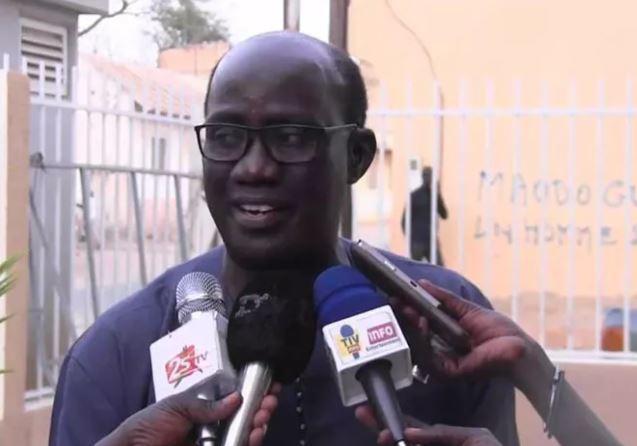
« When you read Sembene, he speaks to human beings from here and elsewhere, but he speaks to the spirit through a literary and cinematographic production, » said Abdoulaye Racine Senghor, president of the Board of Directors of the Museum of Black Civilizations, and one of the sponsors of this edition.
« So his work is always current, you can read it at any time. He speaks to us from the perspective of someone who looks beyond us (…). It is universal, » he continued.
He spoke in the premises of the Manufactures sénégalaises d’arts décoratifs (MSAD), host this year of the celebration of Sembène, who would be 100 years old this year, if he were still alive.
The Kingdom of Morocco, guest of honor for this edition, was represented at this commemoration.
Sembene is nonetheless an « icon of African culture », underlines Racine Senghor, who recalled that the man of culture had started with a poem, before writing « O country, my beautiful people ». ‘, as well as many other novels, and to embrace cinema at the age of 40.
His works are « translated into all the languages of the world » and taught around the world, he continued. « He converted books into films and films into books », added Racine Senghor, praising a « full life in terms of personal, social commitment, as a creator ». « He marked his life by what he wrote and by what he showed as a filmmaker ».
While highlighting Sembene’s interest for Africa in the broad sense, for its society, for the future of humanity, as well as for the weakest, he noted his « concern to build with everyone a truly human society, but one of dignity and respect ».
« A striking trait of Sembène Ousmane is a man of worth who has fundamentally resisted all forms of compromise, who has always wanted the African man, the man in general, the African woman, the woman short, may be someone worthy and who can serve his community ».
« Permanently relevant » like any work of art, Sembène’s work is even more so, argued the PCA of the Museum of Black Civilizations, referring to the avenues and squares that bear the name of Ousmane Sembène in Ouagadougou, Burkina Faso.
Professor Pape Massène Sène, former Secretary General of the Ministry of Culture, in his inaugural course, revisited « Les bouts de bois de Dieu », a classic from Sembène recounting the strike of the railway workers and of which a good part of the plot is takes place in Thiès, the city of rail.
This novel published in 1960 and imbued with social realism, in which the writer describes through the railway workers’ strike from October 1947 to March 1948, two visions of the world. On the one hand, black railway workers claiming equal salary treatment with their white colleagues and on the other hand, an administration which, rather than maintaining an employer-employee relationship, puts itself in a relationship of « natural subordination » vis-à-vis supposedly inferior beings.
The book also paints Sembène’s pan-Africanist vision as a shield against colonization, while noting the existence of a « wall » between Africans, in the same way that there is a « wall between the world western and the African world.
« The social, not to say literary and film work of Sembène Ousmane is a social project. We do not come out of a commemoration of Sembène Ousmane unscathed, he is a trainer, ”said Hadja Maï Niang, head of Daaray Sembène, a popular education institute based in Thiès, and inspired by the work of his mentor. of whom she sees herself as the adopted daughter.
She announced her plan to transform Daaray Sembène into a “popular university”.
Mayor Babacar Diop, who took part in the meeting, announced that he had decided to offer students, in conjunction with the Inspection d’Académie, a thousand copies of the book « Les bouts de bois de Dieu ». ‘, which he considers a « local novel », even a « national novel ». This work restores an important part of the history of Thiès which he describes as a « gift of rail ».
At the end of a reading marathon organized, on this occasion, in two sections, national and international, the prize for the national section was won by a team from the Assane Seck University of Ziguinchor, ahead of that of the Iba Der Thiam University of Thies.
Pour plus d’informations et d’analyses sur la Senegal, suivez Africa-Press