
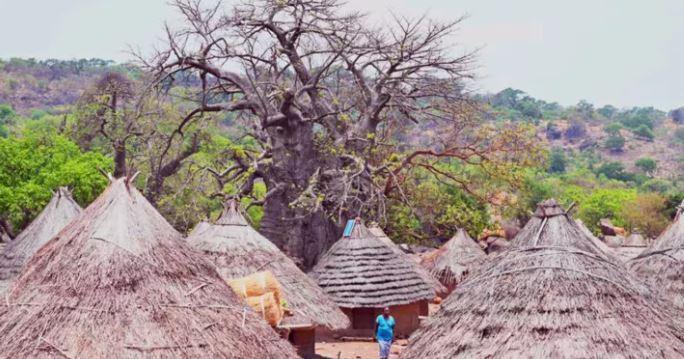
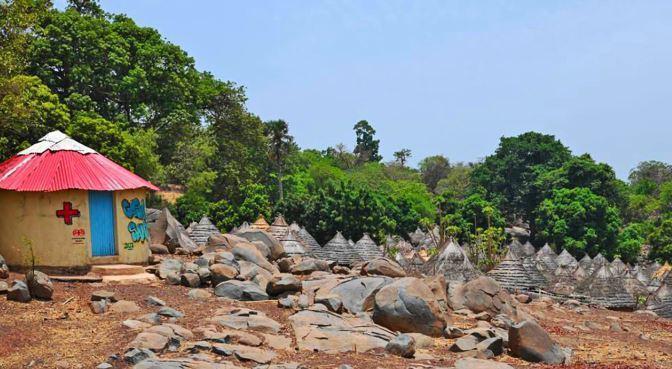
Africa-Press – Senegal. Iwol, a village nestled 485 meters on the hills of the heights of Bandafassi, in the Kédougou region (southeast), recognizes itself as the capital of the Bédiks, a people rooted in their traditions that have remained alive and whose perpetuation is guaranteed by a commemorative calendar which is spread over the whole year.
The first festival of the season takes place in November, a celebration meant to thank God for the rainy season and the saved harvests, explained Jean-Baptiste Keita, a native teacher from Iwol, in an interview with APS-TV reporters. .
Then there is the month of January, reserved for the circumcision of 15-year-old boys, then comes the initiation period in April “for the boys who will enter the sacred wood to learn how to live as an adult. This training lasts five months after which they are taken back to their parents”. They are given, from this moment, “the freedom to do what they want”, according to Jean-Baptiste Keïta.
“In May, it’s the last party of the season reserved for women. This marks the stage of the return from the bush of the men who are welcomed by their wives with a +gourdelette+ of millet wine prepared in their absence”, explains the native teacher of Iwol.
In addition to all these well-preserved customs to be passed on to future generations, Iwol contains many other « mysteries », including a pact with a protective genius, according to Jean-Baptiste, who is part of the Keita line, one of the four main families of Iwol with the Camara, the Samoura and the Sadiakhou.
“The devil was asked for protection during the war, young people were sent to him to help us. After a presentation of the situation, he accepted and sent bees who fought alongside the Bediks until the return of peace”, he underlined, returning to the genesis of this pact with the devil.
The Bediks, a well-organized society
The habits and customs of the Bédiks are the mark of a well-structured society around these four families, the Keïta, the Camara, the Samoura and the Sadiakhou, and whose roles and areas of competence are well defined, he says.
“The Keita are the chiefs of the village in Iwol, they are also the guardians of the age groups. The Camara, as customary chiefs and guardians of the secrets of the village, are responsible for preparing the festivals. The Samoura are from the lineage of blacksmiths and are responsible for arbitrating all conflicts in Bedik society. The Sadiakhou, responsible for preserving customs, are the last family of this patrilineal society,” adds Jean-Baptiste.
The missions assigned to each of these four clans ensure the harmonious functioning of Bedik society and the village of Iwol, which has a total of 618 inhabitants.
“Our origin is in Mali. What made us leave Mali was the war [which was raging at the time between political figures in this region]. We, the Bediks, came here in the mountains in Senegal. It was in the twelfth century”, says Jean baptiste Keita, true memory of this people who are part of the minorities, numerically the least important of Senegal.
The Islamization campaigns of the warrior chief Alpha Yaya Diallo of Labé, one of the provinces of Fouta-Djalon, also constitute important moments in the life of the Bediks, a people who have remained very attached to animism and whose refusal to embracing Islam generated a war with this historical figure. The survivors of this war hid in caves, while many young girls and women, « beautiful » most of the time, were captured by Alpha Yaya Diallo and his men.
Pour plus d’informations et d’analyses sur la Senegal, suivez Africa-Press