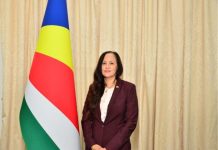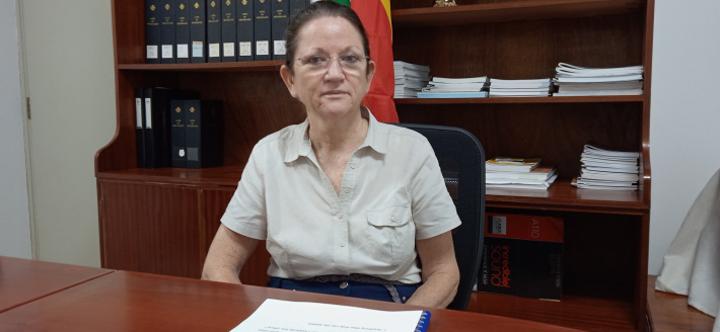
Africa-Press – Seychelles. Ombudsman Nichole Tirant-Ghérardi has said that we need to start moving away from the adversary approach mentality and to collaborate more.
Mrs Tirant-Ghérardi made this comment yesterday morning during a debriefing on the Ombudsman’s annual report for 2021 which took place at its premises at Aarti Chambers, Mont Fleuri.
She was inferring to the lack of responses from certain ministries and organisations and their unwillingness to cooperate.
“There is a lack of acceptance and feedback on the part of the public service organisations as they see our recommendations as criticisms, which is not the case. The work of the Ombudsman is to help to improve the public service. Our recommendations are to allow them to reflect and improve on their delivery,” Mrs Tirant-Ghérardi said.
She noted that the office will have to seek ways to really address her office’s working relationship with the ministries and public organisations.
“It’s a question of collaboration, and that is to understand what the other one is doing for you to not only improve on what you are doing towards him or her but also to help them understand what you are doing so as to improve on what they are doing in respect towards you,” she added.
She said that most public organisations have lost track of old records for use in investigation, research and historical purposes.
She also said these organisations also do not have a structure in place to promote dialogue between parties.
She added that most of the time during her deliberations she recommended that such structure for dialogue and archives be put in place for the benefit of those seeking information.
The Ombudsman’s report is an annual summary of the various activities carried out by her office and the different challenges faced which include the successful and unsuccessful collaborations with different ministries and other public authorities.
As an independent body, the Ombudsman focuses on service delivery at the administrative level – offering an independent and alternative dispute resolution system that works outside the legal system and outside the political arena, to keep maladministration in check and to improve the services delivered by public officers running the state’s daily show.
Mrs Tirant-Ghérardi said that getting skilled personnel to write out investigation reports is one among the challenges the office faces.
“Given the fact that I have taken a position for our reports on cases, most of which are technical and very detailed, getting to write them in a manner that they will be easy for readers to understand and to make them reflect, is difficult and we need that kind of help in the office,” Mrs Tirant-Ghérardi said.
She noted that it is not a question of staffing although some vacancies are available to be filled, but rather a question of getting the right person with the writing skill.
She further noted that without such personnel, it is causing some disruptions in the work of the Ombudsman, especially to complainants who have experienced and continue to experience delays in the handling of their complaints.
The Office of the Ombudsman comprises a complement of six persons, including the Ombudsman. The office will continue to focus on institutionalizing and capacity building this year, particularly with respect to addressing and improving the institutional capacity to deliver on completed investigation reports.
Mrs Tirant-Ghérardi said that although Covid-19 has affected their education and awareness programme on the role and mandate of the office of the Ombudsman, in 2021, they will be conducting some sessions this year in collaborations with partners.
She reminded that the office is not a court for rulings but rather to present advice to improve services that impact on the lives of citizens.
At the end of 2021, ninety (90) complaints were registered as compared to the 151 complaints that were registered in 2020. Out of the 90 complaints only 9 cases were retained while 41 cases were considered premature and 39 other cases were found to be outside remit.
She said the reduced number of complainants for 2021 was a result of the pandemic.
She also said that she will be looking with the public organisations to also put in place a structure where people can address their complaints before coming for help from the Ombudsman.
“This is why we get a lot of premature cases as the complainants do not register their complaints at their work place before coming to us. So we get them to go back, at times with a referral letter, to lodge their complaint at their workplace first before coming for our assistance,” said Mrs Tirant-Ghérardi who noted that in the process the two parties could reach an agreement without the complainant having to come to see the Ombudsman.
Mrs Tirant-Ghérardi has also thanked the public officers across many institutions who fully cooperated and worked with her office in this past year and whose participation has helped make a difference, not only to the complainants, but also to their ministries and agencies and the public service as a whole.
A copy of the report has already been handed over to President Wavel Ramkalawan and to the National Assembly.
The Ombudsman can investigate any complaint received and even act on its own motions where administrative actions of public officers and authorities violate fundamental rights, are fraudulent and corrupt, are contrary to law, unreasonable, unjust, oppressive, discriminatory, based on mistake of facts or a wrongful assessment of facts; and the long list continues…
The Ombudsman intervenes as a last resort when complainants have been unable to obtain any answers or fairness elsewhere.
For More News And Analysis About Seychelles Follow Africa-Press