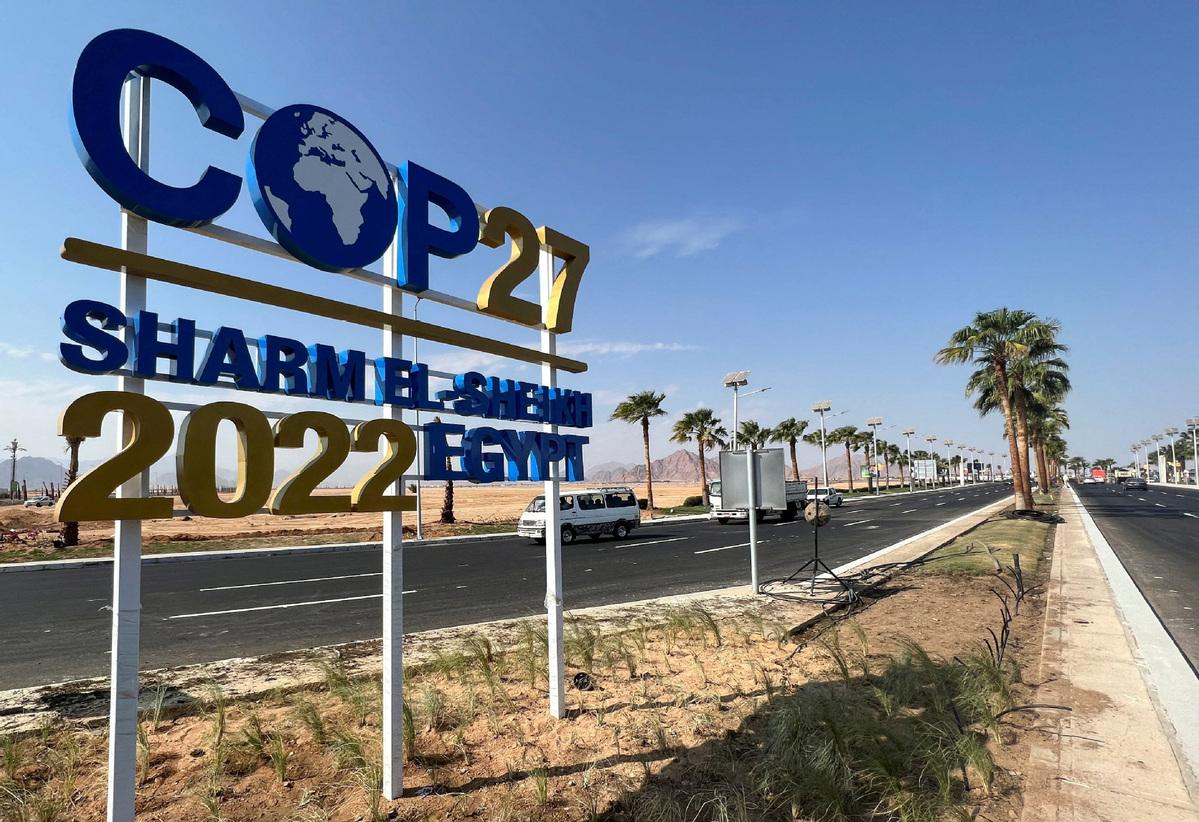
Africa-Press – Seychelles. Guarantee a differentiated treatment for developing islands. This was, in essence, the essential message brought by the Secretary General of the Indian Ocean Commission at COP27. And for a reason: the climate impact on the islands is the herald of global disruptions.
Present at Charm-el-Sheikh from November 10 to 17, Pr. Vêlayoudom Marimoutou emphasizes the specific needs of the islands. Indeed, like Africa, developing islands are minimal contributors to greenhouse gas emissions. They are even marginal, accounting for less than 1% of the total emissions between 1960 and 2014!
Regional climate action
Climate action is inscribed in the genome of the Indian Ocean Commission (COI). From the end of the 1980s, the IOC implemented its first projects in the fields of meteorology and environmental protection. Gradually, the climate action of the IOC is strengthened.
At the parallel event on “the state of the climate in Africa”, co-organized by the African Union, ACMAD and the IOC, Pr. Vélayoudom Marimoutou explains:
“Through its projects and the support of its development partners, the IOC is fully committed to supporting its member states to strengthen regional climate resilience. It is a long-term project that requires a holistic approach that links science and technology, innovation and training, equipment and exchanges, diplomacy and citizen engagement.
Le saviez-vous?
The Indian Ocean is the third region of the world most exposed to natural risks. The last cyclonic season gives an overview: the only large island of Madagascar was crossed by six cyclones that caused significant human and material losses. Over the last thirty years, economic losses related to the effects of climate change have been estimated at more than 17 billion dollars.
The climate / environment projects of the IOC
First the observation:
– So far, the promises to adapt are insufficient; the engagements to support our efforts and our actions are insufficient; the means to allow us to be resilient are insufficient. And to these inadequacies is added a feeling of iniquity. Our African islands suffer the damage of climatic disturbances for which they are not responsible.
Then, the recommendations formulated in the high-level segment:
– Accelerated implementation of Glasgow commitments, notably for the doubling of adaptation funding by 2025 compared to 2019 levels. Objective: availability of funding and above all easier access for SIDS based on the vulnerability index to climatic disturbances and not conditioned by the income per capita. It is, in effect, not to penalize islands like the Seychelles or Mauritius which, despite the level of socioeconomic development, remain “sensitive areas” like all the islands.
Operationalization of the Santiago network for a mechanism for financing losses and damages, with a dedicated fund. This subject was at the heart of this COP.
In addition to these crucial topics, the Secretary General of the IOC called for a massive investment in training, technology and technology transfer. He also emphasized the importance of mobilizing more science to develop solutions and support decision-making.
“In all our African countries, we must train the youth, offer job opportunities in phase with the climatic, energy and environmental challenges, the new socio-economic trends and the aspiration for the well-being of our populations; or in other words, offer opportunities in phase with the world’s development. More than 60% of the jobs of tomorrow do not exist today and there is no doubt that “climatic jobs” will constitute an important part of these jobs. L’investissement, c’est maintenant qu il faut le consentir. It’s urgent! », insisted Pr. Marimoutou
The COP, a time of exchanges
The COP27 was the occasion for numerous and useful exchanges with the partners. The IOC delegation also held talks with the leaders of the Pacific Forum, the Commission of the African Union, the Commonwealth and the Organization of ACP States.
The IOC has coordinated two parallel events, one with the Initiative on Climate Risks and Early Warning Systems (CREWS) and the Center for Caribbean Resilience, the other with the AU Commission and the ACMAD. She also participated in sessions with the OAECAP – ClimSA program, the Secretariat of the Regional Oceanic Environment Program, among others.
Finally, the IOC has supported the participation of delegates from member states for the negotiations through the GGCA+ project financed by the OEACP – EU.
For More News And Analysis About Seychelles Follow Africa-Press