Africa-Press – Seychelles. The elaboration of a common road map
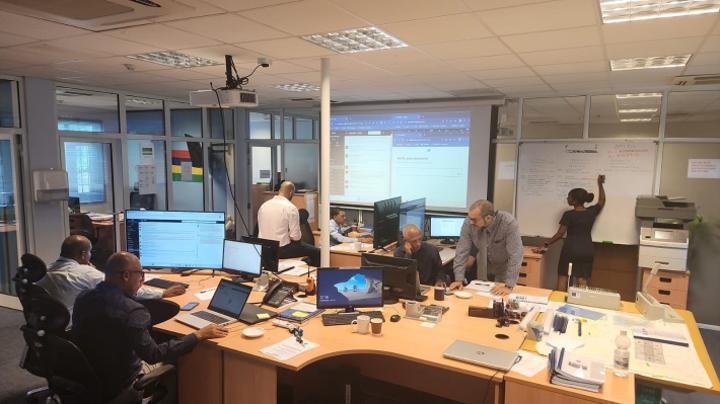
Developing a common roadmap to strengthen coordinated actions at sea is one of the main objectives of the regional exercise to combat marine pollution in the Western Indian Ocean (WIOPOLREX), which took place in the Seychelles on 25 on July 28, 2023.
This exercise aims to strengthen the national prevention and response systems in view of effective regional cooperation during major marine pollution incidents. The launch ceremony took place on Tuesday, July 25, 2023 in the Seychelles in the presence of the Principal Secretary of the Ministry of Agriculture, Climate Change and Environment of the Republic of Seychelles, the Chief of Cooperation of the Delegation of The European Union (UE) in Mauritius, the Chargé d’affaires of the United States Embassy in Mauritius and the Seychelles and the Director of the Indian Ocean Commission (COI).
Organized by the Center régional de coordination des opérations (CRCO) and the Center régional de fusion d’information maritime (CRFIM) – two executive bodies of the Maritime Security Architecture for the Western Indian Ocean – the regional table exercise ( TTX) brought together the signatory states of the MASE1 Agreement as well as the Maldives, Mozambique, South Africa, Tanzania, Yemen, India, the United Kingdom and the United States. International partners actively involved in the maritime domain also participate, namely the International Maritime Organization (IMO), the Nairobi Convention, the United Nations Office against Drugs and Crime (ONUDC) and the European Naval Forces. Operation Atalanta among others.The regional simulation exercise is part of the global action plan of the two regional centers aimed at examining their coordination and intervention capacity in case of marine pollution incidents, with the States of the region, and to strengthen the mechanism regional information sharing and joint operations at sea, which is implemented by the IOC as part of the regional maritime security program (MASE2) financed by the European Union.
The MASE program is implemented by IGAD, COMESA, EAC and IOC. The IOC is responsible for the establishment of a maritime security architecture based on the exchange of information and the coordination of joint operations at sea.Improve coordination, an essential condition for an effective collective response
This large-scale mobilization demonstrates the will of States and partners to develop a collective approach to maritime pollution incidents in the region in order to improve coordination and interoperability. As the director of the IOC emphasized, “it is important to have all the partners such as the Convention of Nairobi, SAMSA, the OMI, alongside the national and regional centers to strengthen their capacity to work in synergy, Facilitate regional coordination in case of marine pollution incidents and also avoid duplication,” said Dev Phokeer.
During his speech, the chargé d’affaires of the United States embassy spoke in the same sense, recalling the importance of structuring and strengthening the mechanism of the fight against maritime pollution. “Stakeholders recognize more and more the essential role of regional cooperation frameworks, which allow countries to respond and collaborate more effectively during joint operations at sea to limit the effects of such incidents,” said Jim Donegan.Bridging the gaps in capacity. The lessons learned from past incidents in the region, in this case the sinking of the MV Wakashio off the coast of Mauritius as well as other situations of shipwrecks and/or drifts in neighboring countries, clearly indicate that a The country cannot alone face all levels of marine pollution incidents.
The exercise is an opportunity for the participating states to examine their level of preparedness, their strategy in the matter of marine pollution, as well as their capacity to share information and implement responses in accordance with their respective national contingency plans. in case of oil spill. According to the head of cooperation of the EU delegation, “it is essential to ensure an effective articulation and synergy between the national plan to combat oil spills and the regional contingency plan, with clear procedures defined and established. Otherwise, there will be delays both at the level of national engagement and the adherence of political decision makers at the level of regional coordination for an effective regional response capacity”, said Milko Van Gool.In this context, the technical support of international partners, whether it is in the matter of exchanging information to improve knowledge of the maritime domain or sharing good practices, is decisive for strengthening national and regional capacities. The Seychelles, for example, have recently benefited from technical support from the Nairobi Convention as part of the SAPPHIRE project to review their national oil spill contingency plan. By 2024, Seychelles hopes to have a new operational and optimized plan, ready to face the challenges of marine pollution”, announced Denis Matatiken, principal secretary of the Ministry of Agriculture, Climate Change and Environment of the Republic of Seychelles.The development of the regional mechanism to combat maritime pollution incidents is part of a broader effort to promote the ownership of maritime security issues by the states of the region. The simulation exercise is therefore a first step to comply with international conventions, in particular that of the Nairobi Convention, and thus adapt to growing challenges. A field exercise (FTX) will be organized later to confirm the recommendations resulting from the current simulation exercise, before proceeding with the validation of the revised regional contingency plan by the countries concerned.
For More News And Analysis About Seychelles Follow Africa-Press