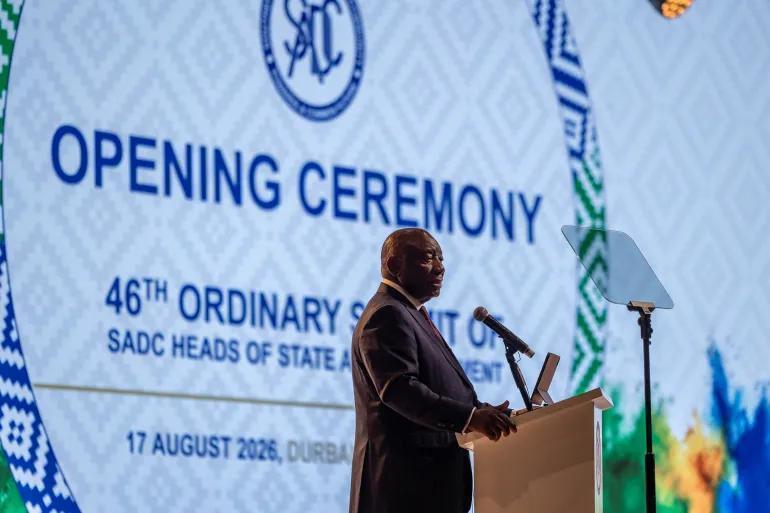
Africa-Press – Seychelles. The Southern African Development Community (SADC) summit, which includes 16 countries, concluded its proceedings in Durban, located on the eastern coast of South Africa, after a closed session that lasted late into the evening. The issue of migration dominated much of the discussions amid rising tensions regarding irregular migrants in South Africa.
The South African president Cyril Ramaphosa delivered the closing remarks of the summit, addressing the migration issue, which has become one of the foremost challenges facing several countries in the region, particularly following the protests in South Africa last June against irregular migrants, which have cast a shadow over relations among regional countries.
South Africa has temporarily assumed the presidency of the SADC since the end of 2025, following Madagascar’s withdrawal, before the country takes on the presidency for one year. The summit saw representatives from 15 of the 16 member states, while Comoros was absent due to unpaid membership fees.
Ramaphosa stated that he was able to engage in discussions with his counterparts regarding the migration issue, describing it as a “complex challenge,” noting that the matter was addressed “openly and transparently.” Several member countries, including Zimbabwe, Mozambique, Malawi, and the Democratic Republic of the Congo, have been directly affected by the migration-related tensions in South Africa, as citizens from these countries were targeted during anti-migrant protests, with some facing mass deportation.
The South African president expressed appreciation for the member states’ understanding of the circumstances facing his country, saying: “We also express our regret for what has happened to us as a nation,” referring to the tensions and protests targeting migrants from regional countries.
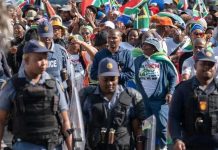
The tensions related to migration were not limited to the summit’s proceedings and discussions; earlier on the same day, August 17, the city of Durban witnessed a march organized by the “March and Rally” group, which is behind several anti-irregular migrant demonstrations in South Africa, reflecting the sensitivity of the issue ahead of the summit.
On the political and security front, the SADC reiterated its solidarity with the Democratic Republic of the Congo in its efforts to restore peace and security, and encouraged various stakeholders in Madagascar to continue working to maintain calm and stability in the country.
Economically, Ramaphosa emphasized the importance of continuing to develop infrastructure in the member states, particularly regional corridors, to enhance trade movement and facilitate transportation and connectivity among countries in the region, as part of the organization’s efforts to support regional economic integration.
The summit also made progress on the project to establish a joint tourist visa among the SADC member states, as the summit approved the agreement related to the project, which still requires the signature of all partner countries before it can come into effect.
The introduction of the joint tourist visa alongside issues of infrastructure, trade, and migration reflects the SADC’s direction towards enhancing integration among Southern African countries, at a time when the region faces intertwined political, security, and economic challenges, alongside increasing pressures related to migration among its nations.