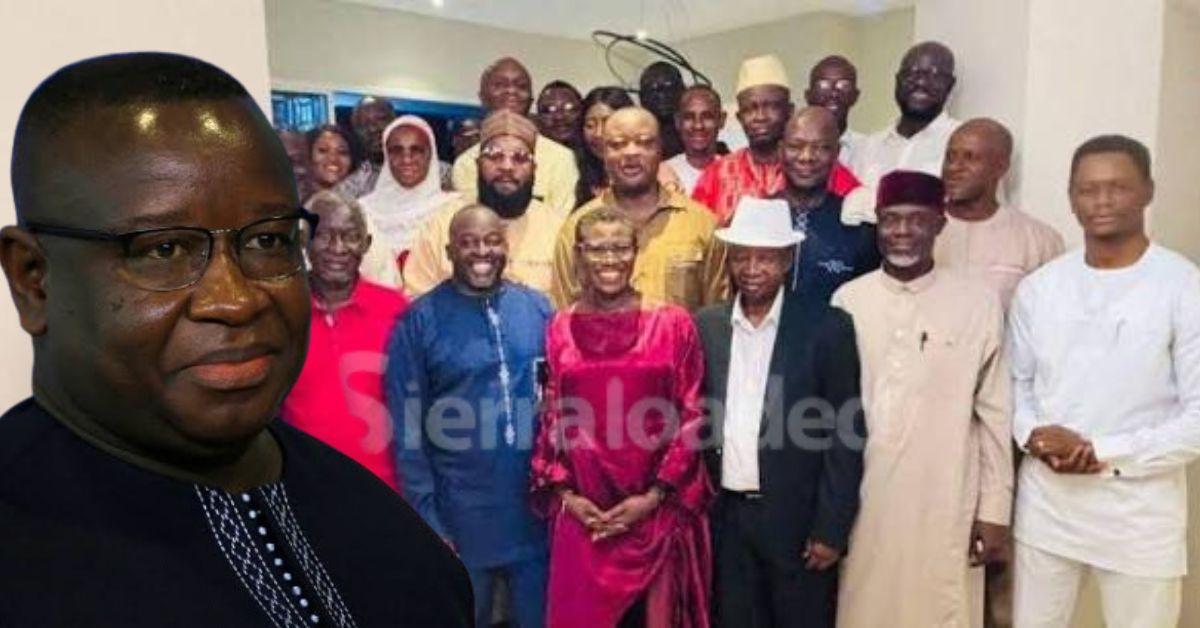
Africa-Press – Sierra-Leone. President Julius Maada Bio used the platform of Sierra Leone’s 65th Independence Day anniversary to directly address the country’s recent political crisis, calling on the opposition All People’s Congress (APC) to embrace “presence, participation, and duty” just days after the party formally ended a contentious two-month boycott of governance institutions.
Speaking to the nation, Bio struck a measured but firm tone, acknowledging the value of political contest while drawing a clear red line against the suspension of parliamentary and local council duties.
“Democracy requires a strong and active opposition; that is not in question,” Bio said. “A healthy republic depends on contest, scrutiny, disagreement, and debate. But it also depends on presence, participation, and duty.”
The address marks the President’s first public comments since the political standoff was resolved on April 20, 2026, following intensive mediation by the International Moral Guarantors—a delegation comprising the Economic Community of West African States (ECOWAS), the United Nations Office for West Africa and the Sahel (UNOWAS), and the Commonwealth.
The APC launched its boycott in February 2026 after President Bio appointed Edmond Sylvester Alpha as Chief Electoral Commissioner. The opposition party maintained that the appointment violated the 2023 Agreement for National Unity (ANU) and specifically breached Recommendation 36 of the Tripartite Committee report, which calls for amending constitutional provisions to establish an independent search and nomination committee for Electoral Commission appointments.
The boycott effectively paralyzed legislative business and saw APC-elected officials withdraw from local councils across the country, raising alarm among civil society and international partners about the health of Sierra Leone’s democracy.
After a week-long assessment mission to Freetown from April 13-20, 2026, the Moral Guarantors brokered a breakthrough. The government agreed to restructure the Electoral Commission for Sierra Leone (ECSL) by December 31, 2026, directly addressing the APC’s core grievance.
President Bio did not explicitly name the boycott in his address, but his words left little doubt about his position on the crisis that consumed the past two months.
“When a person is elected to parliament, they hold that seat in trust for the people who stood under heat and rain to put them there,” Bio said. “When mayors or councilors accept office, they carry a continual obligation to the community that chose them. That duty and trust do not pause or disappear in moments of political disagreement. The people must continue to be served.”
The President welcomed the opposition’s return to governance, offering a pointed acknowledgment.
“I’m encouraged by the return of elected officials to their duty, and I welcome that step in the interest of the nation,” Bio said. “Thank you for affirming an important democratic principle: Political disagreement must never suspend public service.”
Bio used the address to reaffirm his government’s commitment to the reform process, emphasizing that electoral integrity remains a “national objective, not a partisan one.”
“This government has acted within the law in all matters concerning our electoral institutions,” he said. “We have done so carefully, constitutionally, and with full confidence in the integrity and capacity of those entrusted with helping to steward the democratic process.”
The President noted that his administration remains committed to the Agreement for National Unity and to advancing electoral reforms through the Tripartite Committee, the body established after the disputed 2023 elections to review Sierra Leone’s electoral framework.
“As we move towards the 2028 general elections, we must do so with seriousness, restraint, and good faith,” Bio said. “For my government, the door to constructive dialogue is always open. But even as we engage in dialogue, the work of governance must continue.”
The International Moral Guarantors played a crucial role in de-escalating the crisis. The delegation, led by former Gambian Vice President Fatoumata Tambajang, held separate high-level engagements with both government officials and APC leadership before securing the breakthrough agreement.
Under the terms of the agreement, the parties committed to implementing electoral reforms as contained in the Tripartite Committee recommendations, with a binding deadline of December 31, 2026, for restructuring the ECSL. The deal also includes provisions for reconvening the parties and moral guarantors should “undue delay” occur in implementing reforms.
As Sierra Leone marks 65 years of independence, Bio framed the resolution of the political crisis as a victory for the nation’s democratic maturity.
“The citizens who elect us are the reason why institutions exist,” he said. “They must remain at the center of our conduct, our decisions, and even our disagreements. Let us therefore continue to engage through lawful institutions with seriousness, restraint, and respect. This is how confidence is built. This is how the republic is strengthened.”
The APC has confirmed that all its elected officials will immediately resume duties in Parliament and local councils. Political analysts say the move could help stabilize Sierra Leone’s democratic environment and improve legislative functionality ahead of the 2028 general elections.
For now, the immediate political crisis appears resolved. But with the clock ticking on the December 31, 2026 deadline for electoral reforms, and fundamental disagreements over electoral oversight still unresolved, the coming months will test whether both parties can sustain the spirit of dialogue that ended the standoff
For More News And Analysis About Sierra-Leone Follow Africa-Press