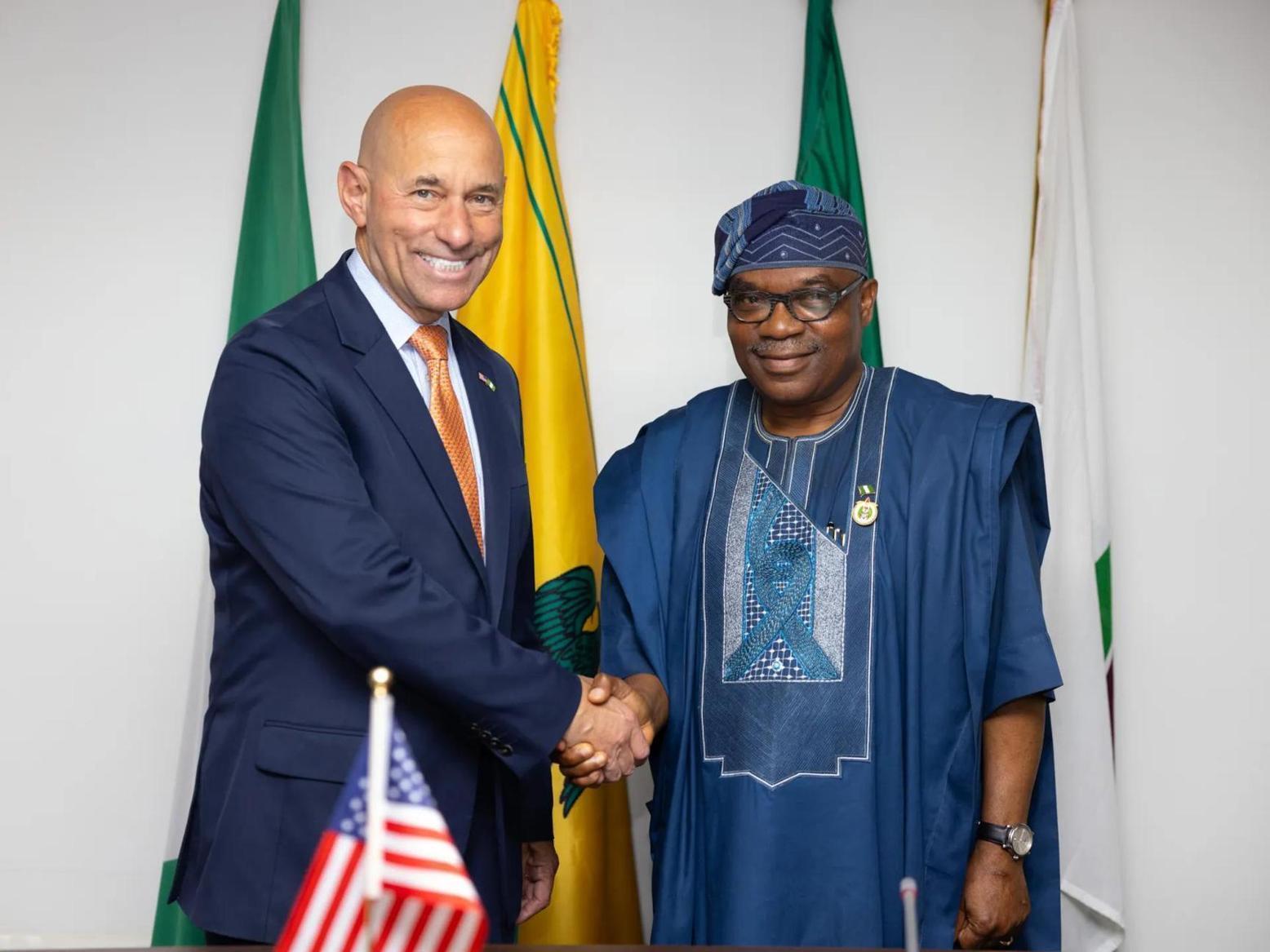
Africa-Press – Sierra-Leone. This week, Frank García, the U.S. Assistant Secretary of State for African Affairs, began his first visit to the continent since taking office, with a tour that includes Nigeria, Côte d’Ivoire, and Mali. This visit comes as the Trump administration seeks to rebuild relations with the Sahel Alliance.
The U.S. State Department stated in a post on X that García will visit Nigeria, Côte d’Ivoire, and Mali “to advance goals that safeguard the security of Americans, enhance economic prosperity in the United States, and defend American interests.”
The announcement followed a call described by the department as “productive” between García and Malian Foreign Minister Abdoulaye Diop regarding “shared interests” in the Sahel region. According to the source, the tour comes at a time when the Trump administration is looking to rebuild relations with the Sahel Alliance, which includes Mali, Niger, and Burkina Faso, while its Russian ally appears “increasingly unable to curb the expansion of jihadist rebels,” as expressed by Africa Report.
García and Christopher Landau, Deputy Secretary of State, met on July 1 with ambassadors from the Sahel Alliance in Washington to “reaffirm the United States’ commitment to working with the Sahel Alliance based on respect for sovereignty and advancing mutual interests.”
In Nigeria, García will discuss the next steps for a U.S. military partnership that focuses largely on protecting Christian populations in the country, as major joint operations in May resulted in the death of ISIS leader Abu Bilal al-Minhaki and around 200 militants, according to the White House.
As for Côte d’Ivoire, Washington has been in talks for months regarding the hosting of U.S. aerial equipment in the country after the U.S. lost its drone base in Niger.
The tour coincides with an open briefing expected to be presented by the head of the United Nations Office for West Africa and the Sahel, Leonardo Santos Simão, on July 14, followed by closed consultations regarding West Africa and the Sahel.
Confronting Russian Influence
In early July, García and Christopher Landau met with ambassadors from the Sahel Alliance, reaffirming the United States’ commitment to working with the Sahel Alliance based on respect for sovereignty and advancing mutual interests.
Political analyst specializing in African affairs, Qasim Keita, commented that “the United States is seeking to confront Russian influence through extensive diplomatic efforts that include offers to Sahelian countries regarding restoring security and stability, amid an American view that Moscow has failed to support these countries.”
Keita added in a statement that “despite this, there are still no agreements between the United States and the Sahel Alliance, which is facing unprecedented crises, especially in Mali, which is suffering from the expansion of armed groups, primarily Jama’at Nasr al-Islam wal Muslimin, affiliated with the terrorist organization al-Qaeda.”
The same speaker pointed out that “political circles from both the Republican and Democratic parties in Washington say that the Sahel cannot be neglected, especially since it contains vast resources, and I believe this visit falls within this context.”
Ambiguity and Hesitation
Months ago, Washington offered to support the Malian government in facing armed groups that have besieged the capital and prevented fuel convoys from entering.
Political analyst specializing in African affairs, Eric Ezeiba, believes that “despite Washington’s efforts to start a new chapter in relations with the capitals of the Sahel, ambiguity and hesitation overshadow these efforts.”
Ezeiba added in a statement that “ambiguity surrounds Washington’s goals and approach to the situation, as it has not yet announced any agreements in specific areas such as defense or economics, while Sahelian countries show hesitation, as they see that turning to Western powers again may provoke public discontent, which they promised to sever ties with Paris and Washington and establish broader cooperation with Moscow.”
He continued: “Sahelian countries find themselves in a difficult diplomatic, military, and economic position, as their governments are unable to find solutions to the complex security situation and their inability to attract investments to the country, while Washington shows rapid steps to return to the region for the precious minerals it possesses.”
Trade, Not Aid
The Trump administration has shifted its initiative titled “Trade, Not Aid” to the United Nations, as the U.S. mission hosts a high-level forum bringing together government officials, companies, and international organizations, targeting countries that Washington considers strategically important, aiming to encourage business-friendly reforms in developing economies, amid the ongoing repercussions of the closure of the U.S. Agency for International Development a year ago in Africa and beyond.
The initiative was launched on April 27 in New York Stock Exchange with the participation of officials from Djibouti, Kenya, Lesotho, Morocco, and Uganda.
Tom Hardy, the CEO of the U.S. International Development Finance Corporation, told Africa Report that the forum will showcase “how the U.S. government supports its friends, allies, and partners around the world through greater engagement in programs such as the U.S. International Development Finance Corporation, the American International Development Finance Institution, and the Export-Import Bank of the United States,” adding, “It is no secret that this administration focuses on its partnerships, allies, and friends, and on ensuring that our investments support their long-term sustainable economic growth.”
The issue of African minerals is also prominently featured this week, as it is expected that the Democratic Republic of Congo’s Foreign Minister, Thérèse Kaikwamba Wagner, will chair an informal meeting of experts on natural resource management, as part of her country’s presidency of the UN Security Council this month, paving the way for an event chaired by President Félix Tshisekedi next week regarding the need for a UN resolution to protect sovereignty over minerals.
On the ninth of this month, the Export-Import Bank of the United States appointed former Pentagon official Brett Lambert as CEO of Voltco, the entity tasked with leading Trump’s $12 billion initiative for the storage of critical minerals, known as the “Volt Project.”