
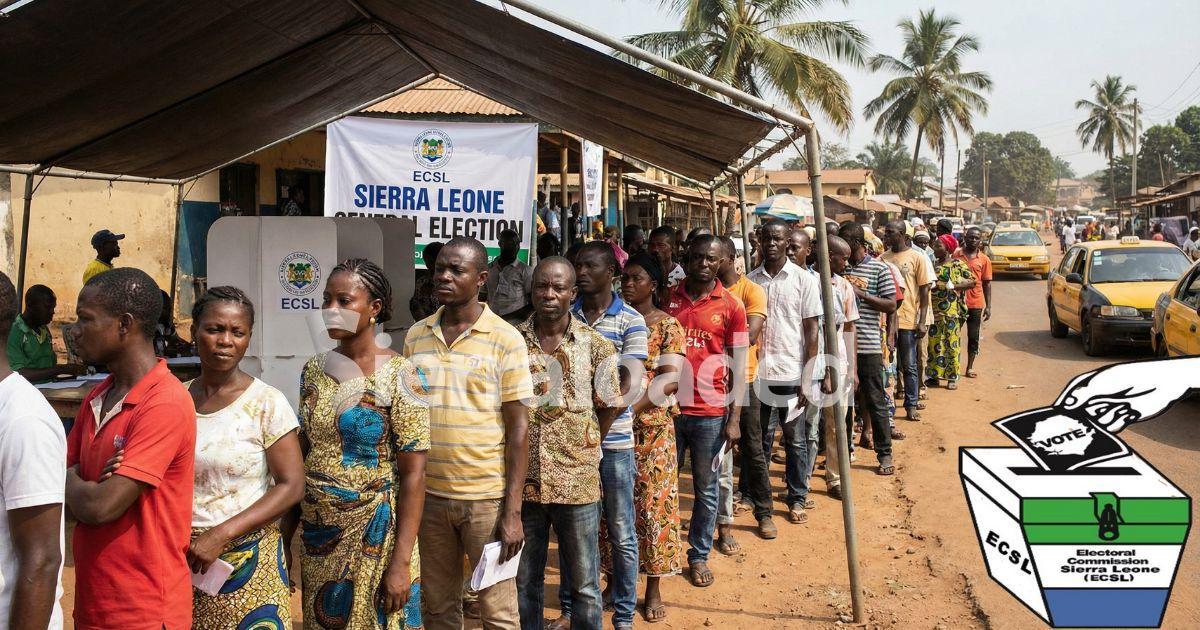
For the first time in its post-war history, Sierra Leone is poised to adopt a fixed calendar for parliamentary elections, a move designed to end decades of unpredictable scheduling.
Under the provisions of the 2025 Constitutional Amendment Bill, currently under review, general elections would be permanently set for the second Saturday of November every fifth year.
If ratified, the legislation would mandate that the country’s next parliamentary election take place on November 11, 2028.
The proposal seeks to repeal Section 87(1) of the 1991 Constitution, which currently allows a flexible window for elections to be held between 30 and 90 days after the dissolution of parliament.
This flexibility has historically led to an erratic electoral calendar, with dates shifting significantly across different seasons and months over the last two decades.
Since the end of the civil war, no two consecutive general elections have been held in the same month. In 2002, elections were on May 14; in 2007, they took place on August 11; in 2012, both presidential and parliamentary elections were held on November 17; in 2018, general elections occurred on March 7; and in 2023, the multi-tier elections were held on June 24.
Proponents of the bill argue that a fixed date will allow for better long-term planning by the Electoral Commission, political parties, and international observers, aligning Sierra Leone with other mature democracies that utilize.
While the shift toward predictability has been broadly welcomed, the specific choice of November has generated debate.
Legal advocacy group ILRAJ has publicly criticized the timeline, noting that while November falls within the dry season—resolving logistical challenges associated with rainy season polls—it sits precariously close to the end-of-year festive period. Critics argue that a November 11 date in 2028 would push result collation and potential runoff procedures into December, risking voter fatigue and conflicting with national holidays.
The Tripartite Committee, tasked with reviewing electoral reforms following the 2023 polls, had reportedly favored a window in March, April, or May to avoid these conflicts. However, the current bill retains the November schedule.
The government maintains that the amendment is a necessary step toward stabilizing the country’s democratic institutions. If passed, the bill will lock in the 2028 date, giving political actors nearly three years of certainty before the next ballot is cast.