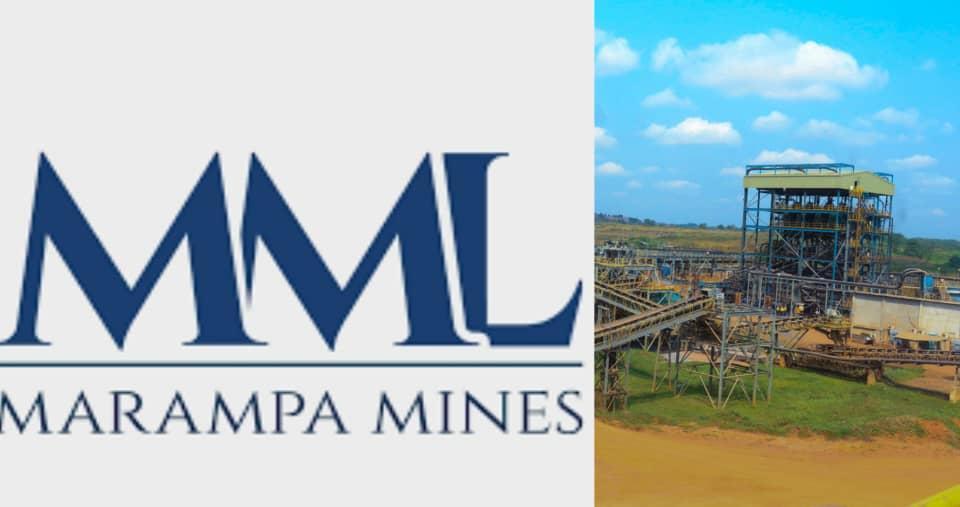
Africa-Press – Sierra-Leone. The National Revenue Authority (NRA) has issued a demand notice to Marampa Mines Limited to promptly pay the US$5.7 million freight levies. Marampa Mines has contested this demand, claiming exemption from all port, harbor, loading or unloading dues, fees, and stevedoring charges imposed by the SLPA, SLMA, or any other entity. They cite provisions within their Mining Licence Agreement signed with the Government of Sierra Leone in December 2021, which spans 25 years.
Conversely, the SLMA argues that the Administration has the authority, as outlined in Section II (1) of the SLMA Act, to impose charges on large-scale mining companies for cargo discharged or loaded in Sierra Leone. A former senior Member of Parliament from the opposition All Peoples Congress Party emphasized that an Act of Parliament holds greater authority than an Agreement ratified by Parliament.
A spokesperson for the Sierra Leone Ports and Harbours Authority warned that failure to comply with the NRA’s demand order could result in the impoundment of Marampa Mines’ vessels and the cessation of their operations in Sierra Leonean waters. A senior official from MML reiterated their reliance on legal advice provided by their legal team.
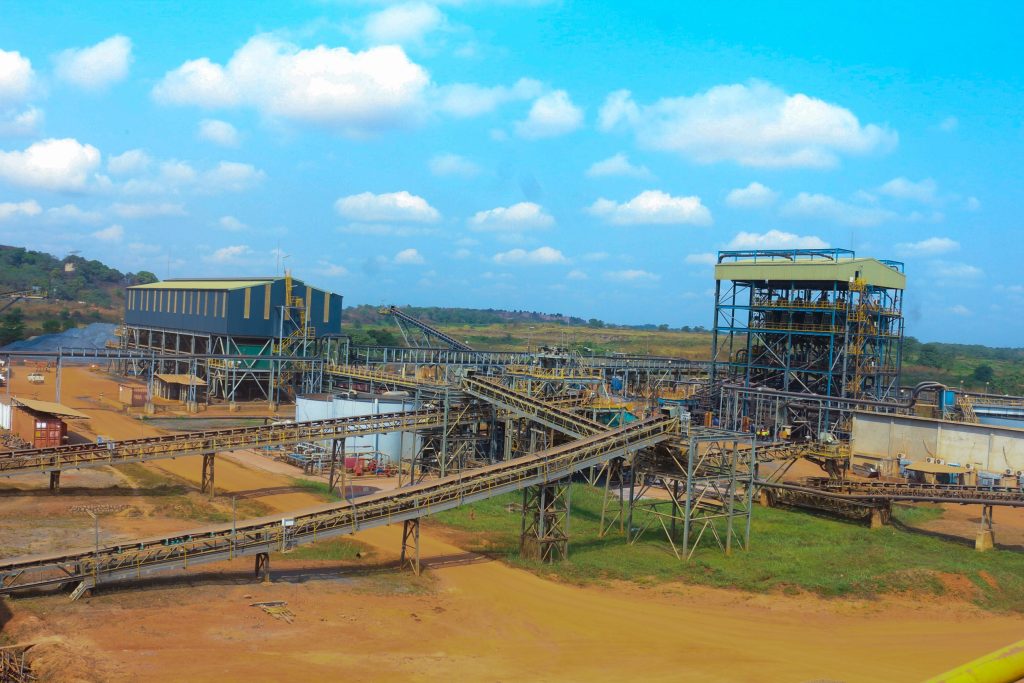
Sierra Leone vs. “Marampa Mines”… A Shipping-Fees Dispute Between Government Stance and Contractual Claims
Sierra Leone’s mining file took a new turn in November 2024 after the Sierra Leone Maritime Administration (SLMA) demanded that Marampa Mines Limited (MML) pay US$5.7 million, which it said was due as fees linked to seaborne shipments of iron ore. The demand coincided with a notice from the National Revenue Authority (NRA) calling for immediate payment, moving the dispute from technical correspondence into the public arena where politics, contracts, local interests, and shipping companies’ concerns intersect.
Dispute Background: A Financial Claim and a Contested Legal Umbrella
The government bases its demand on what it considers sovereign fees and service charges collected on cargo moving through ports and sea lanes—covering, according to summaries of the claim, port and harbor dues, loading/unloading, and related charges levied by the Sierra Leone Ports Authority (SLPA), SLMA, and others. The company rejected the demand, asserting it is exempt from such fees under a 25-year Mining Licence Agreement (MLA) signed with the Government of Sierra Leone in December 2021, which it says grants it preferential rights to use export infrastructure.
What Does the Agreement Say?
Official documents published by the National Minerals Agency (NMA) show that the Marampa Mines agreement was concluded in late 2021 and presented as a long-term framework to develop the mine and relaunch exports after earlier sector disputes. Its clauses regulate transport and export rights and the use of ports, rail, and roads, alongside project-specific financial and regulatory arrangements. The core of today’s dispute is how far the exemptions reach—whether they cover all port/stevedoring/navigation charges in full, or only a defined subset of services.
Government’s Position: Sovereign Fees and Revenue Protection
Authorities are treating the case as one of fee compliance and revenue collection. In addition to SLMA’s demand, the NRA sent final notices urging payment, part of a broader push to tighten financial discipline and collect arrears in foreign-exchange-earning sectors. The official line frames the claim as enforceable and casts it as protecting state revenues from maritime services amid external-financing pressures and balance-of-payments challenges. Local analysts add that reforms to port-operations models and expanded private participation have heightened sensitivity around fees and charges tied to maritime traffic.
The government also invokes a level-playing-field logic: broad exemptions for a major exporter could distort the market and undercut competitors who pay the full schedule of fees. From this angle, the dispute is portrayed as a “difference in interpretation” to be resolved within legal and administrative channels, not as a blow to investment appeal—especially since the project is pivotal for iron-ore exports.
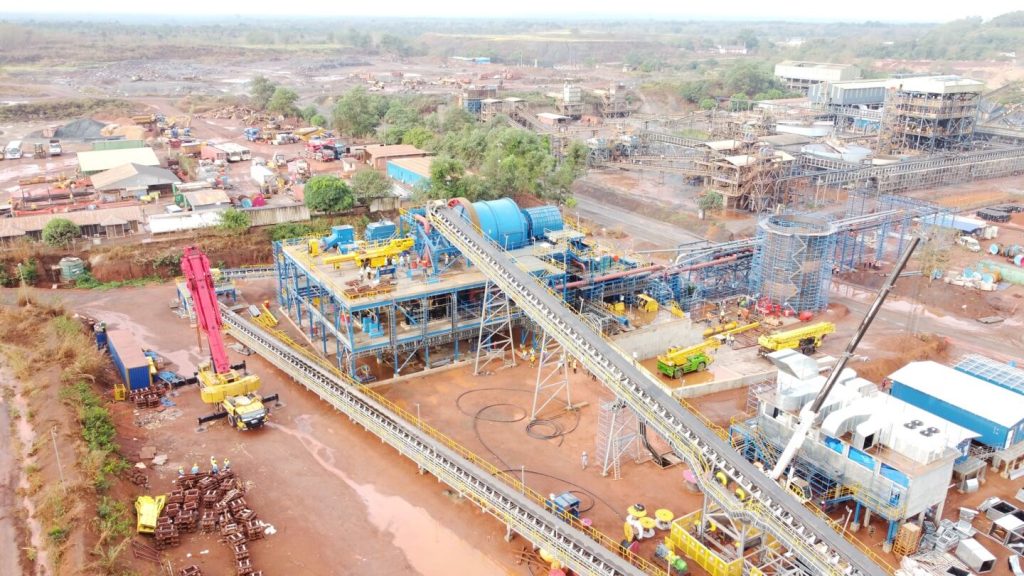
Company’s Position: “The Contract Rules Above All Else”
MML, for its part, stands by its reading of the 2021 MLA. It argues that the exemptions and preferential rights set out in the agreement shield it from all port, harbor, loading/unloading, stevedoring, and similar charges, regardless of the collecting entity (SLPA, SLMA, or others). Any new or re-interpreted fees after the MLA’s execution, the company contends, breach the state’s contractual commitments and risk damaging regulatory predictability for investors, financiers, and contracted shipping firms. MML also notes that the MLA was publicly promoted as a long-horizon arrangement offering clarity sufficient to justify capital outlays for higher production and exports.
The company implicitly points to the sensitivity of international disputes in Sierra Leone’s mining sector, following a string of past cases—underscoring the value of negotiated settlement or domestic arbitration mechanisms before any escalation to international forums.
Stakeholders: A Web of Interlocking Interests
Government bodies. Key institutions include SLMA as the fee-claiming maritime regulator; SLPA as port-service provider; the NRA as the revenue-enforcement arm; and the NMA and line ministries as licensing and policy overseers. Each has distinct roles, but their overlap across fee schedules and regulation means coordination—or conflicting interpretations—can materially influence the dispute’s path.
Communities and supply chains. Marampa and surrounding areas rely on direct and indirect jobs generated by the mine, while local authorities track community-development contributions. Any significant disruption—whether through stricter fees or slowed exports—could affect employment, local revenues, and foreign-exchange inflows. Shipping companies and logistics providers are likewise watching outcomes to recalibrate cost/risk and contractual liability.
Investors and donors. Investors read the dispute through the lenses of “contract stability” and “policy predictability.” Donors and international financial institutions focus on collection efficiency and port-sector reform as components of fiscal sturdiness and non-tax revenue mobilization—context that helps explain the dispute’s sensitivity amid ongoing operational and governance changes in ports.
What Next? Possible Settlement Paths
Three primary avenues lie ahead:
1. Negotiated settlement updating a “fee matrix” and precisely defining the MLA’s exemption scope—potentially with a phased implementation schedule or interim discounts.
2. Domestic adjudication/arbitration to interpret exemption clauses and financial obligations, accounting for the hierarchy of laws and maritime/port regulations.
3. International escalation if local routes fail—an option that is politically and economically costly for both sides given past sector experience.
Ultimately, the crux is how the exemption clauses are read: do they nullify all port, stevedoring, and maritime dues, or only certain defined services? A precise legal answer—backed by a joint public clarification—could end the wrangle and prevent spillover into shipment delays or investment jitters, particularly since the mine is a major source of foreign exchange and local livelihoods. Until clarity emerges, the file will remain a test of Freetown’s ability to balance firm revenue enforcement with the sanctity of long-term contracts that underpin its investment strategy.
For More News And Analysis About Sierra-Leone Follow Africa-Press