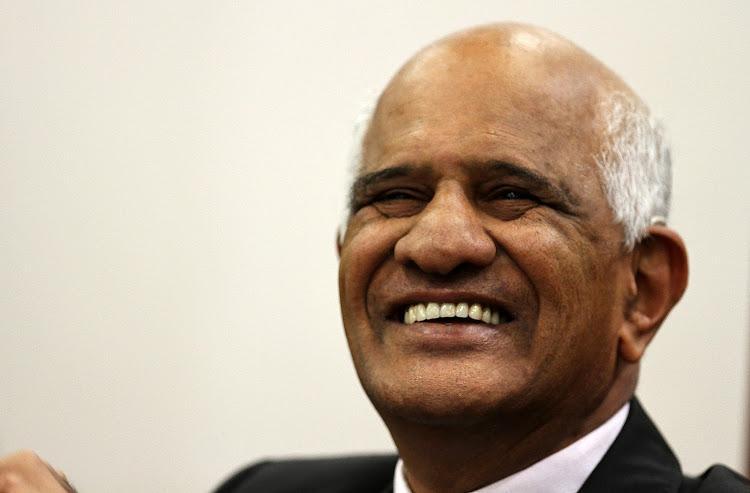
Africa-Press – South-Africa. Chief justice Raymond Zondo has clarified that retired justice Zak Yacoob would be rendering “only a support service to the justices of the Constitutional Court” — in circumstances of the “huge workload” faced by the court’s justices since the expansion of the jurisdiction of the court.
This follows a report in the Sunday World earlier this month that Yacoob had been appointed to the Constitutional Court to “advise the 11 justices of the court on which appeal cases to dismiss and which to entertain”.The report led to concerns that the highest court was outsourcing its constitutional responsibilities. After the report, the Council for the Advancement of the South African Constitution wrote to Zondo seeking clarity on the media report.
In its letter Casac said a decision to set down or dismiss an application that came to the Constitutional Court was “a core judicial function that is entrusted by the constitution to members of the court”. Yacoob was “constitutionally barred” from performing any of the court’s judicial functions. The Sunday Times also sought clarity from the chief justice.
On Friday, Zondo’s office said, in response to the Sunday Times’ questions, that Yacoob would not “take part in the adjudication of any matter… He renders only a support service.”
In the written response, Zondo’s office said Yacoob was “requested to render a service to the serving justices of the Constitutional Court” in terms of section 7 of the Judges’ Remuneration and Conditions of Employment Act read with paragraph (d) of the definition of the word “service” in section 1 of that act.
The service entailed reading new applications that were referred to him “and prepare a draft memorandum in respect of each new application referred to him,” said the chief justice’s office.
“Such a draft memorandum is then sent to the chief justice who will send it to a serving justice of the Constitutional Court who will have been allocated that new application. That justice may, upon reading the application papers, adopt such a draft memorandum as his or her own if he or she is satisfied with it or reject it and prepare a new memorandum if he or she is unhappy with it or he or she may amend it as he or she deems fit.”
The serving justice would then circulate to the other serving justice “a memorandum that he or she is happy with and at conference the serving justices will decide the new application,” said the response from Zondo’s office.Yacoob was volunteering this service. It would also not be just him doing it. Retired justice Johan Froneman had also been approached and had agreed, said the response.
“The idea is that at any one time there would be two retired justices of the Constitutional Court rendering this support service to the serving justices and they would render the service for a few months and then another two retired justices would be given a chance to render the service and later another two retired justices would be approached. The retired justices participate in this initiative on a voluntary basis.”
The chief justice’s office said the apex court’s justices had “a huge workload arising from the expansion of the jurisdiction of the Constitutional Court in circumstances where the number of justices doing the work has not increased”.In the past few years, this has led to “adverse” media reports about delays on the part of the Constitutional Court in dealing with new applications. The response said that last year there were 355 new applications at the ConCourt.
“Although the statistics for 2012 — the last year before the jurisdiction of the court was expanded — are not available, there is no doubt that last year’s 355 new applications represent a considerable increase from the number of new applications that were brought to the Constitutional Court in 2012.”
The initiative by the chief justice was aimed at alleviating the workload on the serving Justices and improving the quality of the service to the public. It was embraced by the court’s other serving justices and the justice minister, said the chief justice’s office.
“This initiative is at a trial stage to see whether it will work and at some stage a review will be undertaken to see how effective it is,” it said.
For More News And Analysis About South-Africa Follow Africa-Press