Africa-Press – South-Africa. South Africa’s new Integrated Resource Plan (IRP) is outdated, with its focus on older technologies likely to result in this plan being around R250 billion a year more expensive than alternative strategies.
This is largely because the release of IRPs in South Africa have been repeatedly delayed, with the country only having three plans for the past 15 years.
Energy expert Clyde Mallinson explained that the country should release an IRP every two years, as it is intended to be a “living plan” that is constantly updated to reflect changes in demand, supply, and technology.
However, Mallinson told BizNews that these plans have become straitjackets in their recent iterations, limiting electricity generation to specific technologies and preventing any freedom to evolve with changing supply and demand dynamics.
The latest plan, unveiled by Electricity Minister Kgosientsho Ramokgopa on 19 October, envisions R2.23 trillion being invested in energy infrastructure by 2042.
It outlines ambitious plans to grow nuclear and gas generation in South Africa to make up 16% of total generation capacity in the country, a significant increase from the 3% currently produced from these sources.
Dependence on coal will drop to 27% by 2042 from the current 58%, as gas, nuclear, and renewables are set to make up a larger share.
This does not mean coal-fired power plants will close or reduce their output, just that other sources will grow more rapidly to take a larger share of generation.
“This is the single biggest investment program of the post-apartheid era and will ensure that we’re able to achieve energy security,” Ramokgopa said.
However, Mallinson questioned whether this plan is realistic, saying it is out of date considering the six years it took to update the last IRP, with the plan not paying attention to the significant shifts in generation technology.
“It is not good from the base up. It is a form of clinging to the past and clinging to fossil fuels. It is choosing the most expensive and inflexible option when it comes to nuclear,” Mallinson said.
“You need to be agile, flexible, and have a game plan. By 2040, when nuclear may or may not be built, we will have about 90 GW of solar, 60 GW of wind, and 50 GW of storage.”
“We might then have 5 GW of nuclear sort of running around and stopping every 18 months for refuelling. It will be bizarre to have nuclear.”
Mallinson explained that, apart from its inflexibility, nuclear is immensely expensive to build and has a significantly longer lead time than other technologies.
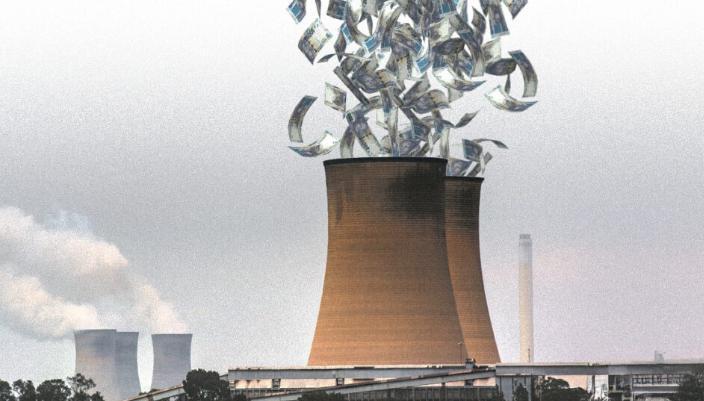
“Things are moving so quickly to make nuclear prohibitively expensive. I did an analysis some time ago to put together an alternative plan that by 2042 would cost South Africa R250 billion less per year than the current plan,” he said.
This is largely due to the sharp declines in price for renewable technologies, with the price of solar panels coming down and battery storage halving in cost.
“Trying to plan with something like nuclear in an evolving technological landscape, where the cost of batteries is now 5% of what they were ten years ago, is a mistake. You cannot plan amid disruption. You have to plan for it,” Mallinson said.
Going nuclear
Energy analyst Clyde Mallinson
A build-out of nuclear power will take substantial resources and will take longer than other forms of energy, which is why the government plans to couple it with gas power.
Currently, gas produces a negligible amount of power in South Africa, but the new IRP plans to expand its generation capacity to 6,000 MW by 2030.
Gas is relatively quick to install, with Ramokgopa explaining that it will be used as a stabiliser until sufficient nuclear generation can come online.
However, while this ambitious plan makes sense on paper, the reality on the ground is changing rapidly as countries invest heavily in energy infrastructure.
For example, there are estimated waiting times of over six months for a gas turbine in the United States as tech giants use them to generate power for their new data centres.
In this environment, it will be difficult for South Africa to build out gas infrastructure, with it likely to be more expensive than anticipated.
Ultimately, gas and nuclear will account for 16% of total generation capacity in the next 14 years, with the potential to expand nuclear generation further to 10,000 MW.
Currently, South Africa’s only nuclear power station, Koeberg, produces just over 1,800 MW of electricity from the two largest turbine generators in the southern hemisphere.
“Globally, there’s a trend of going nuclear,” Ramokgopa said. “Fourteen of the world’s top financing institutions have committed to financing nuclear going into the future. So we’re not just restricted to a boutique, or a small grouping, of finance institutions.”
Mallinson said the government has been relatively quiet on the costs of this immense rollout and how it is going to be financed.
“There is all this talk about lifting people out of poverty, and the reason for that poverty has been a lack of energy, but this plan fails to adequately address energy poverty,” he said.
There are cheaper methods, Mallinson argued, to create a surplus in electricity generation that can enable faster economic growth and drive down prices.
He said the future of electricity in South Africa is no longer about trying to meet demand through various means, but should shift towards creating an excess in supply to drive down prices and foster growth.
For More News And Analysis About South-Africa Follow Africa-Press