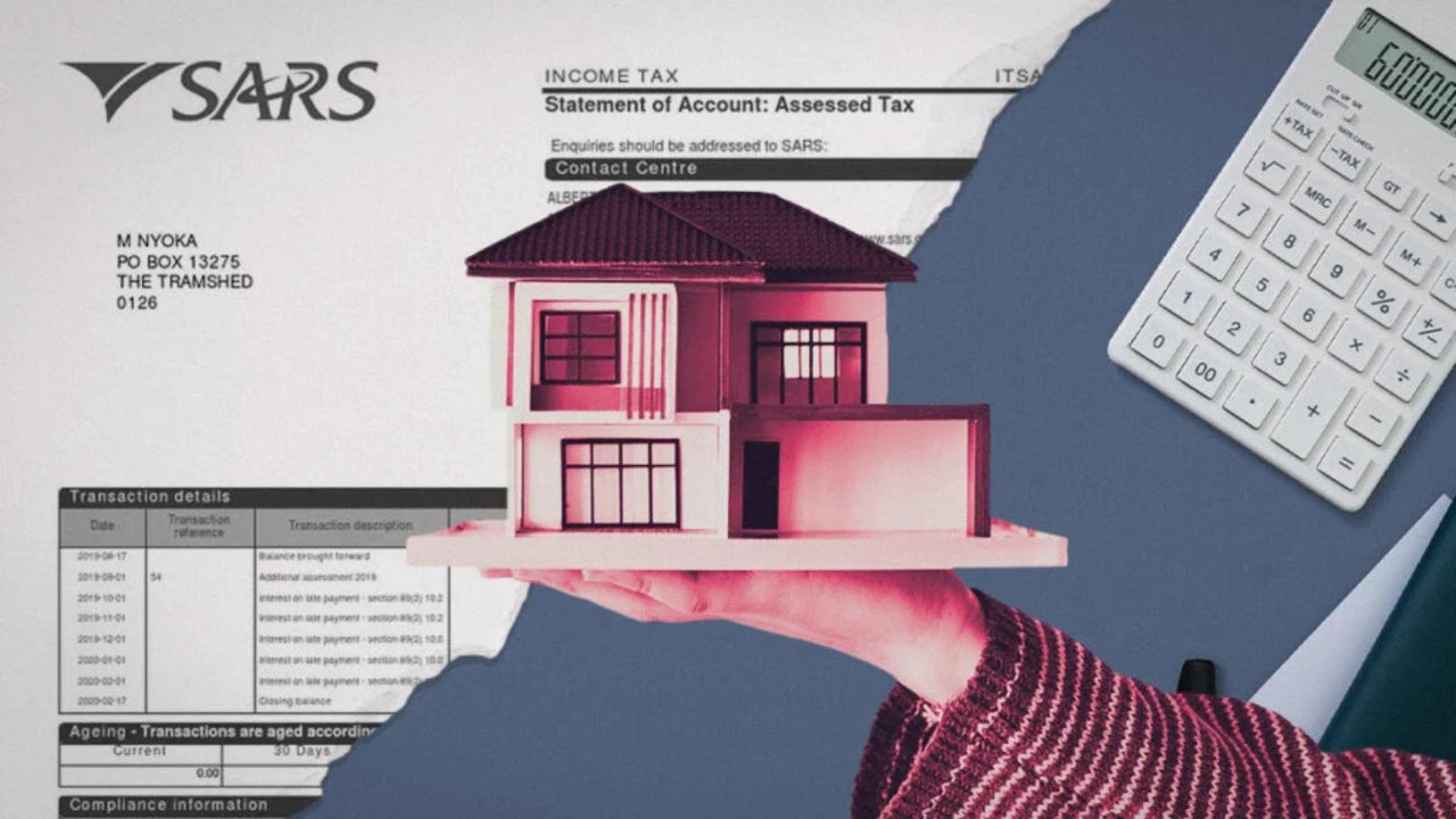
Africa-Press – South-Africa. A Budget change increasing the primary residence capital gains tax exclusion from R2 million to R3 million can save sellers up to R180,000.
The 2026 Budget announced an adjustment to the capital gains tax (CGT) exclusion for primary residences from R2 million to R3 million.
For qualifying sellers, this change effectively increases the tax-free portion on the capital gain (profit) realised on the disposal (sale) of a “primary residence” in South Africa by R1 million.
For those using a top marginal capital gains tax rate of 18%, it means they save R180,000, explained Foreign Buyer Property Solutions’ attorney Robyn Kymdell.
She explained that the latest tax law changes in South Africa were promulgated on 1 April 2026. These consist of:
The Rates and Monetary Amounts and Amendment of Revenue Laws Act 3 of 2026
The Tax Administration Laws Amendment Act 4 of 2026
The Taxation Laws Amendment Act 5 of 2026
“What is often confusing is when your estate agent, accountant or tax advisor says they have studied these amendments and cannot find where the primary threshold was increased to R3 million,” Kymdell said.
“They are correct: the threshold increase is not promulgated in law in the same manner as the new SARS tax tables.”
Paragraph 45(1A) of the Eighth Schedule to the Income Tax Act (the Act) deals with the process surrounding the Finance Minister’s announcement of an alteration to the amount of a capital gain or loss.
When this happens, the alteration comes into effect on the date or dates determined by the minister in that announcement and continues to apply for 12 months from that date.
Alternatively, it will come into effect on those dates subject to Parliament passing legislation giving effect to that announcement within the 12-month period.
“Therefore, despite the recently promulgated legislation remaining silent on the R3 million exclusion, the new R3 million threshold will apply by operation of paragraph 45(1A) of the Eighth Schedule to the Act.”
When a property sale becomes taxable
For those who were in the process of selling over the period, Kymdell said it is very important to understand whether the sale falls under the old or new dispensation.
“If your sale was concluded before the effective date, you only get R2 million exempt on a primary residency sale,” she explained.
“However, where tax law recognises the sale after the effective date, you get R1 million more tax-exempt income. South African tax law is clear: A capital gains tax is triggered at the time of disposal.”
Kymdell explained that, in the context of immovable property, the time of disposal is not determined by when the transfer is registered or when the purchase price is paid or received.
The timing is determined by when the sale agreement becomes unconditional and fully operative and enforceable under the law.
“This is where the expertise of a tax attorney becomes important when you want the additional exemption but are not sure whether it can be claimed.”
The critical part of South Africa’s tax law which must be considered is paragraph 13(1)(a) of the Eighth Schedule to the Act.
It specifies that the time of disposal of an asset by means of a change of ownership effected or to be effected from one person to another because of an event, act, forbearance or by operation of law is, in the case of:
an agreement subject to a suspensive condition, the date on which the condition is satisfied;
any agreement which is not subject to a suspensive condition, the date on which the agreement is concluded.
Kymdell said the SARS Comprehensive Guide to Capital Gains Tax repeats this position – that the time of disposal is effectively when the agreement is fully concluded.
Property transactions are often subject to suspensive conditions, the simplest and most common being that the buyer must secure a mortgage.
In such cases, the law determines that the date on which these conditions are satisfied is the point at which the agreement becomes fully operative and enforceable for purposes of determining the time of disposal.
When the R3 million exemption applies
To illustrate how the CGT amendment works in practice and to which transactions it applies, Kymdell used a few basic examples.
Where the sale agreement was concluded, or the suspensive conditions were fulfilled before 1 March 2026, the R2 million exclusion applies, even if the transfer occurs later.
On the other hand, where the sale agreement was concluded, or suspensive conditions were fulfilled on or after 1 March 2026, the R3 million exclusion applies.
“Accordingly, if the sale agreement became binding before 1 March 2026 but the transfer was, or is only registered later, unfortunately, only the lower R2 million exclusion still applies.”
If a property is sold with a profit of R2.5 million, under the R2 million primary residence exclusion, R500 000 of the profit remains taxable and will be subject to capital gains tax.
However, if the transaction was legally concluded after 1 March 2026, the R3 million exclusion would apply. “This means the full profit falls within the exemption, and no capital gains tax will be payable.”
Importantly, Kymdell noted that the time of disposal is legally determined as of the date the agreement is concluded.
This means that inserting an “effective date” in a contract, or attempting to change the timing through later documentation or re-signature, does not change the capital gains disposal date.
This is the general rule, and each agreement should be carefully reviewed to determine the appropriate treatment, she noted.
SARS also explained that it is a common practice for parties to insert an “effective date” in an agreement of sale which differs from the date on which the agreement is concluded.
However, the insertion of an effective date in a contract does not affect the time of disposal laid down in para 13 of the Act.
“The time of disposal under a contract not subject to a suspensive condition is the date on which the agreement is concluded, not any effective date agreed to by the parties,” SARS said.
A key caveat is that certain contractual provisions, including resolutive or other clauses not specifically listed in the Act, in sale agreements require careful legal and tax analysis, with broader contract law principles in mind.
“The specific drafting of an agreement can therefore influence when a disposal is regarded as having occurred for tax purposes,” Kymdell said.
“Property sale agreements are highly specific, and even small differences in wording or conditions can influence the tax outcome.”
For More News And Analysis About South-Africa Follow Africa-Press