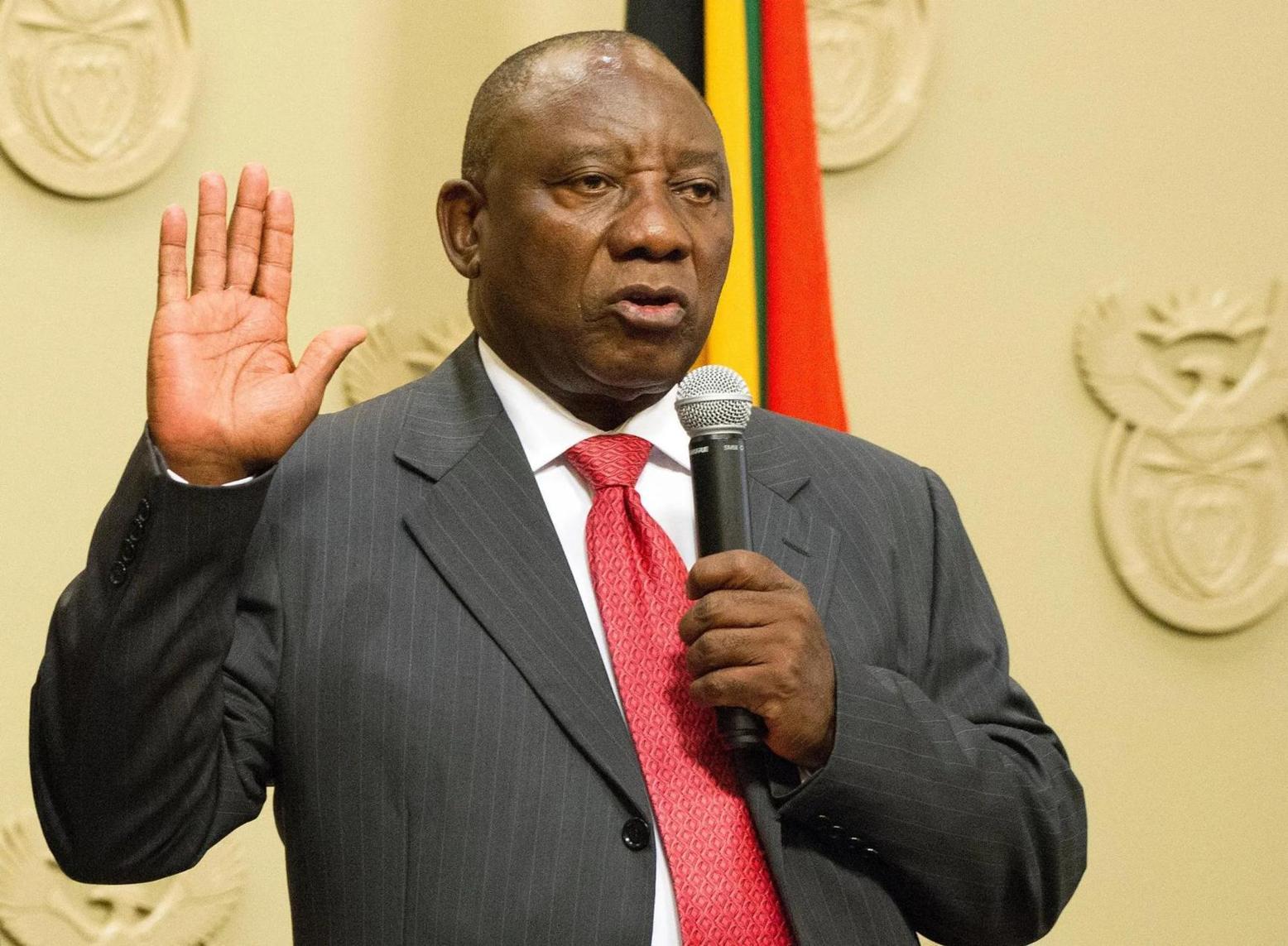
Africa-Press – South-Africa. South Africa’s political landscape has entered a new phase of tension following a ruling by the Constitutional Court that revived the process of holding President Cyril Ramaphosa accountable regarding his private farm, known as “Phala Phala.”
The court ruled that the decision made by Parliament in December 2022, which had dismissed a recommendation to initiate impeachment proceedings against Ramaphosa, was “unconstitutional.”
It also ordered the referral of the report from the independent committee on the matter to a parliamentary committee specialized in impeachment, opening the door to new political and legal investigations that could pose the most significant challenge to the president since he took office.
The case dates back to 2020 when Ramaphosa’s Phala Phala farm, located in the Limpopo province in the north of the country, was subjected to a burglary involving the theft of foreign cash hidden inside furniture on the property, according to circulating allegations.
However, the case did not escalate into a major political issue until a former intelligence official filed a formal complaint in 2022, accusing the president of concealing the crime from police and tax authorities and handling the incident outside legal frameworks.
Since then, Phala Phala has become one of the most controversial cases in South Africa, especially with accusations against the president of attempting to contain the issue by pursuing those involved in the theft and buying their silence instead of informing the relevant authorities.
The ruling from the Constitutional Court represented a significant political blow to the president and the ruling African National Congress party, as the court confirmed that Parliament failed to fulfill its oversight duty when it declined to proceed with impeachment proceedings nearly four years ago.
The Chief Justice stated that the vote by the National Assembly on December 13, 2022, “contradicts the constitution, is a null decision, and must be annulled.”
The court also deemed some parliamentary rules used to close the case unconstitutional, prompting it to officially return the file to the parliamentary impeachment committee.
Following the ruling, opposition parties in South Africa called for the impeachment of President Ramaphosa, led by the Economic Freedom Fighters, a leftist party that spearheaded the legal battle against the government and Parliament to reopen the case.
The opposition party welcomed the ruling, considering it a victory for the constitution and the rule of law. Its leader stated in court in Johannesburg that the African National Congress had previously used its parliamentary majority to shield the president from accountability, adding that the party “exploited the majority to suppress corruption cases.”
The opposition accused the previous Parliament of ignoring the findings of an independent committee that concluded there was preliminary evidence of serious misconduct by the president.
The opposition party also called for immediate impeachment proceedings, arguing that Ramaphosa’s continued position while facing such a significant parliamentary investigation undermines the image of the state and its institutions.
In contrast, President Ramaphosa quickly announced his full respect for the court’s decision, affirming his commitment to the rule of law.
A spokesperson for the presidency stated that Ramaphosa “acknowledged the ruling and respects it,” adding that he believes “no one is above the law.”
The presidency confirmed that the president has cooperated throughout the past period with all investigations related to the case and will continue to cooperate with any future parliamentary or legal proceedings.
Despite increasing political pressure, Ramaphosa continues to deny any legal wrongdoing, as well as the narratives suggesting that millions of dollars were present on his farm.
The president asserts that the stolen amount was approximately $580,000, resulting from the sale of 20 buffalo to a Sudanese businessman, not the four million dollars as reported in the media and by the opposition.
The reopening of the Phala Phala case comes at a highly sensitive time for the African National Congress, which has faced a significant decline in popularity due to economic crises, rampant corruption, and declining public services.
During the last general elections in 2024, the party lost its historic parliamentary majority for the first time since the end of apartheid, with its share dropping to around 40% of the seats.
This decline forced the party to enter into a coalition government with several parties, a coalition described by observers as fragile and filled with political contradictions.
This means that Ramaphosa no longer enjoys the same parliamentary protection that previously helped him navigate attempts at accountability.
In this context, the Democratic Alliance, the second-largest party in the coalition government, announced that it would participate “fully and constructively” in any committee formed for Ramaphosa’s impeachment.
The party leader stated that the party would not shield anyone from accountability “regardless of their position,” adding: “We will not preempt the investigation’s results, but we will also not allow any official to be above accountability.”