Kester Kenn Klomegah
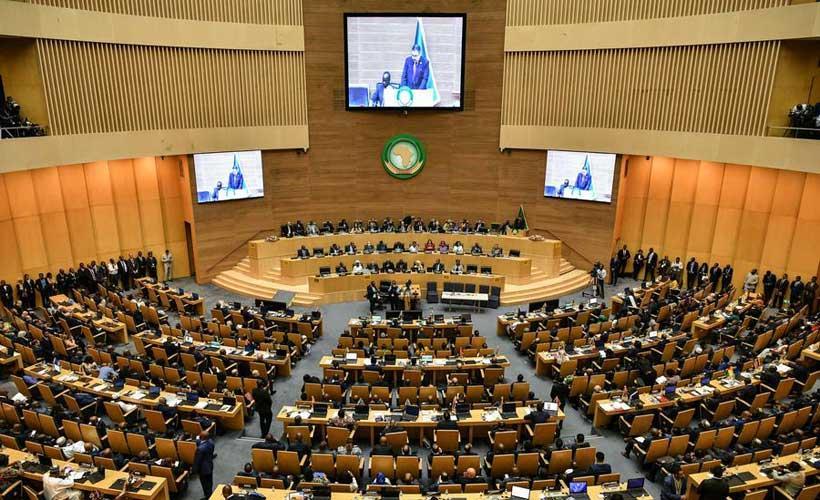
Africa-Press – South-Africa. Under the auspices of the African Union leadership, African leaders convened in Addis Ababa, Ethiopia, for the 39th Ordinary Session of the African Union Assembly.
Under the auspices of the African Union leadership, African leaders convened in Addis Ababa, Ethiopia, for the 39th Ordinary Session of the African Union Assembly. The significance of this gathering for Africa is highly well-known over several years, as the development aspects have been thoroughly discussed, reviewed, and set forth multiple times in collective declarations.
As leaders together in Ethiopia’s capital, in the pursuit of a prosperous Africa, the pathway to achieving broader socio-economic goals would be determined by good political governance. The new narratives for ensuring the effectiveness of a robust state administration characterized by probity and accountability. Mahmoud Ali Youssouf, Chairperson of the AU Commission, underlined this position by reminding African leaders of the importance of sustaining peace and engaging in institutional reforms. It was clearly supported by Angolan President Lourenço, stressing that Africa’s development depends on “silencing the guns” and addressing ongoing conflicts, particularly in Sudan and the Democratic Republic of the Congo, as well as combating terrorism in the Sahel and Horn of Africa. The AU rejects unconstitutional changes of government and consistently warns against legitimizing coups through subsequent elections.
Structural Question: The African leaders confronted the future, as Africa is entering a period of financial recalibration. Institutional reform was one of the key aspects and dominated the discussions. But the central question is no longer whether reform is necessary. At a pivotal moment for Africa, the question is how it will be financed. Against a backdrop of weakening multilateralism and rising global polarization, institutional reforms and financial self-reliance are now imperative as external funding declines.
Without mincing words, Chairperson Youssouf emphasized that institutional reform and financial self-reliance are now imperative as external funding declines. He called for stronger domestic resource mobilization and faster implementation of continental flagship programs, particularly industrialization, agricultural transformation, energy development, and infrastructure expansion, which he described as essential conditions for sustainable growth. In addition, debt restructuring, tighter global capital, and shifting geopolitical alignments are redefining fiscal space across the continent.
Economic Direction: “Institutional reform and financial self-reliance are now imperative as external funding declines,” he stated. Youssouf acknowledged rising expectations from Africa’s youth, women, and civil society, emphasizing that this decade of Agenda 2063 must deliver tangible performance and measurable results.
João Manuel Gonçalves Lourenço, President of the Republic of Angola and outgoing Chairperson of the AU, opened the 39th African Union (AU) Summit by calling for accelerated action as a strategic priority essential for Africa’s development and stability. Lourenço also highlighted progress in advancing Agenda 2063, mobilizing investment for infrastructure, strengthening continental integration through the African Continental Free Trade Area (AfCFTA), and promoting reforms to improve AU efficiency and reduce bureaucracy.
Leveraging Multilateralism: UN Secretary-General António Guterres stressed the importance of strengthening the strategic partnership between the United Nations and the African Union, underscoring multilateral cooperation as essential for peace, security, and sustainable development. He further signals active policy decisions, institutional discipline, and credibility shaping Africa’s next decade, while strongly recommending regional leverage and coordination with multilateralism.
António Guterres highlighted Africa’s growing influence in global affairs, reaffirmed the need for UN Security Council reform (including stronger African representation), and emphasized support for Africa’s development goals, industrialization, and equitable access to financing. The remarks aligned with continental priorities and reinforced the commitment of both organizations to work together on peace, resilience, and prosperity for Africa and the world.
Reports indicated that a number of continental policy decisions and declarations have been taken by the AU to foster actualization of the proposed visions, including the Africa Agenda 2063.
For More News And Analysis About South-Africa Follow Africa-Press