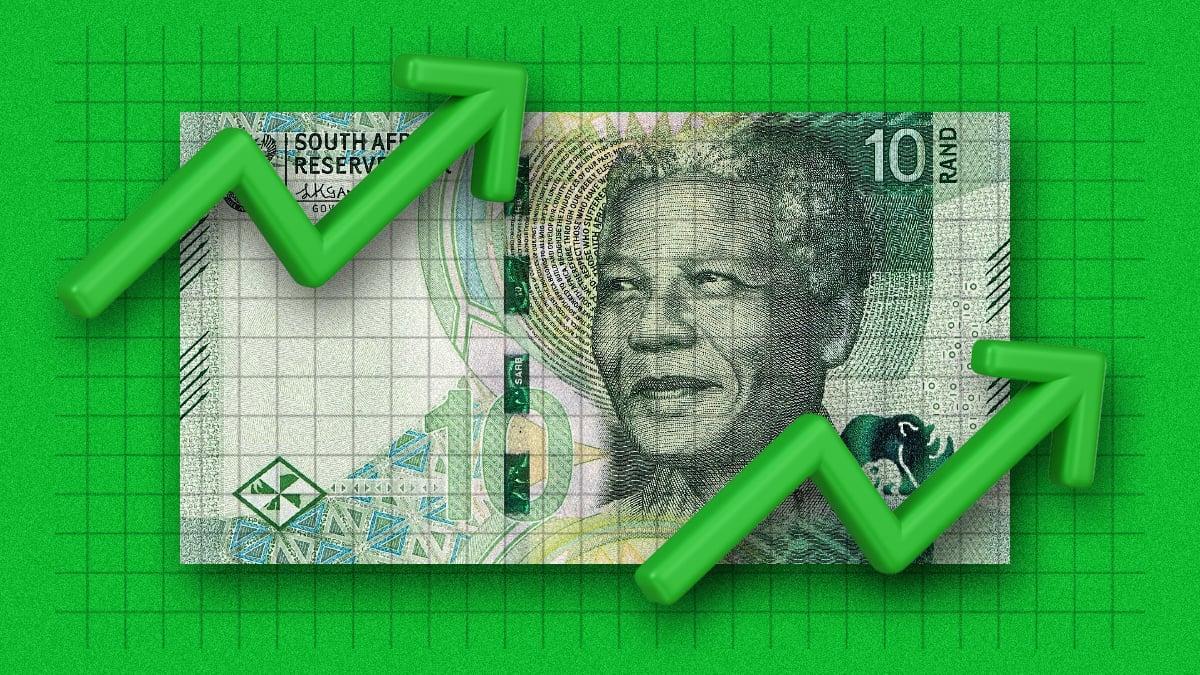
Africa-Press – South-Africa. The South African rand jumped by more than 2% in early trade on Wednesday, sending the currency to its best level against the US dollar in over a month.
This has reversed some of the currency’s losses since the start of the US-Israeli war on Iran after President Donald Trump agreed to a two-week ceasefire, easing fears of energy-driven inflation.
The rand has been pummeled by the ongoing conflict, with the currency being highly vulnerable to external shocks.
This is partly due to South Africa’s relatively deep and liquid capital markets for an emerging economy. As a result, the rand often trades as a proxy for broader emerging market sentiment.
The conflict had seen this relationship break slightly, with the rand being punished more then its emerging market peers.
Stanlib chief economist Kevin Lings explained this is a function of some emerging markets being set to benefit from soaring oil prices as they are major exporters. Examples of this include Nigeria and Angola, among others.
The rand was the third-worst-performing emerging market currency in March, while others are enjoying a resurgence on the back of elevated oil prices.
Since the announcement of a two-week ceasefire between US-Israeli forces and Iran, the rand has strengthened by almost 3% to trade at R16.37 to the dollar at 09:00.
Emerging-market assets, more broadly, also gained after a ceasefire deal between the US and Iran caused oil prices to plunge and revived risk appetite.
The MSCI EM stock gauge rose 4.3% on Wednesday, while its currency counterpart added 0.8%. Brent crude oil fell 16% to $91.70 a barrel at one point. Bonds rallied.
The stronger demand for emerging-economy assets is part of a global rally spurred by the two-week ceasefire agreement that’s expected to result in the reopening of the Strait of Hormuz. The slump in oil prices also has rekindled hopes for the Federal Reserve to resume cutting interest rates later this year.
“High beta names that have been beaten up a little bit lately can benefit from this,” including South Africa, Chile and most of the oil importers in emerging Asia —especially Indonesia and South Korea, said Brendan McKenna, an emerging market economist and strategist at Wells Fargo.
“This is net positive for EM now but if we don’t make progress a geopolitical risk premium will get embedded back into EM asset prices soon enough,” he added.
In Asia, currencies of net oil importers such as the won, baht and the Philippine peso led gains against the dollar. The South African rand rallied as much as 2.4% against the greenback, while the Mexican peso gained 1.2% at one point.
“The real test will be where oil prices settle as negotiations continue,” said Kerry Craig, a global market strategist at JPMorgan Asset Management.
“Oil prices are not high enough to destroy demand, but are likely to maintain a risk premium and remain much higher than where they started the year.”
In fixed income, the Indian benchmark 10-year bond fell as much as 13 basis points, the biggest drop since 2022, to 6.91%. Indonesia’s 10-year yield fell 6 basis points, while Korea’s 10-year bond yield dropped 12 basis points to 3.64%.
Reporting with Bloomberg.
For More News And Analysis About South-Africa Follow Africa-Press