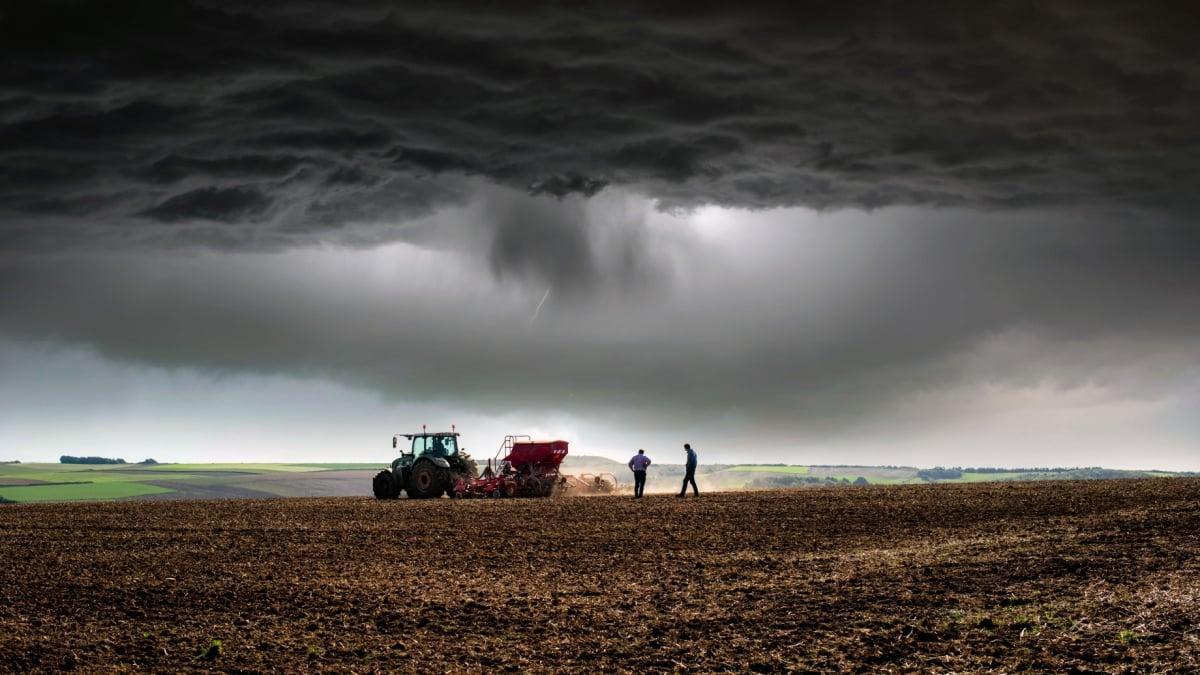
Africa-Press – South-Africa. South Africa’s agricultural sector faces growing risks as increasingly severe and unpredictable hailstorms threaten crops, infrastructure and food system stability.
Recently, the South African Weather Service (SAWS) issued Orange Level 5 warnings for storms, hail and flooding across parts of Gauteng, Limpopo, Mpumalanga and KwaZulu-Natal.
The high frequency and shifting nature of hailstorms now pose a significant threat to farmers in these regions, said Agri Crop at Santam Specialist Solutions Business Head of Underwriting, Hanjo Fourie.
Fourie warned that this will have direct consequences for agri-businesses and the country’s wider food system.
“These recent hailstorms have already generated significant losses. Direct loss typically relates to crop reduction and infrastructure damage, while packhouses, irrigation systems and vehicles can suffer severe collateral damage too,” Fourie said.
“For commercial farmers, this disruption can affect production cycles and contracts, but smallholder farmers are even more vulnerable.”
Without insurance or financial buffers, Fourie said these farmers risk falling into poverty traps that are difficult to escape.
“Hail losses also ripple far beyond individual farms and agri-producers. Reduced crop volumes can leave packhouses underutilised, affecting employment and operational efficiency,” Fourie said.
Damaged logistics infrastructure disrupts already fragile supply chains, he added. Export markets are also highly sensitive to cosmetic standards.
This means that fruit with external blemishes may be downgraded to lower-value markets, resulting in reduced earnings and potentially affecting trade relationships.
“For staple crops, broad losses can influence local availability, price stability and, in severe cases, food security,” Fourie said.
Over the last 30 to 50 years, he explained that both the frequency and severity of hailstorms have increased.
“While long-term observational data remains patchy, available evidence points to more extreme rainfall, hail and damaging wind events,” he said.
“Even where the number of hail days in some regions has decreased, the individual events that do occur tend to be more intense, with a potential for larger hailstones.”
Hail hotspots
Fourie said regions such as the Eastern Free State, Lesotho and the Highveld have long been recognised as hail hotspots. However, climate change is now creating new patterns that make the threat far less predictable.
“Much of this unpredictability stems from broader climatic shifts. Anthropogenic warming is increasing low-level moisture and convective instability, providing more energy for the strong updrafts required to form large hailstones,” he said.
“At the same time, a rising freezing level means smaller hailstones melt before reaching the ground, leaving a greater proportion of larger, more damaging stones.”
Fourie noted that climate models also suggest spatial changes in storm hotspots. This means that regions historically considered lower risk may see greater hail activity.
At the same time, South Africa’s traditional hail hotspots may also experience different patterns and intensities.
“The influence of phenomena such as El Niño adds another layer of complexity, as years with high hail incidence can coincide with drier seasonal rainfall, creating counterintuitive outcomes,” he said.
Fourie warned that a lack of long-term, high-resolution hail data further complicates forecasting and risk assessment.
“There is also evidence for shifts in the timing of hail seasons. Historically, hail is most common in the summer rainfall regions between October and March, peaking in November,” he said.
“Yet farmers are increasingly seeing extreme events fall outside these typical windows, along with greater variability within the season. For crops at critical growth stages, even a slight shift can have severe implications.”
As a major summer grain, Fourie said maize is particularly vulnerable during flowering and pollination. Hail during this period can lead to substantial yield losses or terminate the season entirely.
Some producers may need to adjust planting dates to reduce exposure, but these decisions must strike a balance between hail risk, heat stress, and moisture availability.
High-value fruit crops, such as citrus, grapes, and stone fruit, are also highly vulnerable to hail, as visual damage affects marketability and significant capital is invested per hectare.
“A single storm can undo a season’s worth of labour and investment,” Fourie said. “In this environment, crop insurance provides a critical safety net.”
“As climate volatility increases, insurance will shift from a commercial farmer’s luxury to a fundamental part of every farmer’s holistic risk management strategy.”
For More News And Analysis About South-Africa Follow Africa-Press