Africa-Press – South-Africa. South Africa is under severe financial pressure. The government is set to spend over R1 billion a day on interest payments in the current fiscal year, and its debt-to-GDP ratio is crossing 76%.
This results from the historical mismanagement of state finances, with the government last running a full budget surplus in 2007/08.
Since then, its spending has consistently outstripped revenue growth, saddling the country with a R5.7 trillion debt pile.
Running a budget deficit is not a problem, but running consistent deficits results in a significant debt burden that must be paid back.
In 2008/09, gross loan debt amounted to R627 billion, or 26% of GDP, and net loan debt was R526 billion, or 21.8% of GDP.
The most recent government budget shows its gross loan debt was R5.7 trillion, 76.1% of GDP. This comes when the country’s economy has averaged an annual growth rate of 0.8% for the past decade.
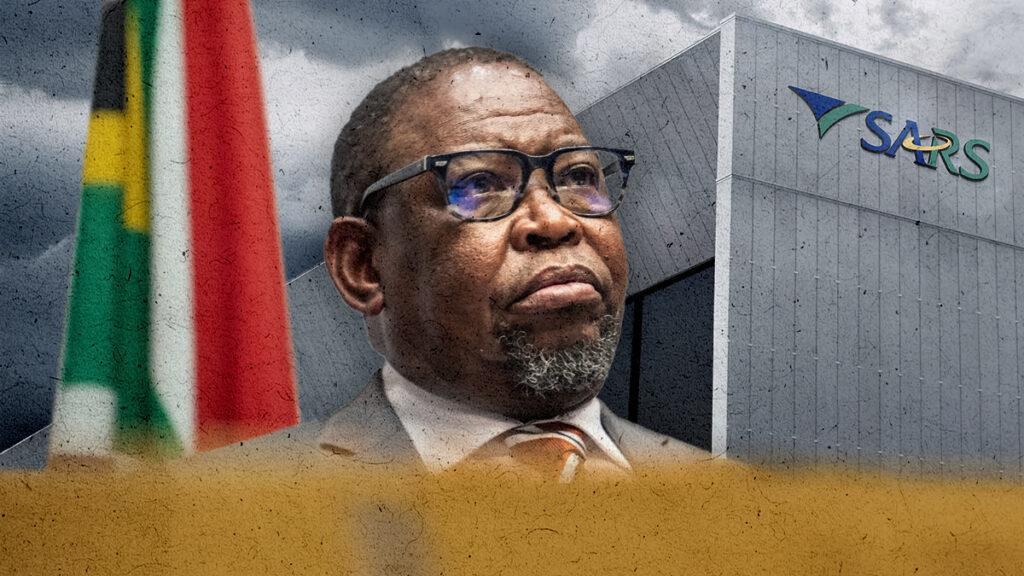
Enoch Godongwana was appointed Finance Minister in August 2021 to tackle this problem through fiscal consolidation without plunging the country into a recession.
In particular, Godongwana aimed to keep expenditure growth below inflation to gradually improve the government’s finances to a point where revenue would catch up and it would run a budget surplus.
Deloitte’s Hannah Marais and Hanns Spangenberg unpacked this strategy in more detail and how it has recently shifted.
Marais and Spangenberg explained that this strategy would take years to play out, with South Africa’s tiny primary budget surplus barely moving the needle.
A primary budget surplus excludes debt-servicing costs and effectively means the government brings in enough revenue to cover its spending obligations.
In time, this should result in the country’s debt burden stabilising and eventually declining as the government begins to pay it down.
How VAT hikes fit in
However, in his most recent Budget, Godongwana unveiled plans to increase revenue by hiking VAT by 0.5% in 2025 and 0.5% in 2026.
This marks a shift away from only fiscal consolidation towards increasing revenue to meet the government’s growing spending obligations, with plans for the Basic Income Grant and National Health Insurance requiring billions in the years to come.
Godongwana explained that the government cannot afford to take on more debt to fund its spending plans as it would have to pay a significant premium to encourage investors to give it money.
Further debt issuances are not sustainable for the government, and it has already repeatedly delayed the year in which it expects the debt load to stabilise.
The National Treasury sees the debt-to-GDP ratio stabilising at 76.2% in 2025/26 in comparison to 75.5% just six months ago during the Medium-Term Budget Policy Statement.
Marais and Spangenberg said it is now crucial that the Treasury does not repeat the mistakes made in the past decade, where the government spent excessively with no economic benefit.
This period of mismanagement resulted in investment in South Africa plummeting, its credit rating being moved into junk status, and the country’s economy becoming increasingly vulnerable.
They explained that fiscal consolidation has to be coupled with structural reforms to boost economic growth, which is the only sustainable way for the government to raise revenue.
These include opening up the electricity and logistics sectors to private participation and making it easier to do business in South Africa.
This echoes the advice of the International Monetary Fund (IMF), which urged the government to reduce its public sector wage bill as a share of GDP.
This rise has been largely due to increased hiring and compensation consistently growing faster than inflation. Crucially, this has not been accompanied by productivity gains.
The IMF also said there is a large public-sector wage premium relative to the private sector. This means that workers in the public sector earn more than their private counterparts but are less productive.
Another area where billions of rands could be saved is the reform of state-owned enterprises, which have cost the government around 5% of GDP since 2008.
Reducing SOE operating costs, including rationalising wages and staffing, tackling waste, divesting non-core assets, and streamlining operations, could generate savings of up to 1.5% of GDP.
The IMF also singled out the fragmented procurement system that has resulted in uncompetitive and unfair practices, resulting in the state overpaying for services.
Reform of this system, which is underway, could yield between 1% and 3% of GDP in savings alongside reduced corruption and fraud.
While it praised South Africa’s social safety net, the IMF said that subsidies could be better targeted towards vulnerable households. This could yield up to 0.5% of GDP in savings.
For More News And Analysis About South-Africa Follow Africa-Press