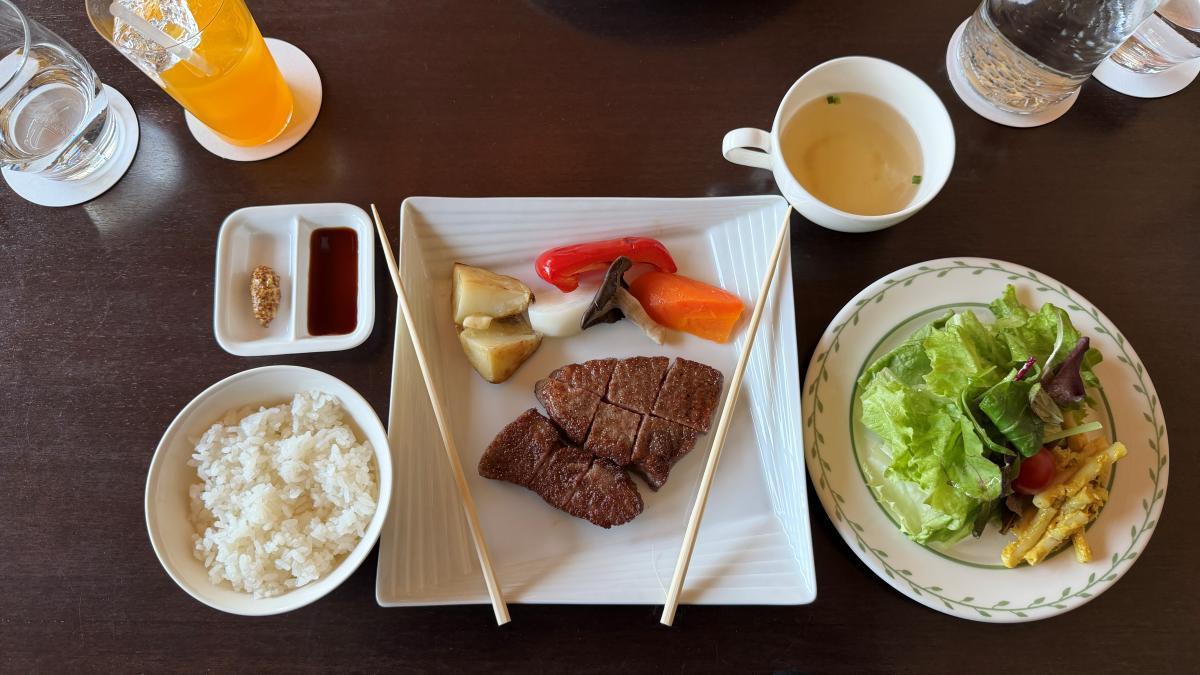
Africa-Press – South-Africa. Restaurants in Tokyo, Japan, show that you can enjoy excellent and affordable food without the need to struggle with waiters, engage in awkward small talk, or worry about tipping.
BusinessTech recently visited Japan, following numerous people’s praise for the country as a great travel destination.
We spent most of the time in Tokyo, which was precisely as enjoyable as the people who advised us to visit it said.
It is an honest and advanced society where residents and visitors enjoy complete safety, excellent service, and a wealth of things to do.
One of the things which stood out, apart from their obsession with claw machines, was the great experience when visiting restaurants.
Although the staff could not speak English, the restaurants were so well organised that it was easy to order food and pay for it.
The first difference between restaurants in Japan and South Africa is that you see precisely what you are ordering through window displays and visual menus.
Many restaurants display model plates in their windows, showing what the food on the menu looks like and its corresponding price.
This is a remnant of times before colour photography and printing. The displays show clients what they were getting and what they would pay.
Apart from the benefit of transparency, it also enables customers to decide what they want before entering, making the service faster.
Most restaurants also have colour photographs in their menus, which clearly show what food you will receive.
Apart from one instance where we mistook eel for chicken, which looked similar in the photographs, we always received exactly what was on display.
Many restaurants offered an English menu online through a QR code, which removed the language barrier completely.
The ordering process was seamless. In less modern restaurants, you could point to the dish you want, which the waiter would then record.
In more modern restaurants, everything was done on a tablet. You take your seat, order your food and drinks through the tablet on the table, and it soon arrives.
There is minimal interaction with the staff. They show you your table, you order your food, it arrives, you enjoy it, and you pay. That is it.
It was a pleasure not to be bothered by the waiter and the restaurant staff asking you how your meal was halfway through, as is customary in South Africa.
In Japan, they discovered that people dislike being bothered by waiters or restaurant managers while enjoying their food.
No tips and paying for your food
The restaurant prices in Tokyo were surprisingly affordable. Most meals cost between R100 and R150, which include a protein, rice, a broth, and a salad.
Another great tradition at these restaurants was that you immediately got a glass of water when you sat down. No need to ask, and it is refilled all the time.
The most pleasant aspect of visiting a restaurant in Japan is that there are no tips and that you always pay on your way out of the establishment.
Although there were no tips, the service was exceptional. In Japanese culture, providing excellent service is a matter of professional pride and a fundamental part of the job.
If that service were bought with a tip, it would no longer be considered sincere hospitality. It would just be a transaction.
Unlike South Africa, where waiters rely on tips to make up for a lower wage, Japanese service workers are paid a standard hourly wage or salary.
The price listed on the menu is the price you pay. Employers are responsible for paying their staff, not the customers.
After you finish your meal, you can get up, take your bill, and proceed to the payment counter located at the entrance.
There is always a friendly staff member who quickly rushes to help you. Most restaurants accept cash, credit cards, or mobile payments.
It is surprising how pleasant it is to visit a restaurant when you remove the need to tip or wait for a waiter to fetch a card machine to pay your bill.
In Japan, the payment process is made part of the restaurant experience. It is designed to be as frictionless and efficient as possible.
This system is beneficial for both staff and clients. It creates certainty and removes all awkwardness and long waiting times associated with paying your bill.
For More News And Analysis About South-Africa Follow Africa-Press