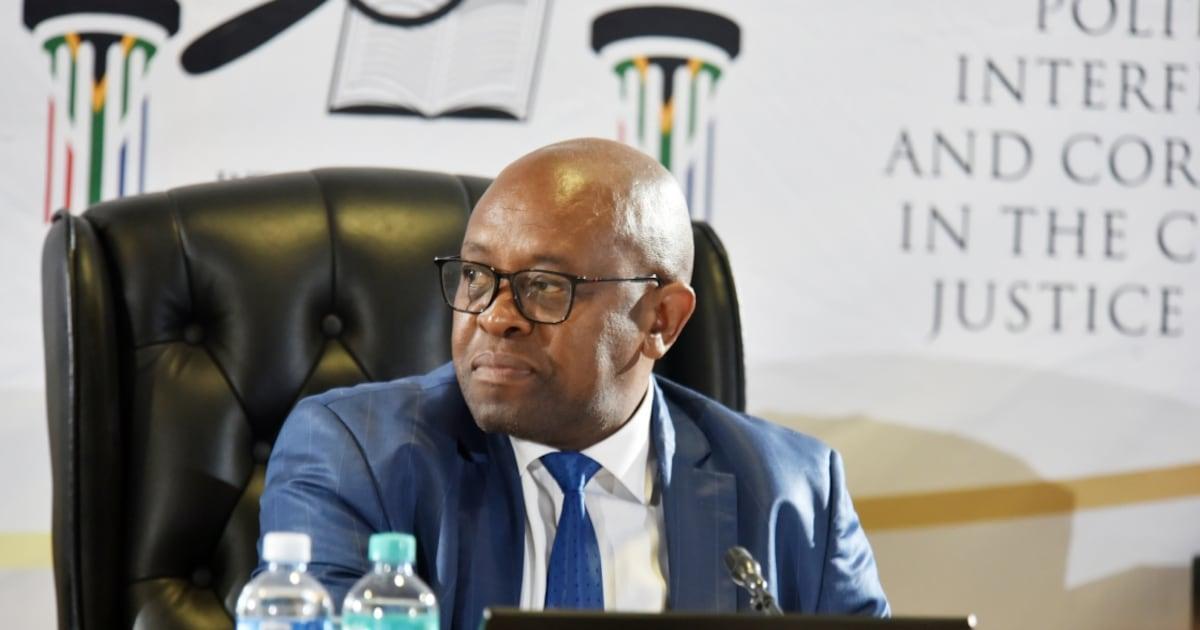
Africa-Press – South-Africa. The Madlanga commission of inquiry, which is investigating allegations of criminality, corruption and political interference in the criminal justice system, has decided to have the next witness testify in camera.
Chief evidence leader advocate Matthew Chaskalson told the commission the decision was due to the sensitivity of the evidence.“The witness testifying today [Thursday] is going to testify about matters that are the subject of ongoing police investigations. So it’s the subject matter of the evidence, not the identity of the witness, that requires the evidence to be in camera, and when the police are at an advanced stage of investigations, one can’t ventilate the content of those investigations publicly without running a risk of compromising those investigations. That’s the unfortunate situation we find ourselves in, because this commission is, of necessity, investigating matters that are the subject of parallel police investigations that are at an advanced stage,” Chaskalson said.
It was hoped that before the commission concluded its business, the investigations would have reached a stage where they would no longer be at risk and the testimony would be made public.
However, Chaskalson said that for thematic reasons and to enable the commission to understand the narrative the evidence leaders want to present to the commission coherently, it makes sense to consider that evidence now, rather than waiting until much later, when it may be presented publicly.
“As soon as the need for secrecy has passed, the evidence will be made public.”
He said that in future, the evidence leader will not seek to lead any other witnesses in camera without making a new application to the commission and making that application publicly known at least 72 hours before the witness is called to testify.
Asked what would happen if the investigations were still under way by the time the commission concluded its work, Chaskalson said the evidence led in camera would not have any evidentiary value. The commission cannot make findings against anyone based on “secret information”.
“So we accept that if by the time the commission ends, there are certain allegations the commission has had sight of that have to remain private and cannot be put to the implicated parties for their response. We won’t ask you to make a finding on the basis of those allegations, but we are confident that situation won’t arise,” he said.
Commission chair justice Mbuyiseli Madlanga ruled that the commission sit in camera to hear the evidence of the next witness.
On Tuesday, the evidence of a witness who was to testify remotely, off camera, and with the help of an intermediary in the commission was stopped mid-session after the commission said it had run into a technical issue that could compromise the safety of the witness.
For More News And Analysis About South-Africa Follow Africa-Press