Africa-Press – South-Africa. Despite inflationary tax relief in the 2026 Budget, rising costs for medical aid, fuel, and electricity are eroding take-home pay, leaving many South African employees worse off in real terms.
“Following the 2026 Budget, many employees may expect a welcome boost to their take-home pay from inflationary tax adjustments,” said Tax Consulting SA’s tax and remuneration specialist Tanya Tosen.
“On paper, it appears to be good news. When set against rising medical aid contributions and record fuel price increases, the outcome is far less encouraging.”
Tosen explained that, for the first time in two years, income tax brackets were adjusted, delivering 3.4% inflationary relief.
However, this still lags behind the actual inflation rate of 4.4% in 2024 and just outpaces 3.2% in 2025. In real terms, this means that lower-income earners will save approximately R585 per year or around R48.75 per month.
Higher-income earners earning around R2 million a year will save approximately R6,776 per year, or R564.66 per month. “At first glance, this appears meaningful – until cost increases are layered in,” Tosen said.
For example, average medical aid increases for Discovery Health Medical Aid, effective from 1 April 2026, range between 6.9% and 7.9% dependent on the medical aid plan type.
This is well above inflation, and has been for several years. It has a significant impact on members. Even at the higher end of tax relief –
A single member on Classic Comprehensive cover already exceeds the monthly tax saving, as premiums increase by R739 per month
A Classic Saver plan member sees relief almost entirely eroded with a monthly increase of R315
Families experience a compounded effect that pushes them firmly into negative territory, Tosen said. “The bottom line is that medical aid alone is enough to wipe out most, if not all an employee’s tax relief,” she said.
Fuel and electricity prices erode tax savings
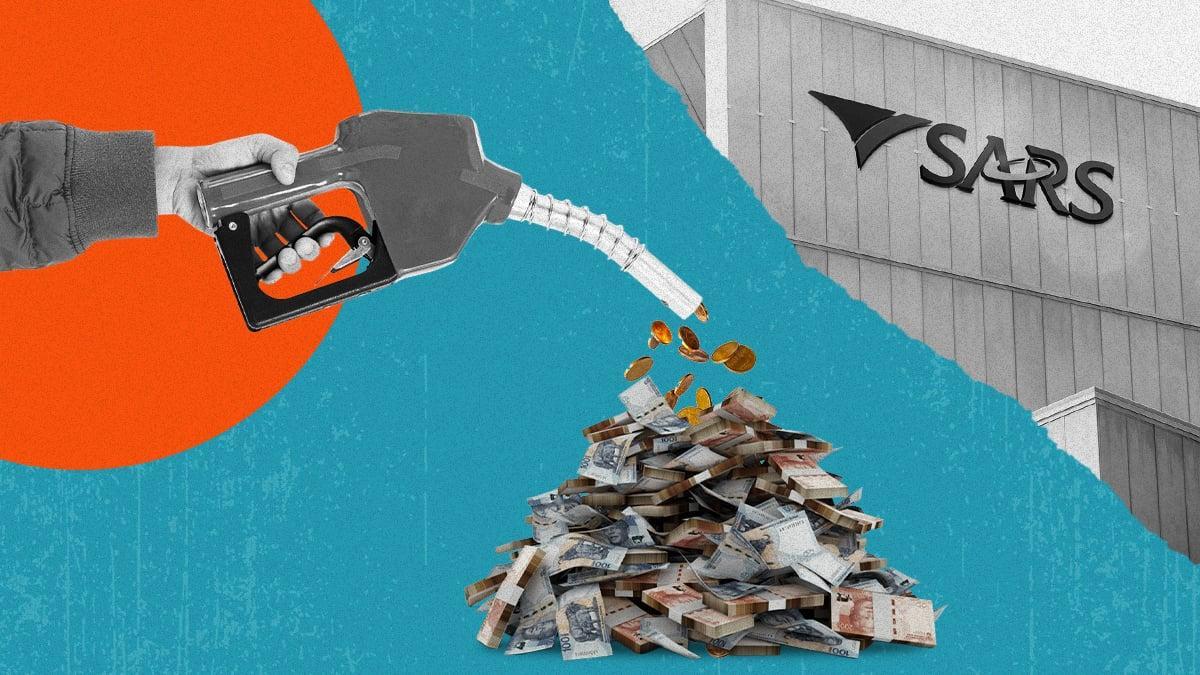
From April 2026, fuel prices have increased to their highest levels in months, with the government providing temporary relief in the form of fuel levies being reduced by R3.00 per litre until 6 May 2026.
Petrol prices have increased by around R3.06 per litre, pushing inland prices to around R23.36 per litre for 95 Unleaded petrol.
Diesel prices have increased by around R7.37 per litre. As a result, there have been broader inflationary effects across transport and goods.
For employees, Tosen said this translates into hundreds or even thousands of rand in additional monthly costs, particularly for those commuting long distances.
In addition, from April 2026, direct Eskom customers will face an average electricity tariff increase of 8.76%, as approved by the National Energy Regulator of South Africa (NERSA).
“The impact does not end there – municipal customers, who typically see adjustments from 1 July 2026, are likely to experience even higher increases, as municipalities often apply additional mark-ups above the Eskom tariff,” Tosen said.
She illustrated the practical effect of these rising costs by looking at three hypothetical employees on identical cost-to-company packages, but who experience very different – and increasingly negative – outcomes.
While a single employee may retain some tax relief following the tax adjustments, a family on medical aid will see any relief fully eroded.
A commuting household, meanwhile, will be materially worse off due to increasing fuel, electricity and medical costs. “The result is that net disposable income is declining, despite ‘relief’ on paper,” she said.
Message for employers in South Africa
Tosen stressed that this is no longer just an employee issue, but also a business risk. Net pay is under pressure from multiple fronts – employees’ tax with bracket creep, increased benefit costs, and now fuel and electricity costs.
Fuel is a multiplier, as it increases not only commuting costs but also the prices of food, goods, and services, which will be felt in the coming months.
“Retention risk is rising because employees are increasingly sensitive to even small changes in take-home pay, which may impact morale and retention,” Tosen said.
“What makes this particularly important is that these pressures are largely outside the employer’s control, but their impact on employees is not.”
Tosen urged employers in South Africa to take action sooner rather than later. Helpful measures may include the following –
Model the combined impact of tax, medical aid, electricity, and fuel increases on net pay and reassess salary increase percentages for 2026.
Introduce flexibility into benefit structures to improve affordability and educate employees on how to optimise their packages.
Reassess remuneration design and benefit offerings to prioritise take-home pay where employees are struggling to make ends meet with their basic living expenses.
The tax relief outlined in the 2026 Budget may sound promising on paper. However, Tosen explained that in isolation, it no longer tells the full story.
“When medical aid contributions increase, electricity tariffs are hiked, and record fuel prices are factored in, many employees are facing a real decline in disposable income. What looks like relief is, in reality, a growing net loss,” she said.
For More News And Analysis About South-Africa Follow Africa-Press