Africa-Press – South-Africa. The issue of contestation is the disparity between the signatures required by independent candidates and unrepresented political parties to contest an election
Planning for the 2024 national and provincial elections could once again been thrown into a state of uncertainty because of the likelihood that political parties which are not currently represented in parliament or the provincial legislatures will contest the Constitutional Court judgment handed down earlier this week on the Electoral Amendment Act.
The issue is that unrepresented political parties will have to meet the same stringent signature requirements to contest the elections as represented political parties, rather than the 1,000 signature requirement for independent candidates which the court decided was appropriate.
The court struck off the signature requirement for independent candidates contained in the amended act which was 15% of the quota for the region necessary to obtain a seat in the previous election, which could be as high as 14,000 signatures.
The court action against the signature requirement was brought by the One SA Movement.
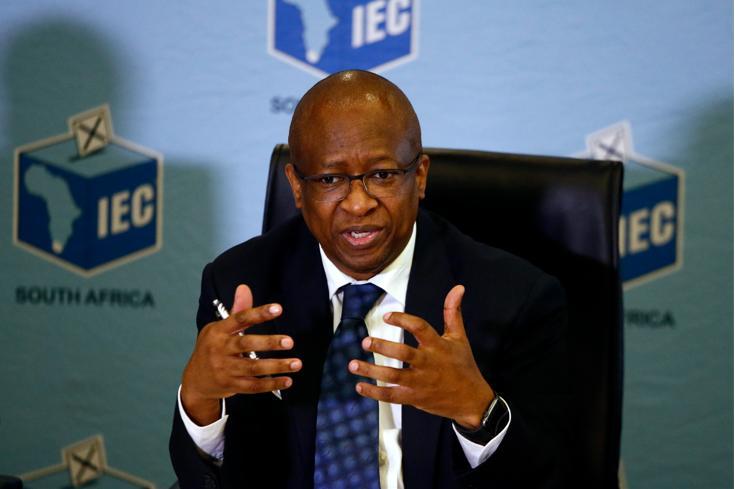
Electoral Commission of SA (IEC) CEO Sy Mamabolo told parliament’s home affairs committee on Friday that the IEC expected litigation against the signature requirement for unrepresented political parties.
Already think-tank The Rivonia Circle and Build One SA have asked the IEC to give a confirmation by the end of Friday that unrepresented political parties would have the same court-determined signature requirement as independent candidates.
The parties had indicated that they would approach the Constitutional Court to ensure this was read into the act.
Mamabolo pointed out, however, that the IEC was unable to give this confirmation as it is not a law-making institution and would respond accordingly. “It is imminent that there is going to be a subsequent litigation in respect of signature requirements for unrepresented political parties. We are in a very fluid and fraught environment at the moment.”
IEC deputy CEO for electoral operations Masego Sheburi said this possible court application “increases the uncertainty in the environment and will also result in a delay if the court finds in favour of those applicants. If they eventually go to court it will mean we will have to review some of our systems.”
Parliamentary legal adviser Telana Halley said the department of home affairs would have to decide whether the Electoral Amendment Act must be amended to address the signature disparity between independent candidates and unrepresented political parties.
If so, this could be included in the Electoral Matters Amendment Bill which has been tabled in parliament, though the home affairs committee will have to get approval from the National Assembly to extend the scope of the bill.
Sheburi outlined the complications that the court judgment would have on the elections. Systems would have to be reviewed as the architecture of the existing system assumed the signature requirement for independent candidates and political parties would be the same. Regulations would also have to be changed.
He said the cost of administering the elections would rise due to the increase in the number of contestants with the participation of more independent candidates. The ballot paper would have to be longer and ballot boxes bigger. The ballot paper could be a multi-page booklet.
It was possible that additional staff would be required to deal with the increased volumes and complexities at voting stations and that logistics costs would increase.
Sheburi also said it might not be possible for the IEC to announce the results within the traditional three days after the election but would have to do so within the legally required seven days. This was because voters would take longer to make their choices, there was a foreseeable increase in spoilt and miscast votes and it would take longer to count votes.
For More News And Analysis About South-Africa Follow Africa-Press