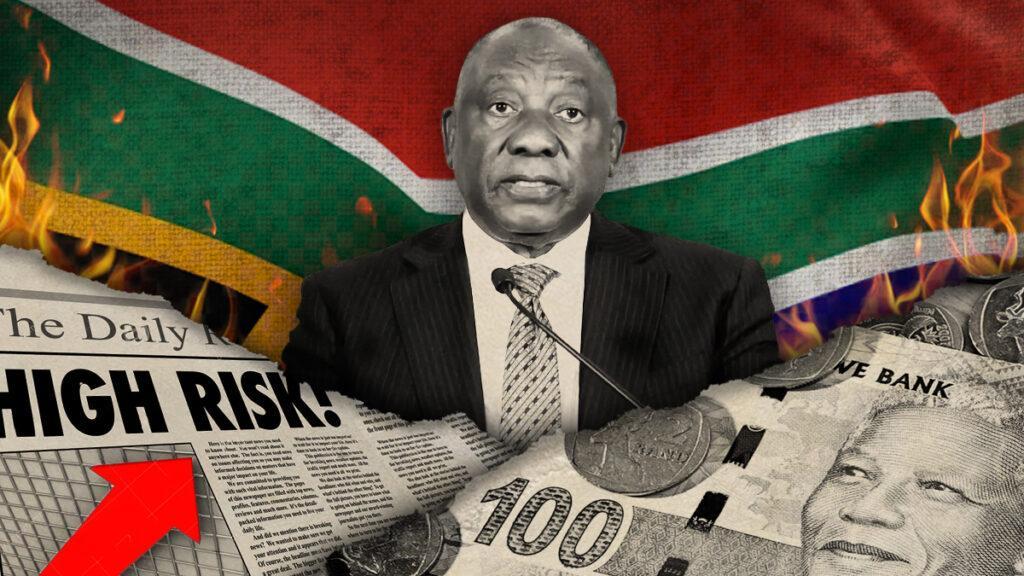
Africa-Press – South-Africa. South Africa pays between R50 billion and R70 billion in additional debt-servicing costs due to a mismatch between its economic fundamentals and its credit ratings.
The data points to the country having far better ratings, according to the metrics of global ratings agencies, than it currently has.
While this costs the country billions of rands in additional debt-servicing costs annually, the tide is beginning to turn, with ratings agencies increasing their presence in the country and perception improving.
This is feedback from Standard Bank CEO Sim Tshabalala, who referred to the premium African countries pay on their debt as “scandalous”.
Tshabalala has been a vocal critic of what he describes as the mismatch between the economic fundamentals of countries and their credit ratings.
As the head of the B20’s Finance and Infrastructure task force in 2025, Tshabalala tackled the issue of the elevated cost of capital many African countries face.
He has brought attention to South Africa as an example in this case of a country that should have a far better credit rating than it currently has, but, due to perception, remains far below investment grade.
“It is actually scandalous. I mean, there is no other way to put it. The additional borrowing costs wipe out about two percentage points of African GDP across the board,” Tshabalala said at a Bloomberg event.
“Take a country like Cote d’Ivoire, it is similarly rated by agencies to Serbia, and yet, its debt is priced at about 50 basis points more.”
“You take South Africa. On the data, it should be rated by the ratings agencies as a BBB country. It is currently rated BB-.”
Tshabalala explained that African sovereigns are rated about four rungs lower than they ought to be, based on their economic data.
“There is a mismatch, and it is inexplicable. The data just does not support the ratings and therefore the costs of borrowing,” Tshabalala said.
“In the case of South Africa, the additional cost is about R50 billion to R70 billion per annum. It is scandalous and ought to change.”
Changes are being made
Standard Bank Group CEO Sim Tshabalala
Things are beginning to change, with ratings agencies looking to increase their presence in Africa and enhance the quality of their ratings.
This is coupled with African countries being increasingly transparent and regular with the release of economic data that ratings agencies use.
“There are a couple of things happening to improve African credit ratings, but there is a debate happening with standard setters and agencies,” Tshabalala said.
“We are arguing that they should understand the continent better, and they are taking steps in that direction.”
Tshabalala noted that Moody’s bought GCR, an African ratings agency, to give them better representation on the continent.
S&P Global has also upped its representation in South Africa to bolster its understanding of the continent.
However, while this is progress, Tshabalala urged for this to be coupled with improvement from African countries themselves.
“There is work to be done by African sovereigns. This includes improving investor relations, improving budget transparency, improving monetary policy management, and having an independent central bank,” Tshabalala said.
Another major improvement comes in the form of enabling local currencies to trade freely, enabling the market to adequately value them.
Tshabalala previously said that Standard Bank was engaging with the ratings agencies regarding the credit ratings ascribed to African countries.
“The additional cost is why it is so important to keep the debate alive and keep making the argument. It is not a trivial matter,” he said.
“We are in the process of engaging the rating agencies as we speak. We are going to keep making this point. Just look at the fundamentals and your rating. The mismatch is too large for us not to have a say.”
Others noted that South Africa’s fundamentals are improving to a point where ratings agencies are now behind the curve with regard to the country’s ratings.
When these institutions downgraded South Africa to its current ratings level, they forecasted a significantly higher debt-to-GDP ratio for the country.
This was essentially an extrapolation based on the government’s accelerating spending in the 2010s, which was coupled with poor economic growth.
These metrics look far better than what was anticipated by the three ratings agencies when they assigned South Africa’s latest ratings.
Moody’s anticipated the debt-to-GDP ratio would hit 110% by 2024, S&P saw it reaching 80% after 2025, and Fitch forecast it hitting 95% by 2022.
South Africa’s debt load is expected to peak at 77.9% of GDP in the current financial year.
For More News And Analysis About South-Africa Follow Africa-Press