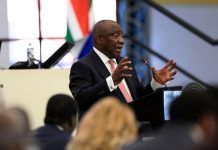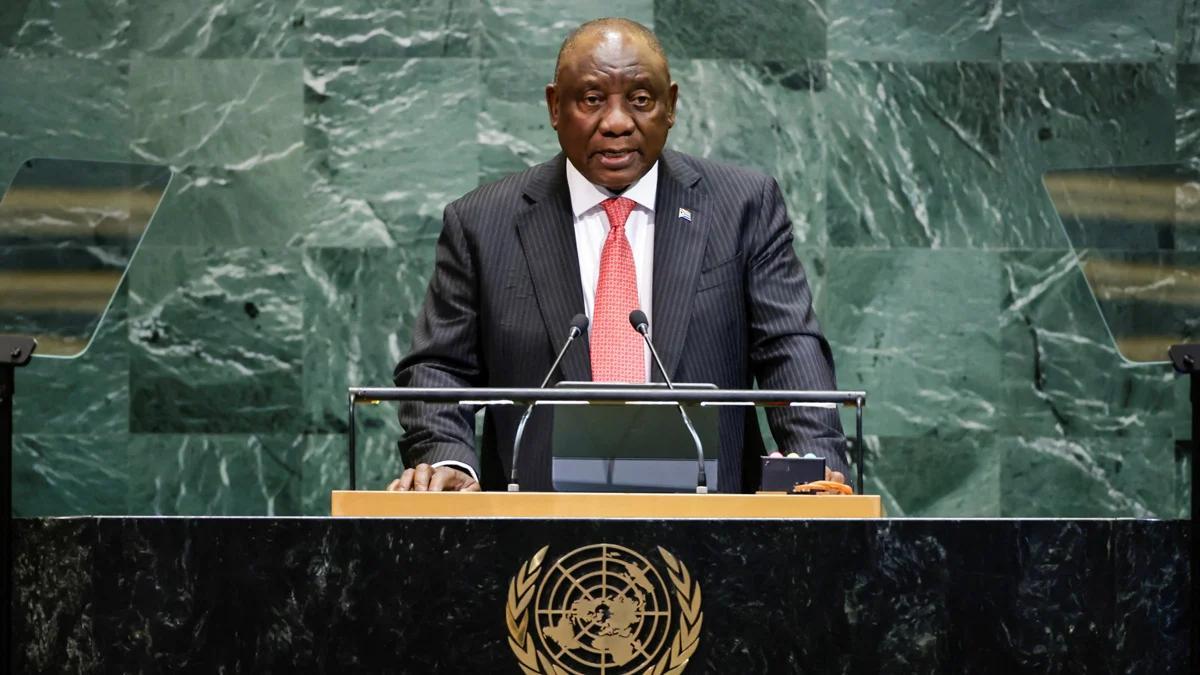
Africa-Press – South-Africa. President Cyril Ramaphosa is increasingly becoming a lame duck, as he is unwilling and unable to take decisive action to address South Africa’s deep crises.
Apart from the crises, Ramaphosa has failed to decisively engage with the United States regarding a trade deal for South African exports.
This is partly due to the President’s consensus-forming style of leadership, but also the structural issues within the ANC that prevent the party from charting a unified course of action.
The ANC’s structural inefficiencies are exacerbated by the run-up to its elective conference in 2027, with individuals becoming increasingly occupied with leadership battles rather than governing the party or the country.
Political analyst Dr Frans Cronje explained why President Ramaphosa has been unable to take decisive action regarding South Africa’s crises at the second BizNews Investment Conference.
Cronje’s explanation came after he outlined a relatively simply three-step solution to reviving the local economy and reducing unemployment.
His solution included utilising South Africa’s extensive coal reserves to create an energy surplus to drive industrialisation, the end of taxing capital on arrival through empowerment policies, and the concessioning of the country’s ports and railways to private operators.
While the solution is simple and potentially very effective, the government has failed to make rapid progress in reviving South Africa’s economy.
“The ANC has a structural immunity against reform. It has immunised itself to reform through its extensive structural processes,” Cronje said.
He said that even if some senior leaders of the ANC agree about what to do and see what needs to be done to save South Africa, it cannot get the support of the party behind it.
“It’s board, the National Executive Committee, has about 100 members drawn from every possible perspective of life you can imagine, from the ideological to the criminal to the just not very good,” Cronje explained.
“The chairman of the board, that is what Mr Ramaphosa is, is a sort of non-executive chairman and he sees his role as facilitating a discussion between the hundred and no decision must be taken until there is complete agreement about what to do.”
If that means there needs to be another meeting, then the discussion will continue at a later date until consensus is reached.
“If you ran anything, any company along those lines, you would be in trouble. You have a weak chairman and a board with conflicting objectives, let alone 100 people on it, and your competitors are taking big bites out of you – you will never turn the thing around,” Cronje said.
This prevents the ANC, which is still the dominant political force in South Africa, from taking decisive action regarding the country’s crises and its future.
Furthermore, it limits the scope of what President Ramaphosa is able to say or do when leading the country, with a constant search for consensus preventing decisive leadership.
South Africa has the solutions
Social Research Foundation head Dr Frans Cronje
South Africa has the solutions to its crises, with extensive policy documents outlining plans to save the country, many of which are sound in principle.
The country’s government lacks the ability to implement these policies successfully, as it is bogged down by a lack of capacity and debate.
Cronje pointed to the Department of Trade and Industry’s master plan to make South Africa one of the largest hemp producers globally.
“They had an accelerated hemp production master plan for South Africa to capitalise on the rapid growth of the global hemp industry,” Cronje said.
“The master plan includes the final master plan, which will be presented to the Cabinet in a year’s time. A full year after that, the legislation will be put to Parliament to discuss it.”
“I have no doubt that our global competitors also recognise the strong growth of the global hemp industry, and I don’t think their master plans include putting something to Parliament to debate in three years’ time.”
This is emblematic of the government’s inefficiency and inability to take decisive action to capitalise on South Africa’s competitive advantages, even when it knows what needs to be done.
At a deeper level, this is indicative of the ANC’s inability to reform and drive change through decisive leadership in South Africa.
“I think the ANC immunised itself to reform through its structures, exacerbated by the manner of its leader,” Cronje said.
“Therefore, while it can agree with you and hate what is happening, it can see the consequences, and it knows it is the biggest loser, so it cannot act.”
“And so, it is not a question of not knowing and not understanding or not fearing the effects, but that there is a structural impasse and they cannot get past that.”
The inability of the government and ANC to make decisions has been further exaggerated by the party’s looming elective conference in 2027.
This has led to a shift in focus for party members towards who will take up key leadership positions rather than on implementing solutions to South Africa’s challenges.
For More News And Analysis About South-Africa Follow Africa-Press