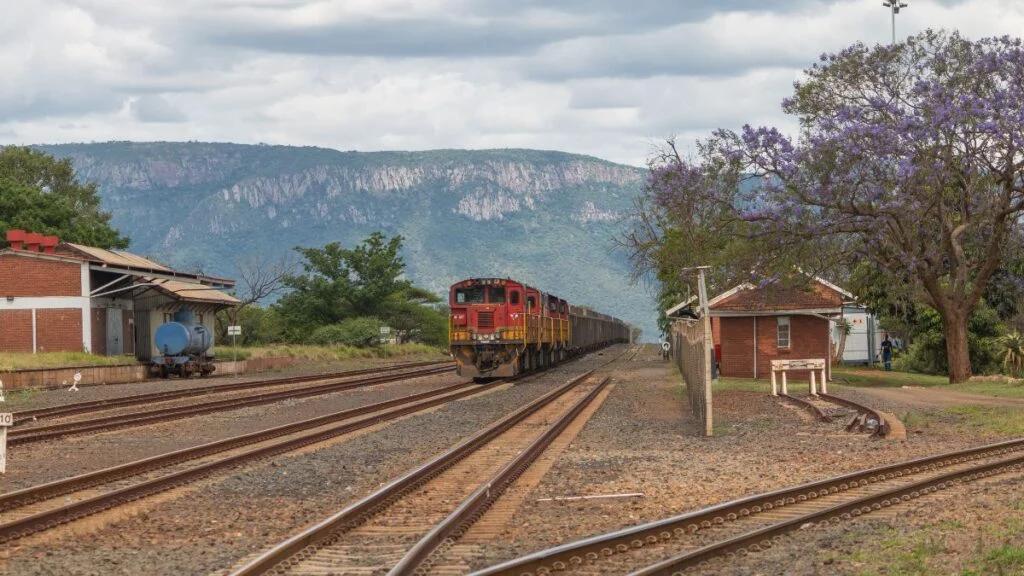
Africa-Press – South-Africa. Private rail operator Traxtion will invest R3.4 billion in new rolling stock, the largest private rail investment in South Africa. The program includes 46 diesel-electric locomotives from KiwiRail, New Zealand.
Traxtion CEO James Holley said the company’s investment in locomotives is a signal of confidence in South Africa’s rail reforms and a major step toward improving the country’s freight logistics capacity.
Speaking about the upcoming investment, Holley said the company sees a real opportunity emerging as Transnet opens the rail network to private operators.
Holley added that the company has been deeply involved in the public consultations leading up to South Africa’s rail reforms, and described the changes as long overdue.
“We’ve been very involved in the process of public consultation on the implementation of these really groundbreaking reforms for the South African rail sector,” he said.
“I think this is a big vote of confidence, where we’re saying that we’re happy with the direction of reform, we’re happy with the policies that have been implemented and the enabling legislation—and we’re ready to make an investment off the back of that.”
The locomotives Traxtion is acquiring come from KiwiRail, which is replacing its fleet of Wabtec diesel-electric locomotives.
Holley said this created a rare chance to secure a large, high-quality fleet suitable for southern Africa’s narrow-gauge rail network.
“It was an opportunity at a time that we felt we had the confidence to invest in South Africa,” he said.
Holley explained that this is going to be a fleet with very high reliability and very high capacity.
After purchasing the locomotives, Traxtion will work with Wabtec—widely regarded as the world’s preeminent diesel-electric locomotive manufacturer—to upgrade the units.
The result, Holley said, will be “a very high-capacity and high-reliability locomotive that we can deliver to the industry in a very short period of time and at a very cost-effective price.”
First locomotives will be ready in the nex t 12 months
Traxtion CEO James Holley
He said the investment will enable South Africa to receive true private rail freight services for the first time.
“What’s in it for us is to be able to bring to South Africa private rail freight services—and on a very cost-effective basis,” he said.
On whether South Africa’s infrastructure is ready for the new locomotives, Holley said Traxtion already operates similar technology across the continent.
“We already have about 12 of these locomotives operating in our fleet with pretty much identical technology,” he said.
“So we know the technology very, very well. It’s also very similar to the technology that Transnet has in its fleet.”
He added that this familiarity gives the company a very high degree of confidence that it will be successfully rolled out.
Holley also emphasised the local economic benefits of the deal. “About 79% of the total value of this contract is going to be placed with South African companies,” he said, with around 60% of that translating directly into local content.
He noted that Transnet currently moves between 160 and 165 million tons of freight a year, while demand sits at 250 million tons.
“We’re solving a portion of one of the big constraints to economic growth in the country,” he said.
Job creation will also be significant. “Our project in Traxtion is going to create 662 jobs,” Holley said. With a five-times multiplier effect across the upstream and downstream economy, the total impact will be substantially larger.
The investment aligns with growing regional integration opportunities, noting that similar reforms across neighbouring countries now allow private trains to operate across borders. “The opportunity for private trains to operate from South Africa into the region exists now in a way that didn’t exist in the past,” he said.
For now, the 46 locomotives and 920 wagons are earmarked for South African customers, but Holley is optimistic about future cross-border trade.
As for timelines, he said the rollout will be fast compared to standard locomotive procurement cycles.
“The first locomotives will be available for service within the next 12 months. To have locomotives in service as soon as this time next year is also a pretty good part of this project,” he said.
For More News And Analysis About South-Africa Follow Africa-Press