Africa-Press – South-Africa. In South Africa, a wave of anti-migration protests continues to unfold in several major cities, coinciding with a rise in violence against undocumented migrants.
The organization “March and March,” which leads the anti-migration movement, has launched a campaign of weekly protests that began on Thursday, July 9, following large demonstrations held on June 30. They announced their intention to organize protests every Thursday for four months, leading up to the municipal elections.
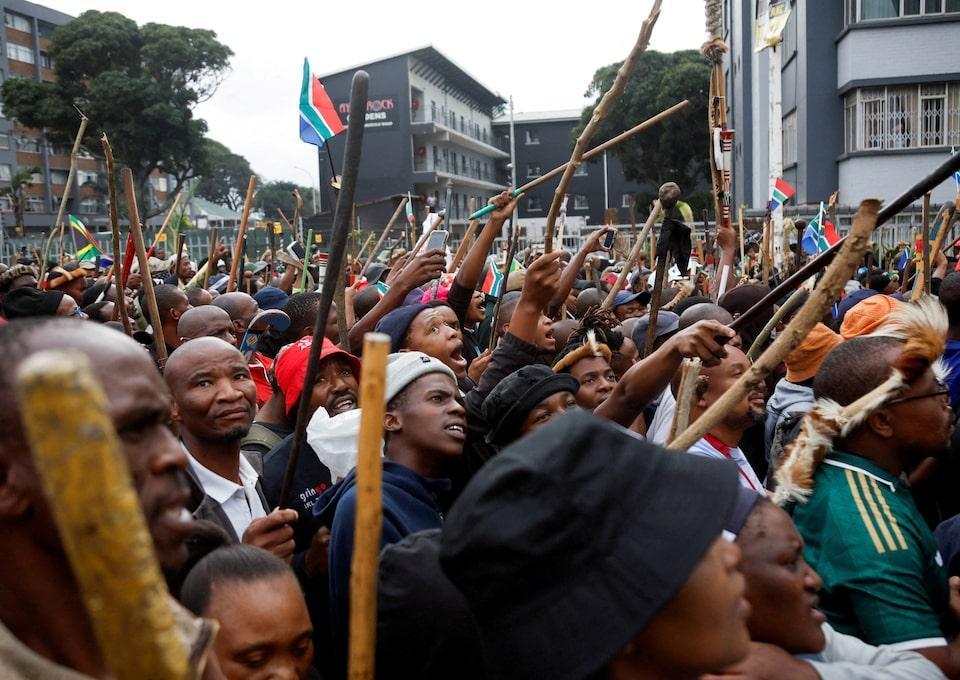
Hundreds of protesters participated in demonstrations in the cities of Durban and Johannesburg, protesting what they described as the ongoing influx of undocumented migrants into the country, demanding that authorities take stricter measures against them.
The protests have seen attacks on shops owned by migrants, as well as acts of intimidation and violence targeting alleged undocumented migrants, with some being evicted from their homes outside legal frameworks, sometimes in the presence of police officers.
Although “March and March” presents itself as a grassroots movement, it enjoys political support from the “Umkhonto we Sizwe” (MK), the opposition party linked to former President Jacob Zuma, who has made immigration a key focus of his political campaign.
Protest organizers state that the continued weekly demonstrations aim to keep the issue of immigration at the forefront of the political landscape; however, these actions have contributed to increased tension and distrust within the country.
Meanwhile, the Department of Home Affairs in South Africa has intensified security raids across the country, resulting in the arrest of thousands of undocumented migrants, with the frequency of these operations increasing since the protests began.
In recent months, there has been a rise in threats, intimidation, and physical violence, alongside the spread of anti-foreigner rhetoric, as part of a campaign led by civil groups demanding the departure of all undocumented migrants.
According to circulating data, more than 45,000 foreigners have left South Africa recently, returning to their home countries, including Malawi, Zimbabwe, Mozambique, Ghana, and Nigeria.