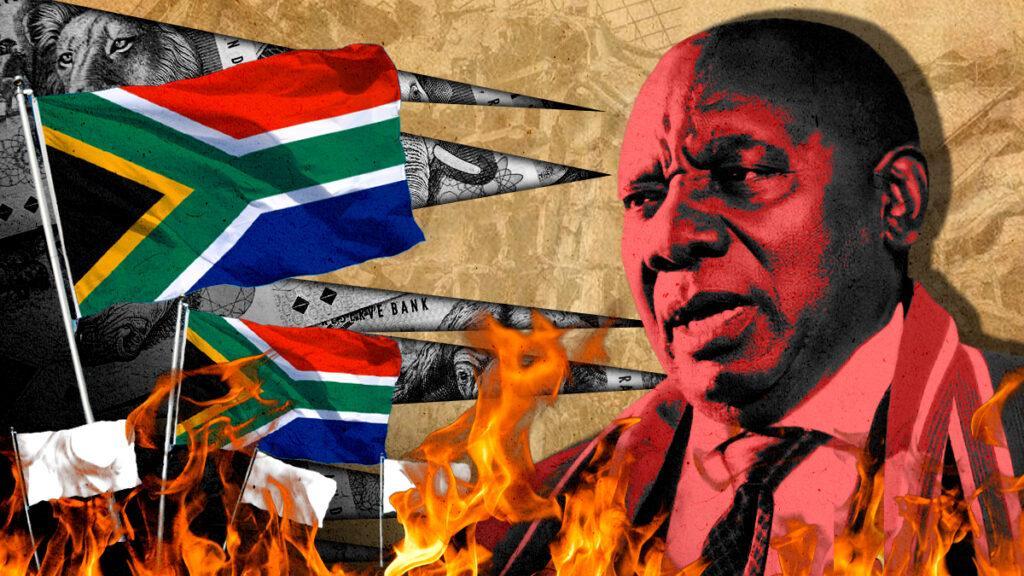
Africa-Press – South-Africa. South Africa’s Employment and Labour Minister has expressed concerns about the number of recent job cuts at local firms, which has seen the country shed thousands of jobs.
Minister Nomakhosazana Meth expressed “grave concern” over this, but many industry stakeholders have laid the blame for some of these job cuts at the government’s feet.
In a statement released on Tuesday, 2 September, Meth “noted with grave concern, the ongoing retrenchments, resulting in heavy job losses”.
This comes after ArcellorMittal South Africa (AMSA) is set to shut down its long steel plants by the end of September, resulting in an estimated 3,500 direct job losses and a further 100,000 jobs downstream.
Prior to this, Ford Motor Company of South Africa also announced plans to cut 474 jobs at two of its plants in the country.
The recent closure of tyre producer Goodyear due to a global restructuring has also resulted in the loss of 900 jobs.
On 2 September, mining giant Glencore also announced that its ferrochrome venture in South Africa has started restructuring talks that may lead to job losses months after shuttering some of its plants.
On AMSA, the minister said her department has been part of ongoing efforts by key stakeholders to intervene and mitigate job losses at the steel giant.
Some of these stakeholders included the Department of Trade, Industry and Competition (DTIC) and the Industrial Development Corporation (IDC).
Initially, the plan was to allocate R416.84 million to AMSA from the Unemployment Insurance Fund (UIF) under the Temporary Employer/Employee Relief Scheme (TERS) to support 2,982 employees.
“However, the company is adamant about proceeding with the wind-down. AMSA had hoped to secure further funding, which they were unable to secure,” Meth said.
“In the absence of securing the funding, the UIF funding did not materialise as our agreement is conditional upon a company providing a guarantee that they would not effect any retrenchments.”
“The primary purpose of our mandate is to preserve jobs; therefore, part of the condition is that companies cannot enter a retrenchment process whilst undertaking a turnaround strategy.”
“Hence, the deal collapsed. It is unfortunate that we have reached this point with AMSA, but we remain committed to the intervention strategy.”
The minister further pointed to other government programmes and interventions that have saved jobs, including around 5,956 employees at the South African Post Office.
However, according to industry stakeholders, government inaction played a major role in the recent job losses and retrenchments across South Africa.
Dragging heels
Employment and Labour Minister Nomakhosazana Meth
On the AMSA job losses, trade union Solidarity said they must be attributed to the government’s inability and a dragging of its heels to find solutions to the structural problems that fall under its control.
In describing the factors that led to the wind-down, AMSA itself also pointed to problems such as rising import tariffs, insufficient tariff protection, excessive electricity costs, an expensive and dysfunctional rail transport system, and a drop in local demand for its products.
Solidarity Deputy General Secretary Willie Venter blamed the government for the closure, warning that an “even bigger bloodbath looms”.
“This closure is the direct result of the government’s inability to create a competitive industrial environment and to find and implement real solutions with a sense of urgency where such solutions fall within its control,” Venter claimed.
“For years, our steel industry has been plagued by power crises, a failed rail and ports system and a government that simply cannot make the policy decisions to protect our industries. Now the jobs and income of thousands are at stake.”
On the Ford layoffs, Venter also pointed to economic pressures, international political uncertainties, and the government’s unfavourable policies.
He said these factors are causing the local automotive industry to become increasingly less competitive.
“Without serious intervention and economic reform from our government, our country will have to endure even more job losses,” Venter warned.
Similarly, with the Glencore layoffs, he said South African workers are paying the price for the government’s policy mistakes and Eskom’s tariff explosion.
“Since 2008, electricity tariffs have increased – making the entire industry uncompetitive compared to countries where lower electricity costs and government support are the norm,” he said.
Lack of confidence
Old Mutual chief economist Johann Els
Old Mutual chief economist Johann Els has also pointed out that South Africa is suffering from an ongoing confidence crisis, with local and global investors losing trust in local political institutions and the country’s policies.
Els explained that one of the most overlooked issues in South Africa is a lack of confidence in the country due to its deteriorating political climate.
The main driver of this deterioration is policy uncertainty and question marks around the country’s future, given some of the legislation enacted in the past decade.
Els said studies from economic institutions indicate that the declining confidence in South Africa has cost it one percentage point of economic growth per annum over the past decade.
This means that if confidence remained at the levels seen under Former President Thabo Mbeki, the local economy would have grown by over 2% per annum over the past decade instead of 1%.
“While there are some successful programmes implemented currently, we are gravely concerned about the reported job losses in some sectors,” Minister Meth said.
“These are not just numbers, but people with families and children to support and put through school.”
“We will continue to do everything possible within our mandate to provide the requisite support to struggling companies and contribute to unemployment reduction.”
For More News And Analysis About South-Africa Follow Africa-Press