Africa-Press – South-Africa. The government of South Africa has confirmed that it will not allow any closure of the country on June 30, despite escalating protests related to calls for the expulsion of undocumented migrants and increasing pressure for stricter immigration measures.
The Minister in the Presidency, Khumbudzo Ntshavheni, stated that citizens have the right to protest as guaranteed by the constitution, but emphasized that law enforcement remains the responsibility of state institutions, asserting that “there will be no closure of the country on June 30.”
Ntshavheni made these remarks during a media briefing on the outcomes of a Cabinet meeting, at a time when the government faces a deadline set by civil groups demanding action on what they describe as a worsening crisis of undocumented migration.
Previously, ministers of justice, crime prevention, and security held an emergency meeting in Pretoria to discuss recent developments related to protests against undocumented migrants, amid fears of escalating tensions in several cities.
Repeatedly, the government has affirmed its commitment to enhancing border control and intensifying inspection campaigns and enforcement of immigration laws, while stressing its rejection of any attempts by citizens or civil groups to enforce the law themselves.
An official has previously stated that South Africa is indeed facing challenges related to undocumented migration but warned against exploiting this issue to incite chaos or undermine public stability.
He added that authorities are conducting ongoing operations to apprehend violators and deport undocumented migrants, noting that the number of deportations has been increasing recently.
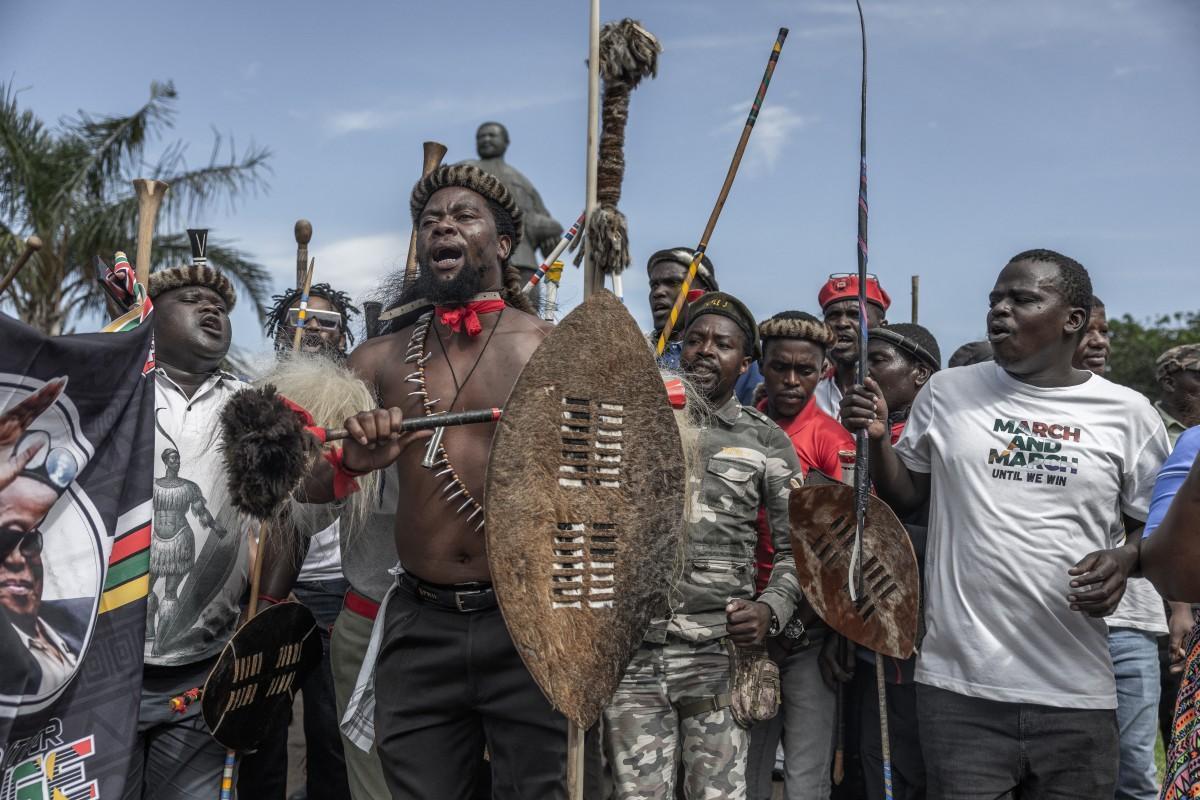
The “March and March” movement and several civil groups are leading a campaign urging the government to take tangible steps to address the issue of undocumented migrants before June 30.
The movement claims that the presence of large numbers of foreigners residing illegally places pressure on public services and the job market, and accuses some of being involved in criminal activities, including drug trafficking.
The movement has asserted that its demands are not based on racial considerations or targeting specific nationalities, indicating that its activities extend to several regions, including KwaZulu-Natal, Limpopo, the Eastern Cape, and Gauteng.
During a previous press conference in Durban, a representative of the movement stated that the protests are gaining increasing support across various parts of the country, calling for stricter border control and a crackdown on undocumented migration.
The warning demanding undocumented migrants to leave the country by the end of June has raised fears of a repeat of the violence witnessed in South Africa in previous years.
Hundreds of migrants from the Democratic Republic of the Congo, Rwanda, Somalia, and other countries have sought refuge in the coastal city of Durban, following reports of threats and demands for them to leave the country.
Several cities, including Cape Town and Katlehong near Johannesburg, have seen protests calling on authorities to verify the legal status of foreigners running businesses.
In Bloemfontein, police arrested around 100 individuals after local protests turned into looting targeting shops owned by foreigners.
The police also announced the detention of dozens on suspicion of participating in attacks and looting of small shops in several areas, while increasing their presence to protect public facilities and infrastructure and prevent the spread of unrest.
Authorities have urged citizens to refrain from acts of violence and looting, asserting that any violations will face strict legal consequences.
More than three million foreigners live in South Africa, representing about 5.1% of the total population, according to data from the national statistics agency.
Over 63% of these individuals come from the Southern African Development Community, many of which face economic and political challenges driving their citizens to migrate in search of job opportunities, while the official unemployment rate is around 33%, increasing competition for jobs and services.
South Africa has experienced repeated waves of violence against foreigners over the past two decades, most notably the events of 2008, which resulted in the deaths of 62 people and the displacement of thousands, with similar incidents recurring in subsequent years, raising fears of a return to tensions as the deadline set by protest groups approaches at the end of June.