Africa-Press – South-Africa. South Africa is at a crossroads, with the National Treasury’s upcoming ‘mini-budget’ set to determine whether the country will escape stagnation or entrench it.
To escape, the Treasury will need to make some tough and likely unpopular decisions, including outlining how it plans to limit government spending, as revenue-raising options have become increasingly limited.
This will be a continuation of the government’s focus on fiscal consolidation, as it needs to achieve a primary budget surplus to stabilise the state’s significant debt burden while ensuring it does not hamper economic growth.
At the same time, tensions are already high in South Africa, and the high social cost of unpopular spending cuts threatens to amplify them further.
Coface chief Africa economist Aroni Chaudhur recently explained that the upcoming Medium-Term Budget Policy Statement (MTBPS) will be a key test for the Government of National Unity.
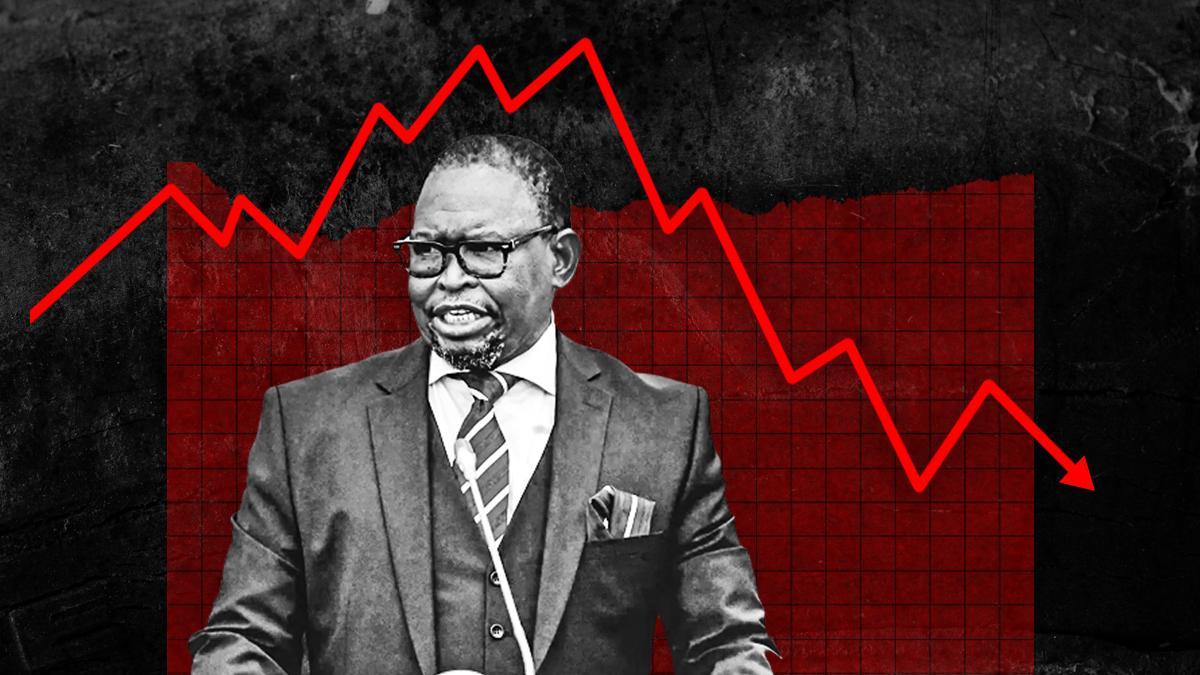
Finance Minister Enoch Godongwana is set to table the statement on Wednesday, 12 November 2025.
Chaudhur said the MTBPS, sometimes referred to as the “mini-budget”, comes as South Africa is standing at a crossroads.
He said the next 24 to 36 months will determine whether the country escapes a decade of stagnation or slips deeper into it.
He explained that South Africa still has solid economic fundamentals, but structural constraints and intensifying global headwinds continue to weigh heavily on the economy.
As a small, open economy, South Africa is particularly vulnerable to external shocks. However, the country’s homegrown challenges amplify the impact of these shocks, making it less resilient.
One way to become more resilient is by having a strong, growing economy that can cushion South Africa from external blows like the United States’ tariffs.
However, the country’s economic growth has stagnated over the past few decades, averaging 0.8% growth over the past decade.
Investment in the country has also stalled, with corporates preferring to keep their cash on the sidelines and the government funnelling resources to state-owned enterprises, which are notoriously inefficient capital allocators.
At the same time, higher taxes and inflation-driven real interest rates have further constrained growth.
This slow economic growth and a growing state expenditure bill have seen South Africa’s government debt as a share of GDP balloon, reaching over 76% in the past financial year.
This means the government is now spending over R1.2 billion a day servicing its debt, taking even more resources away from investment in productive assets like infrastructure.
This decline has not gone unnoticed by South Africans, who have felt the effect of underinvestment in state infrastructure through service delivery failures across the country.
More recently, frustrations with these failures reached a boiling point when residents in parts of Johannesburg, who had gone without water for weeks, protested poor municipal service delivery.
Experts and government officials have warned that more incidents of social unrest could break out if the state does not address service delivery failures.
However, to do that, the state needs more money, which is where the National Treasury’s strategy for the upcoming mini-budget becomes vital in setting South Africa on the right course.
A rock and a hard place
Chaudhur explained that the Treasury has limited options left to raise revenue in the upcoming MTBPS.
While the MTBPS cannot implement new tax hikes, it outlines the government’s policy goals and priorities, which help direct future spending and give South Africans an idea of where the state’s finances are headed.
One of the Treasury’s top priorities is reducing its budget deficit to, in turn, stabilise its debt burden and the associated debt-servicing costs.
Therefore, it either needs to raise revenue, cut spending or implement some combination of both.
Earlier this year, South Africa’s Budget debacle – which saw the Treasury propose three different budgets – made it clear that further tax hikes to raise additional revenue will be near impossible to implement.
“With VAT reform stalled and one of the highest tax burdens among emerging markets, options are limited,” Chaudhur said.
Despite this, he explained that the Treasury’s target of reducing the budget deficit to 3% of GDP by 2027 is ambitious, but not impossible.
“The cost of cutting expenditure on growth might be relatively low in the short-term,” he said.
“The fiscal multiplier has declined substantially in the past two decades. However, the social cost could be high in an already tense environment. In short: fiscal consolidation must be strategic, not blunt.”
Anchor Capital economist Casey Sprake echoed this sentiment, saying a stronger, more credible reform push could set a virtuous cycle of investment, productivity gains, and higher growth in motion.
She said this must be combined with greater political and policy certainty and improved coordination between fiscal and monetary policy.
“History shows that South Africa has, in moments of crisis, delivered reform against even greater odds,” she said. “There is no structural reason why it cannot do so again.”
“That said, downside risks remain significant. Reform momentum has been halting, with isolated milestones reached but little evidence of a durable acceleration in growth.”
“The erosion of per capita incomes and persistently high unemployment present deep long-term challenges, and without decisive action, the risk is that stagnation becomes entrenched.”
For More News And Analysis About South-Africa Follow Africa-Press