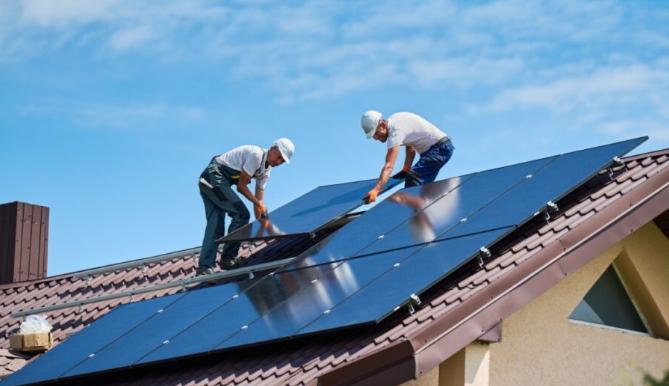
Africa-Press – South-Africa. South Africa’s renewable energy tax incentives for individuals and businesses were largely ineffective, with little impact on the uptake of alternative electricity sources.
These incentives also resulted in significant deadweight loss in the form of lost tax revenue to reward decisions that would have been taken regardless.
PwC explained this outcome was explained in its recent analysis of the National Treasury’s study on the impact of renewable energy incentives.
In 2023, the National Treasury introduced two major interventions in response to South Africa’s load-shedding challenge in the form of renewable energy tax incentives.
One of these incentives targeted rooftop solar panel installation, while the other was aimed at encouraging businesses to expedite investment in renewable energy generation by enhancing the existing renewable energy incentive for businesses.
These incentives were not extended beyond their sunset dates of 29 February 2024 and 28 February 2025, as they were considered short-term interventions.
Now that South Africa’s energy security crisis appears to be firmly in the past, the National Treasury began assessing the impact of these incentives on taxpayers.
The results were not pretty, with both incentives largely ineffective in altering taxpayers’ behaviour, as they would have invested in alternative energy sources regardless.
“The enhanced renewable energy incentive for businesses showed some success in altering investment behaviour, while the solar energy incentive for households largely functioned as an inefficient subsidy,” PwC said.
The two incentives functioned in different ways, with individuals able to claim a tax rebate of 25% of the cost of new solar panels up to a maximum of R15,000.
Businesses were able to claim an upfront deduction of 125% of the cost of qualifying assets used in generating electricity from renewable sources.
Companies were able to invest in solar panels, wind, and even hydropower and claim the deduction, without any thresholds on generation capacity.
The National Treasury’s survey found that the uptake of the individual incentive was low, with only 27% of eligible respondents claiming the incentive.
Of those who claimed, 78% stated they would have installed solar panels regardless of the incentive. This means that for every five people who received the credit, four were being rewarded for something they were already committed to doing.
This points to a high degree of deadweight loss, PwC said, with tax revenue foregone to reward decisions already made or those that would have been made regardless.
The survey also found that the benefits of the incentive were mostly received by higher-income households within the top two tax brackets who primarily lived within Gauteng and the Western Cape.
As a result, the incentive did not broaden access to solar power but rather subsidised those who already had the means and motivation to invest.
Businesses give it a go
Finance Minister Enoch Godongwana
Businesses responded much more positively, with 49% of eligible respondents claiming the deduction. However, this means a majority did not claim.
This incentive enjoyed a more positive response as it was an enhancement of an existing programme, meaning it enjoyed far greater awareness.
Furthermore, 43% of business claimants said they were encouraged to invest because of the incentive, indicating that it actually increased investment.
However, the true success of the enhanced incentive is perhaps its scaling effect, which is its ability to amplify investment.
The survey found that 65% of businesses that would have invested regardless were prompted by the incentive to install larger systems than originally planned.
This additionality, that is, the extent to which an incentive causes an investment or action that would not have happened otherwise, proved critical in maximising the generation capacity added to the grid for every rand of tax revenue forgone.
PwC added that a major issue with the incentives was their short-term nature, with individuals only given one year to claim the rebate and businesses two years.
This inhibits investment, which typically requires more certainty and, in the case of larger projects, more than two years to develop.
The financial services firm pointed to the one-year window and relatively low cap of R15,000 as the reasons why many individuals were not swayed by the incentive.
It said the R15,000 limit created a regressive subsidy, with a small system of R60,000 representing the maximum rebate of 25%. On the other hand, a larger R200,000 system would see the rebate falling to an effective 7.5%.
This discouraged larger investments and, coupled with a limit to just solar panels, prevented investment in enhanced inverters and batteries, diluting the incentive’s benefits.
In contrast, the enhanced incentive for businesses’ upfront deduction of 125%, and the inclusion of foundations and supporting structures, served as a useful tool to improve a renewable energy project’s internal rate of return, thereby encouraging larger investments.
The absence of a capacity cap was also a critical design choice, as it was a key enabler of the scaling effect.
For More News And Analysis About South-Africa Follow Africa-Press